Yes, you can build muscle at home with just dumbbells. Studies show a wide range of loads build similar muscle when sets end close to failure, so a pair of adjustable dumbbells, a few square metres of floor and a plan of 10 or so hard sets per muscle each week is enough for most people. You progress by adding reps, then sets, slowing the lowering phase, switching to single-arm or single-leg versions, or buying heavier dumbbells. No bench is required: floor presses, standing presses, rows and split squats cover every major muscle.
This guide covers what to buy, two example plans (3 day full body and 4 day upper/lower) built from exercises in FitArchive’s library, swaps for a home without a bench, and what to do when your dumbbells start to feel too light.
Can you build muscle with only dumbbells?
The research on load and equipment is reassuring:
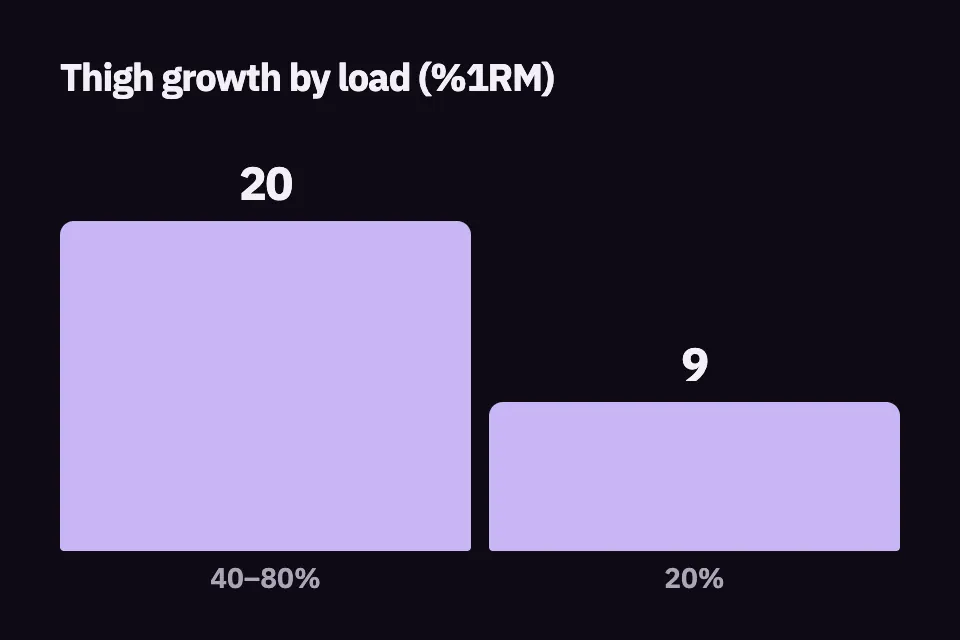
- A 2017 meta-analysis of 21 studies by Schoenfeld and colleagues found light loads (60% of one-rep max or less) and heavy loads built similar muscle when every set went to failure. Heavy loads built more maximal strength. Our article on how many reps build muscle covers this and related studies in detail.
- The 2026 ACSM position stand, an overview of 137 systematic reviews, found equipment type did not consistently change training outcomes, while about 10 or more sets per muscle each week enhanced muscle growth.
- Our comparison of free weights and machines reaches a similar conclusion: the tool matters less than effort, volume and progression.
The catch is effort. In a study of light versus heavy training, sets at 30% of one-rep max built clear muscle only when taken to failure, while heavy sets worked either way. At home, your dumbbells will often be light for your legs, so those sets need to end close to failure, roughly 0 to 2 reps in reserve (RIR).
What to buy for a home dumbbell workout
| Option | Good for | Trade-offs |
|---|---|---|
| Adjustable dumbbells (dial or pin) | Small spaces, wide weight range | Changing weight between sets takes time; check the maximum and the smallest step |
| Adjustable spin-lock (plate) dumbbells | Low cost per kilogram, can add plates later | Slower to change; collars must be tightened every time |
| Fixed dumbbells | Fast changes, durable | Take more space; a full range needs many pairs |
Two numbers matter more than the type. The maximum should be heavy enough for goblet squats and Romanian deadlifts in the 8 to 15 rep range, which is usually the heaviest work you do. The smallest step matters for small exercises: moving from 6 to 8 kg on a lateral raise is a 33% jump, which is why reps and tempo do most of the progressing there. A doorway pull-up bar is a useful extra for your back, but optional.
Example 3 day full body dumbbell workout
This example plan suits beginners and anyone training three times a week on alternate days. Sets × reps, with the target RIR in brackets. “Per leg” or “per arm” means each side.
| Day | Exercises (sets × reps, target RIR) |
|---|---|
| Full body A | Goblet squat 3 × 8 to 15 (2), dumbbell floor press 3 × 8 to 12 (2), bent-over dumbbell row 3 × 8 to 12 (2), dumbbell Romanian deadlift 3 × 8 to 12 (2), dumbbell lateral raise 3 × 12 to 20 (1), dumbbell curl 2 × 10 to 15 (1) |
| Full body B | Reverse lunge 3 × 8 to 12 per leg (2), standing dumbbell shoulder press 3 × 8 to 12 (2), one-arm dumbbell row 3 × 8 to 12 per arm (2), dumbbell hip thrust 3 × 10 to 15 (2), push-up 3 × 5 to 20 (2), overhead dumbbell triceps extension 2 × 10 to 15 (1) |
| Full body C | Bulgarian split squat 3 × 8 to 12 per leg (2), dumbbell floor press 3 × 8 to 12 (2), one-arm dumbbell row 3 × 8 to 12 per arm (2), single-leg Romanian deadlift 2 × 8 to 12 per leg (2), dumbbell rear delt fly 3 × 12 to 20 (1), dumbbell lateral raise 2 × 12 to 20 (1), hammer curl 2 × 10 to 15 (1) |
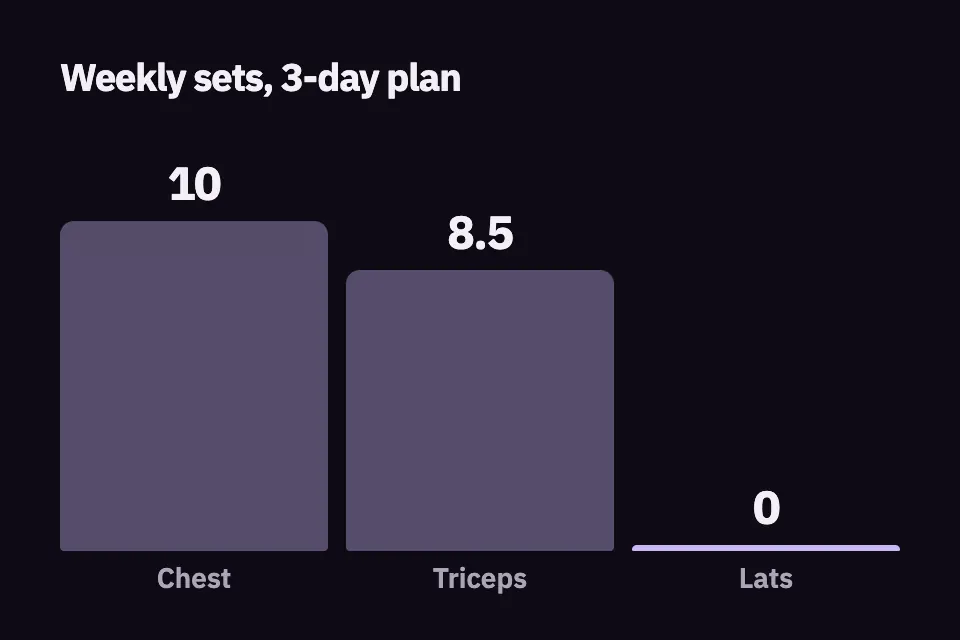
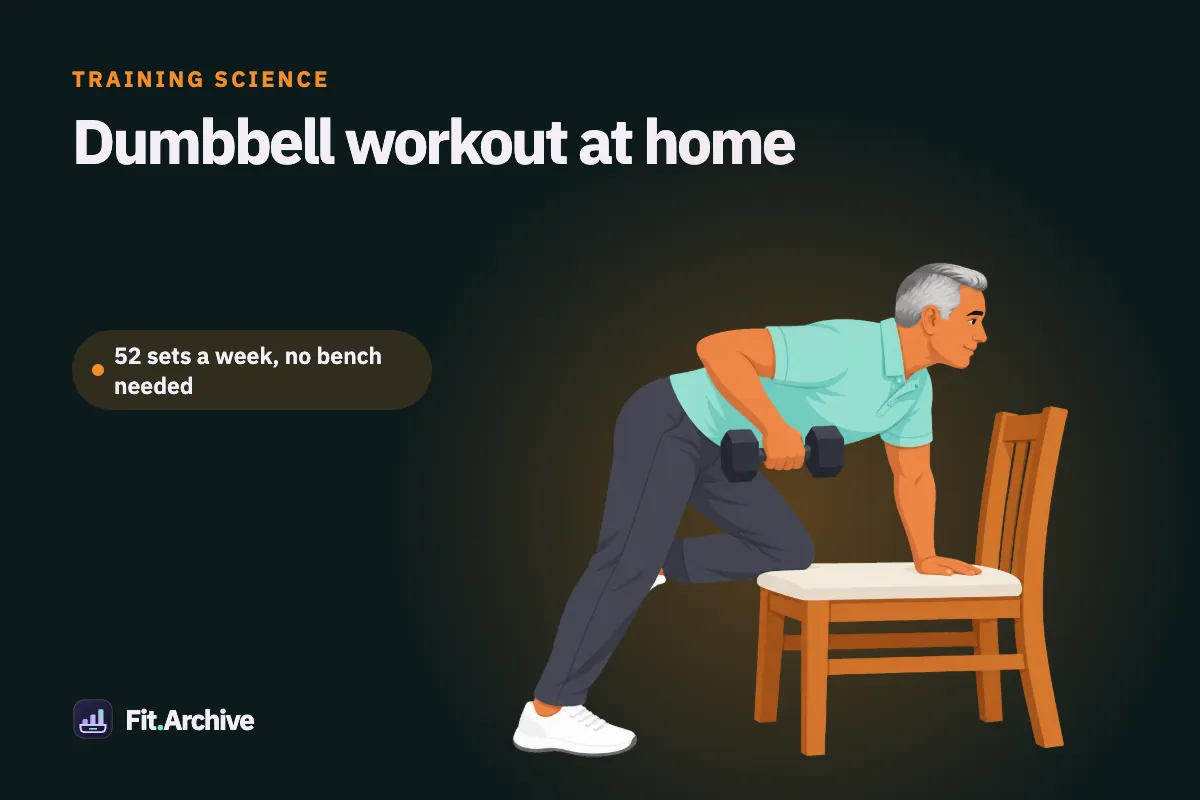
That is 17, 17 and 18 working sets, or 52 a week. Counted with FitArchive’s rule (1 set for the primary muscle, 0.5 for secondary muscles), it gives roughly 9 weekly sets for chest, quads and lats, 10.5 for upper back, 15.5 for glutes, 6.5 for hamstrings and side delts, and 8.5 for biceps. If push-ups are too hard, put your hands on a sturdy table (incline push-up).
Example 4 day upper/lower dumbbell plan
For four days a week, this example plan trains each muscle twice with more sets per session. A common week is Upper A, Lower A, rest, Upper B, Lower B, rest, rest.
| Day | Exercises (sets × reps, target RIR) |
|---|---|
| Upper A | Dumbbell floor press 4 × 8 to 12 (2), one-arm dumbbell row 4 × 8 to 12 per arm (2), standing dumbbell shoulder press 3 × 8 to 12 (2), dumbbell lateral raise 3 × 12 to 20 (1), dumbbell curl 2 × 10 to 15 (1), overhead dumbbell triceps extension 2 × 10 to 15 (1) |
| Lower A | Goblet squat 4 × 8 to 15 (2), dumbbell Romanian deadlift 3 × 8 to 12 (2), reverse lunge 2 × 8 to 12 per leg (2), single-leg dumbbell calf raise 3 × 10 to 20 (1), dead bug 2 × 8 to 12 per side (2) |
| Upper B | Push-up 3 × 5 to 20 (2), bent-over dumbbell row 3 × 8 to 12 (2), Arnold press 3 × 8 to 12 (2), dumbbell fly on the floor 2 × 10 to 15 (1), dumbbell lateral raise 3 × 12 to 20 (1), dumbbell rear delt fly 2 × 12 to 20 (1), hammer curl 2 × 10 to 15 (1), dumbbell skull crusher 2 × 10 to 15 (1) |
| Lower B | Bulgarian split squat 3 × 8 to 12 per leg (2), dumbbell hip thrust 3 × 10 to 15 (2), single-leg Romanian deadlift 3 × 8 to 12 per leg (2), dumbbell sumo squat 2 × 10 to 15 (2), single-leg dumbbell calf raise 3 × 10 to 20 (1) |
That is 66 working sets a week: about 9 for chest and side delts, 11 for quads, 17 for glutes, 7 to 8 for the back muscles and 12.5 for triceps. If you have a pull-up bar, swapping one row for pull-ups or chin-ups adds back work. The upper/lower guide explains the split itself.
Shoulders and back with dumbbells
Dumbbells cover the shoulders well: a press (standing or Arnold) for the front, lateral raises for the sides and rear delt flies for the back of the shoulder. Back training relies on rows, which work the lats and upper back. Without a bar, vertical pulling is the one pattern dumbbells cannot fully replace, so higher row volume fills the gap.
No bench? Swaps that keep the plan working
| With a bench | Without a bench |
|---|---|
| Dumbbell bench press | Dumbbell floor press |
| Incline dumbbell press | Decline push-up (feet raised) or standing dumbbell shoulder press |
| Seated dumbbell shoulder press | Standing dumbbell shoulder press |
| One-arm dumbbell row, hand on bench | Hand on a sturdy chair, or bent-over dumbbell row |
| Chest-supported dumbbell row | Bent-over dumbbell row |
| Dumbbell hip thrust, shoulders on bench | Shoulders on the edge of a sofa, or glute bridge on the floor |
| Bulgarian split squat | Rear foot on a stable chair or step, or dumbbell split squat |
The floor press stops each rep when your upper arms touch the floor, so the range is shorter than a bench press. Keep using the same version so your numbers stay comparable.
How to progress when your dumbbells are too light
Progressive overload does not have to mean heavier dumbbells. In an 8 week trial of 43 people with lower-body training experience, adding reps at the same load built similar muscle to adding load at the same reps. Options, roughly in order:
- Add reps up to about 20 to 30, close to failure. Then add a set. Double progression gives a simple rule.
- Slow the lowering phase, for example 3 seconds down. A meta-analysis of 8 studies found similar growth across rep durations from 0.5 to 8 seconds, so slower reps are a way to make a light weight harder, not a growth trick. See lifting tempo.
- Pause at the hardest point, such as the bottom of a squat or split squat.
- Go single-arm or single-leg. A Bulgarian split squat or single-leg Romanian deadlift puts most of the load on one leg.
- Add partial reps at the stretched position at the end of a set. Our guide to lengthened partials covers the evidence.
- Buy heavier dumbbells when sets of 30 still end far from failure.
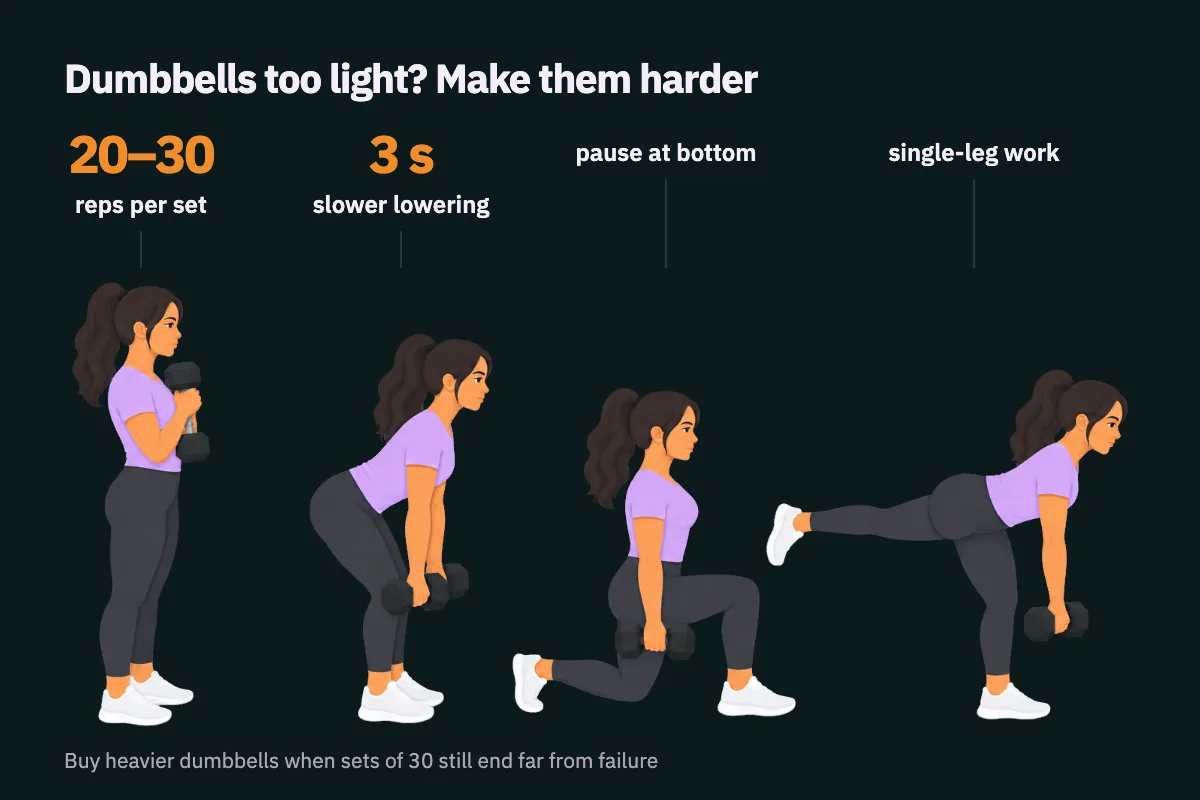
Progress does not have to mean heavier dumbbells.
One warning about high reps: a meta-analysis on rep predictions found people underestimate their remaining reps by about one on average, and predictions were less accurate in sets above 12 reps. On long sets, push a little harder than feels necessary. See training to failure vs RIR.
Space and safety at home
- Clear a space at least as wide as your arm span, on a firm, non-slip floor. Keep children and pets out of the area.
- Check collars or locking mechanisms before each set, following the manufacturer’s instructions.
- Lift dumbbells from the floor by bending at the hips and knees, and set them down rather than dropping them.
- Test that any chair, sofa or step you use will not slide or tip.
- Stop an exercise if it causes sharp or worsening pain, and ask a qualified professional.
Common mistakes
- Stopping sets at 12 reps because the plan says so when you had 10 more in you. With light weights, effort is everything.
- Only upper body, because legs feel awkward with dumbbells. Split squats and single-leg Romanian deadlifts make light weights challenging.
- Changing the plan every week. Keep exercises for at least a few weeks so progress is visible.
- Logging weight inconsistently, sometimes per dumbbell, sometimes for the pair. Pick one and stick to it.
- Cutting rest too short to make sets feel harder. It can reduce reps in later sets; see rest between sets.
Logging home dumbbell workouts in FitArchive
FitArchive is a free workout log that runs in your browser and works offline. Build your own plan from its exercise library, which includes every exercise above, or edit a built-in template. Log the weight of one dumbbell for each set and write “weight per dumbbell” in the workout notes, so later comparisons stay fair. Record reps and RIR for each set. The Progress screen estimates one-rep max only when reps plus RIR come to 15 or less, so for long, light sets, judge progress by reps at the same weight instead. Weekly hard sets by muscle are shown too. Try it with sample data in the demo.