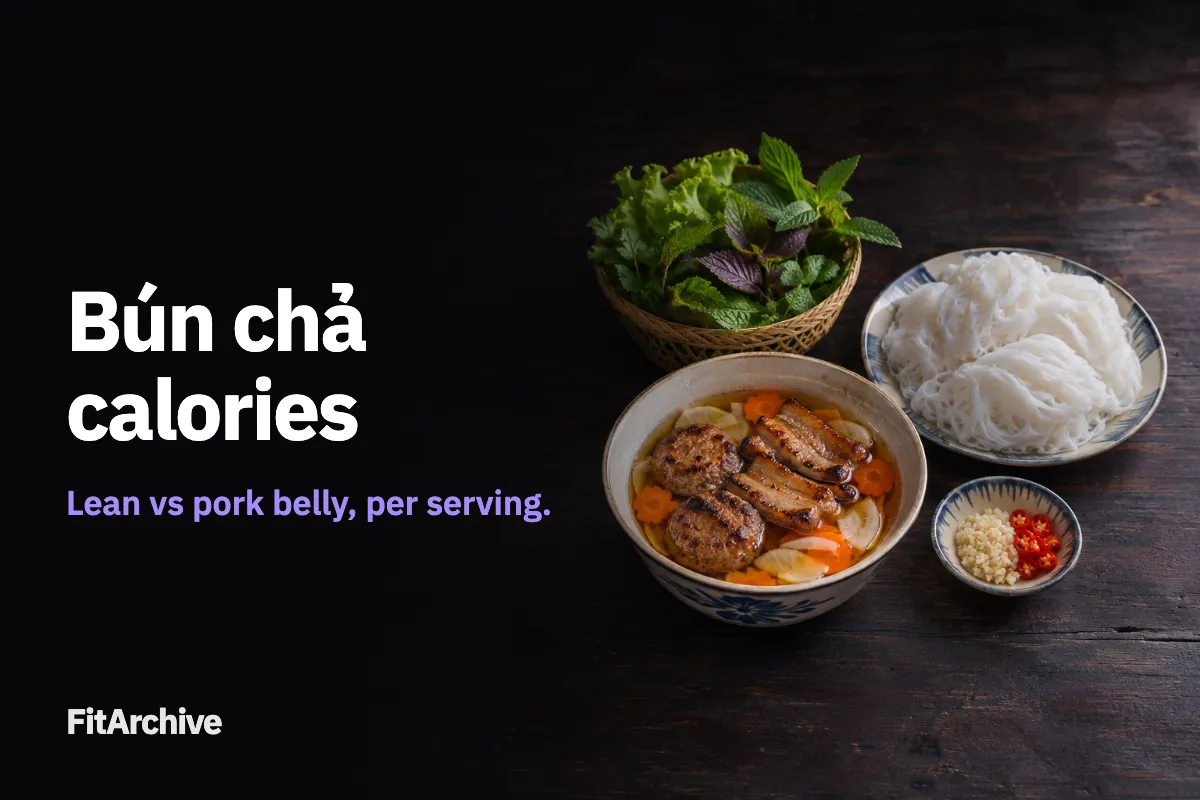
A serving of bún chả is about 538 kcal and 30 g of protein in FitArchive’s recipe, which uses 200 g of rice vermicelli (bún) and 100 g of grilled lean pork shoulder. A typical Hanoi plate with both grilled patties (chả viên) and pork belly slices (chả miếng) comes to about 770 kcal and 37 g of protein in our component estimate. Our small and big example plates range from about 460 to 1,190 kcal. The meat cut, how much bún you eat and how much of the sweet dipping sauce you drink decide where yours lands.
Every number below is a calculated estimate built from USDA ingredient data for the gram weights we state, not a lab-measured restaurant meal. The app recipe and the restaurant-style plate use different weights, so both are shown. Restaurants vary: some grill lean shoulder, most grill fatty belly, some refill the bún for free and some add a fried spring roll (nem) to the plate. A laboratory study of 269 restaurant foods found about one in five had at least 100 kcal more than stated, so treat any number for an unweighed plate as a starting point.
How many calories are in bún chả?
The answer depends mostly on the pork. Here are the three versions you are likely to meet.
| Bún chả version | Weight | Calories | Protein | Carbs | Fat |
|---|---|---|---|---|---|
| Lean pork shoulder (FitArchive recipe) | 382 g | 538 kcal | 30 g | 63 g | 17 g |
| Typical Hanoi plate: patties and pork belly | 438 g | 766 kcal | 37 g | 73 g | 35 g |
| Small plate, lean pork, light dip | 341 g | 461 kcal | 27 g | 52 g | 15 g |
| Big plate: bún refill, more belly, plus 1 nem rán | 632 g | 1,192 kcal | 54 g | 113 g | 57 g |
The 228 kcal gap comes from more pork in total, the fattier belly cut, and the oil and sugar in the marinade and sauce. Swapping only the 60 g of belly for shoulder removes about 87 kcal. Belly is about 404 kcal per 100 g cooked in USDA data, compared with about 259 kcal for shoulder and 143 kcal for lean tenderloin. If your plate has glossy, streaky slices with a ring of fat, use the belly row.
Some Vietnamese health sites say a bowl of bún chả is about 390 kcal. That is only plausible for about 100 g of bún and a small amount of lean meat. A full plate with belly is roughly twice that.
What is in a typical plate? Calories by part
This is our component estimate for a Hanoi-style serving with both kinds of grilled pork. The dipping sauce line is what you actually eat or drink, not the whole bowl.
| Part | Grams | Calories | Protein | Share of calories |
|---|---|---|---|---|
| Rice vermicelli (bún), cooked | 200 | 216 | 3.6 g | 28% |
| Grilled pork patties (chả viên) | 60 | 178 | 15.4 g | 23% |
| Grilled pork belly slices (chả miếng) | 60 | 242 | 15.9 g | 32% |
| Sugar and oil in the marinade | 8 | 46 | 0 g | 6% |
| Dipping sauce eaten: fish sauce | 15 | 5 | 0.8 g | 1% |
| Dipping sauce eaten: sugar | 15 | 58 | 0 g | 8% |
| Pickled green papaya and carrot | 30 | 13 | 0.2 g | 2% |
| Lettuce and herbs | 50 | 8 | 0.7 g | 1% |
| Total | 438 | 766 | 36.6 g |
Pork brings 55% of the calories and nearly all the protein. Bún brings 28%. Sugar from the marinade and sauce is about 10%, which surprises most people: every 10 g of sugar is about 39 kcal.
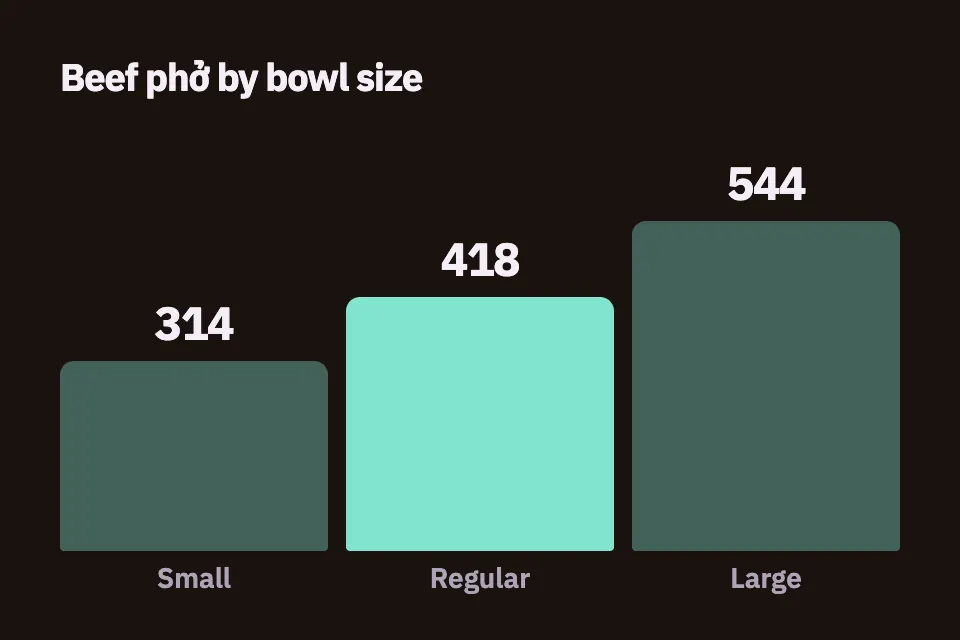
Dividing 766 kcal by the 438 g of listed ingredients gives about 175 kcal per 100 g (the water in the dipping bowl is not counted). The protein density is about 4.8 g per 100 kcal, lower than beef phở (about 9 g per 100 kcal in our phở guide) and bún bò Huế (about 7 g in our bún bò Huế guide). The fat in belly is the reason.
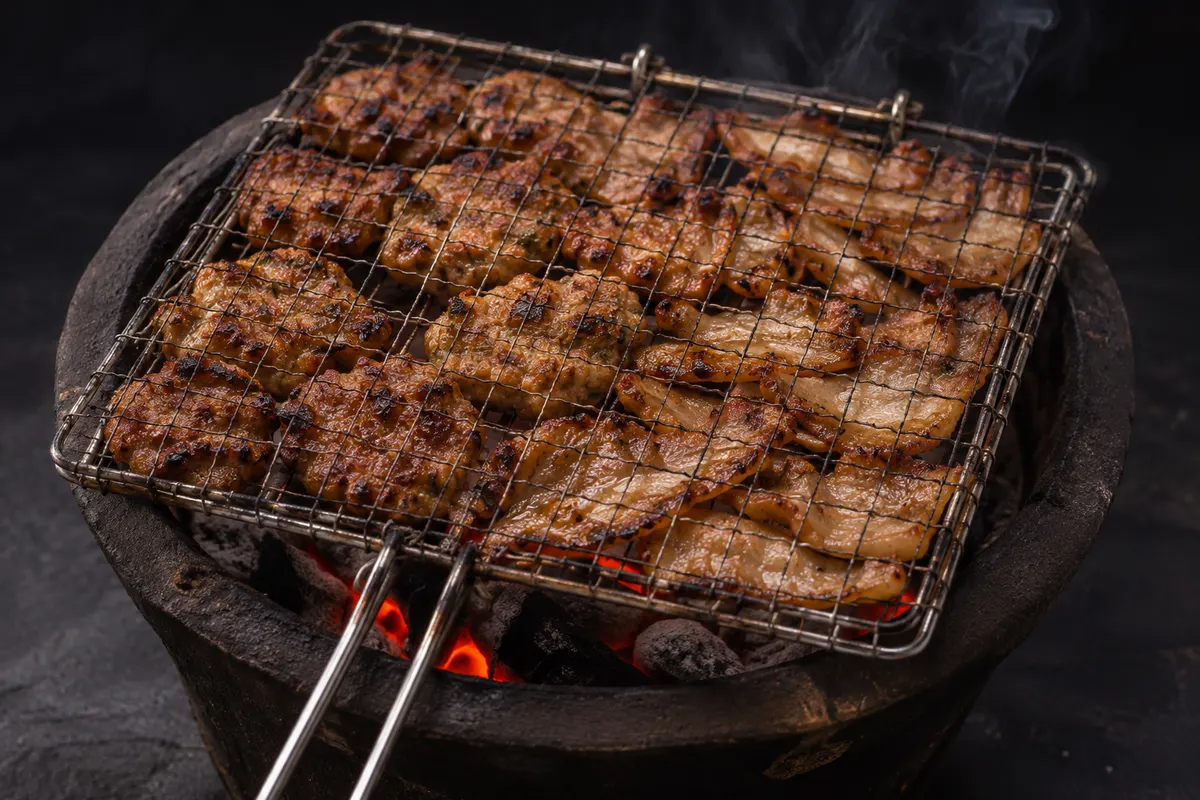
Pork belly and patties over charcoal. The cut of pork changes the plate more than anything else.
How much protein is in bún chả?
- Lean shoulder (FitArchive recipe): about 30 g per serving.
- Typical plate with patties and belly: about 37 g.
- Small lean plate: about 27 g.
- Extra chả (thêm chả, about 50 g more pork): add about 13 g protein and 175 kcal.
All of these clear the roughly 25 to 30 g of protein per meal that a review on protein and appetite suggested for fullness. If you lift and want more, extra chả adds protein far better than a second bún refill, which adds about 108 kcal but under 2 g of protein. For daily totals, see how much protein you need per day.
Sizes and adjustments
These use FitArchive’s lean recipe as the base, with the same size rules as the app: small is 75% of a regular plate and large is 130%.
| Change (lean recipe) | Calories | Protein |
|---|---|---|
| Small plate | 404 kcal | 23 g |
| Regular plate | 538 kcal | 30 g |
| Large plate | 700 kcal | 40 g |
| Regular, half the bún | 430 kcal | 29 g |
| Regular, 50% more meat | 668 kcal | 43 g |
And from the typical belly-and-patty plate:
| Change (typical plate) | Calories | Protein |
|---|---|---|
| Eat half the bún (100 g less) | −108 kcal | −1.8 g |
| Each extra 100 g bún refill | +108 kcal | +1.8 g |
| Swap the belly slices for lean shoulder | −87 kcal | −0.6 g |
| Drink half as much dipping sauce | −31 kcal | −0.4 g |
| Add 1 fried spring roll (nem rán) | +165 kcal | +7 g |
| Add 50 g extra chả | +175 kcal | +13 g |
Bún chả with nem, and chấm vs chan
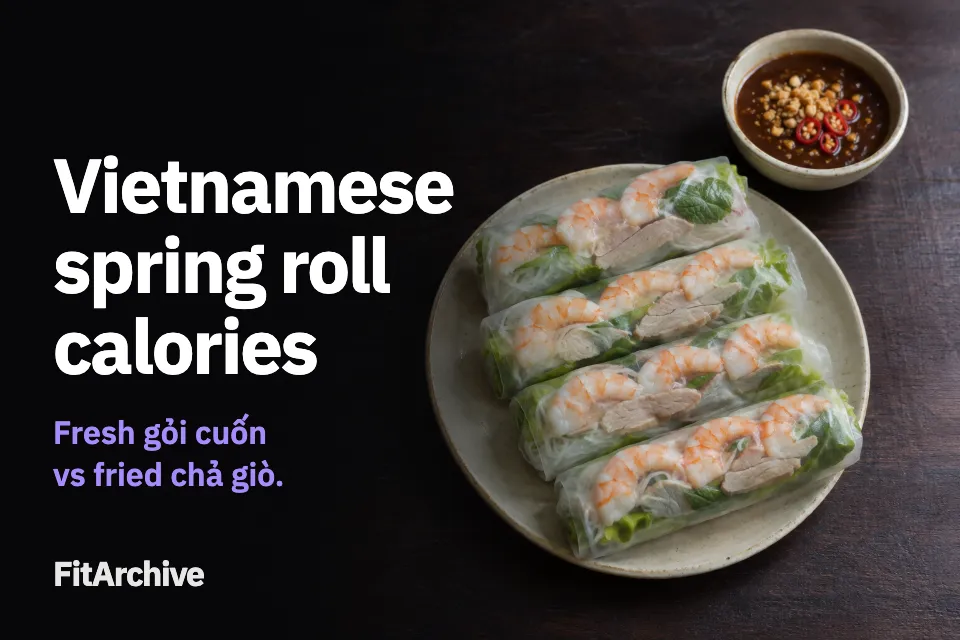
Bún chả nem (or bún chả giò) adds fried spring rolls. One medium nem rán is about 165 kcal and 7 g of protein in our estimate, and a third of that is frying oil. Two rolls take a typical plate past 1,000 kcal. Our Vietnamese spring roll guide compares fresh and fried rolls in detail.
Chấm vs chan is how you eat it. With chấm you dip the bún into the bowl. With chan you pour the sauce over it, so you usually eat more of the sauce. The ingredients are the same, but chan likely means more sugar eaten, around 20 to 40 kcal more in our model. That is a direction, not a measured number.
Is bún chả fattening?
No single dish makes you gain or lose fat. Weight follows your overall energy intake over days and weeks. In a two-year trial of 811 adults, reduced-calorie diets led to similar weight loss whether they emphasized fat, protein or carbohydrate.
Portion size does matter in the moment. In a lab study of 51 adults, people ate 30% more at lunch when served the largest portion. With free bún refills, a plate can quietly grow by 200 kcal or more.
Salt is the other thing to know. Fish sauce has about 7,851 mg of sodium per 100 g in USDA data, so 15 g of it is about 1,180 mg, over half of the World Health Organization’s suggested daily limit of under 2,000 mg. Not drinking the dipping sauce helps with both sugar and salt. This is general information, not individual nutrition advice.
How to order bún chả when cutting or bulking
Cutting (lighter plate, protein kept):
- Ask for less bún (ít bún) and skip the refill.
- Ask for more lean pieces or patties and fewer belly slices, if the shop offers it.
- Dip rather than pour, and leave the sauce in the bowl.
- Fill up on the herbs, lettuce and pickles: a 50 g plate of greens is under 10 kcal.
Those changes take the typical plate from about 766 to about 540 kcal while keeping about 34 g of protein. More on eating less without losing muscle is in keeping muscle while cutting.
Bulking: order thêm chả first, then a bún refill. Add a nem if you want the calories, but it brings more fat than protein.
Bún chả vs other Vietnamese noodle dishes
| Dish (regular, FitArchive recipe) | Calories | Protein |
|---|---|---|
| Bún chả, lean shoulder | 538 kcal | 30 g |
| Bún chả, typical belly plate (our estimate) | 766 kcal | 37 g |
| Bún thịt nướng | 614 kcal | 32 g |
| Bún nem | 625 kcal | 21 g |
| Bún bò Huế | 571 kcal | 42 g |
| Phở bò | 418 kcal | 38 g |
Bún thịt nướng is the southern cousin: grilled pork on a bowl of bún with peanuts and fish sauce. Bún chả cá is a different dish, a fish-cake noodle soup, and is not covered here. The Vietnamese food calorie table lists more dishes.
Common mistakes when logging bún chả
- Logging every plate as the lean version. If the pork is belly, the plate is closer to 770 kcal than 540.
- Forgetting the sauce. The sugar you drink with it is around 60 kcal on a typical plate.
- Missing the refill. Each extra serving of bún is about 108 kcal.
- Not counting the nem. One roll is about 165 kcal.
Under-recording is common: in one small clinical study, adults who reported very low intakes had under-reported their food by about 47% on average. Logging at the table, extras included, matters more than exact noodle weights.
Log bún chả in FitArchive
FitArchive’s food log has bún chả as a ready-made dish, built from weighed parts with USDA ingredient data, next to bún thịt nướng, bún nem, phở and hundreds of other Vietnamese dishes. Pick small, regular or large, set the noodles or meat to less or more, and add a nem as its own entry. Your calories and protein for the day sit next to your training log, so you can see whether you are eating enough to recover. If you usually get the belly version, save the plate as your own food once and reuse it.
Get FitArchive free on iPhone or Android. Food logging and your full history are free, with no ads. To see how it handles Vietnamese food, read counting calories in Vietnamese food.