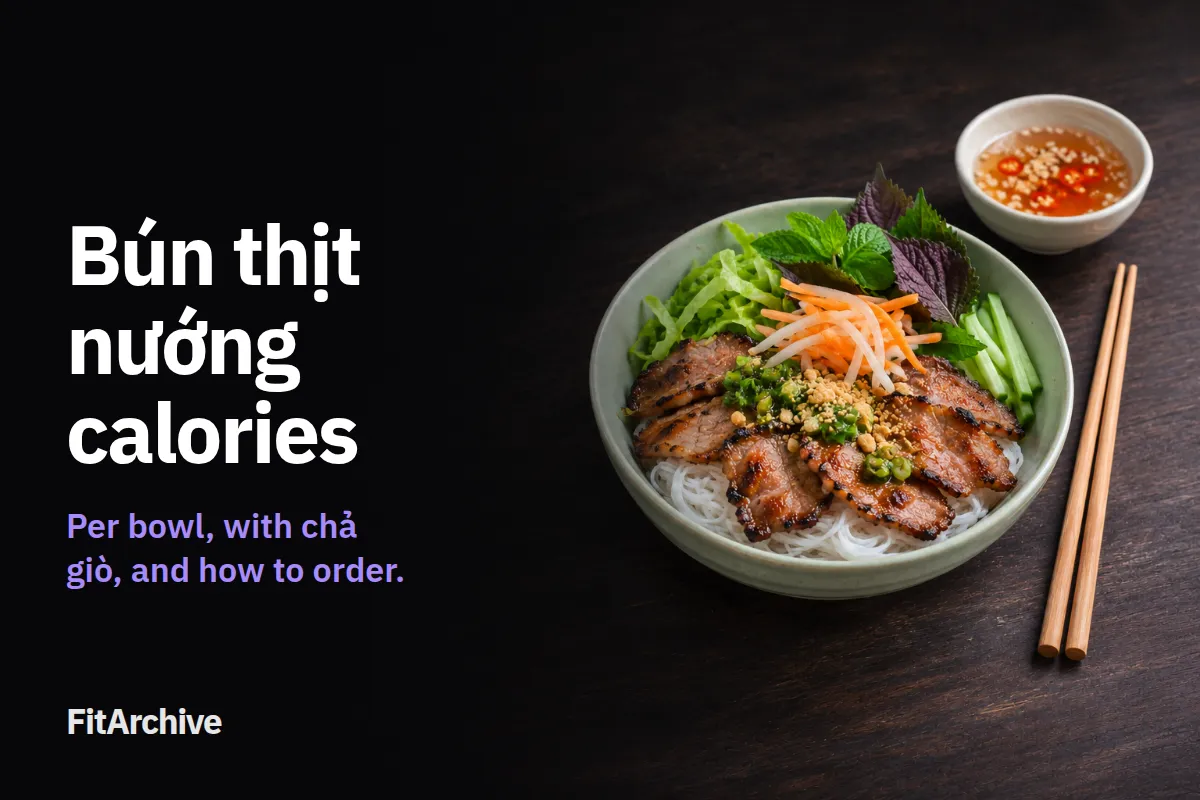
A regular bowl of bún thịt nướng is about 614 kcal and 32 g of protein in FitArchive’s recipe: 200 g of rice vermicelli (bún), 100 g of grilled pork shoulder, crushed peanuts, scallion oil, lettuce, cucumber and carrot, and a sweet fish-sauce dressing. Bún thịt nướng chả giò, with a fried spring roll and less pork, is about 659 kcal and 29 g of protein. A regular bowl with a whole chả giò added on top comes to about 788 kcal. The pork brings most of the calories and almost all of the protein; the dressing, peanuts and oil add about 120 kcal between them.
These numbers are calculated from USDA ingredient data for the weights we state, not measured in a lab. Shops differ in how much pork and bún they serve, how fatty the pork is and how much scallion oil goes on top. A laboratory study of 269 restaurant foods found about one in five had at least 100 kcal more than stated. Treat these as a starting point when you cannot weigh your bowl.
How many calories are in bún thịt nướng? Each version compared
| Bún thịt nướng (regular bowl) | Weight | Calories | Protein | Carbs | Fat |
|---|---|---|---|---|---|
| Grilled pork (FitArchive recipe) | 407 g | 614 kcal | 32 g | 65 g | 25 g |
| Bún thịt nướng chả giò (FitArchive recipe) | 353 g | 659 kcal | 29 g | 70 g | 29 g |
| Grilled pork plus one whole chả giò (component estimate) | 459 g | 788 kcal | 39 g | 74 g | 36 g |
| Lighter order: half the dressing, no scallion oil (component estimate) | 391 g | 544 kcal | 31 g | 59 g | 20 g |
Vietnamese health and recipe sites usually give about 450 to 600 kcal for a bowl, mostly without a weight or a protein figure. Our regular bowl sits just above that range, mainly because it has 100 g of cooked pork.
What is in a bowl of bún thịt nướng?
The FitArchive recipe, part by part:
| Part | Grams | Calories | Protein | Share of calories |
|---|---|---|---|---|
| Grilled pork shoulder | 100 | 259 | 25.6 g | 42% |
| Rice vermicelli (bún) | 200 | 216 | 3.6 g | 35% |
| Dressing (fish sauce and sugar) | 22 | 50 | 0.5 g | 8% |
| Scallion oil (modelled as vegetable oil) | 5 | 44 | 0 g | 7% |
| Roasted peanuts | 5 | 29 | 1.2 g | 5% |
| Lettuce, cucumber and carrot | 75 | 15 | 0.8 g | 2% |
| Total | 407 | 614 | 31.7 g |
Three things stand out:
- The pork is 42% of the calories and 81% of the protein. We use USDA’s cooked pork shoulder, which has more fat than loin. A shop that grills leaner meat lands lower; one that uses pork belly lands well above this.
- The dressing is about 50 kcal, almost all from 12 g of sugar. If you pour the whole bowl of nước chấm over the noodles, you eat all of it.
- The toppings add up. One small spoon of scallion oil (44 kcal) and a sprinkle of peanuts (29 kcal) together bring about as much as 70 g of bún.
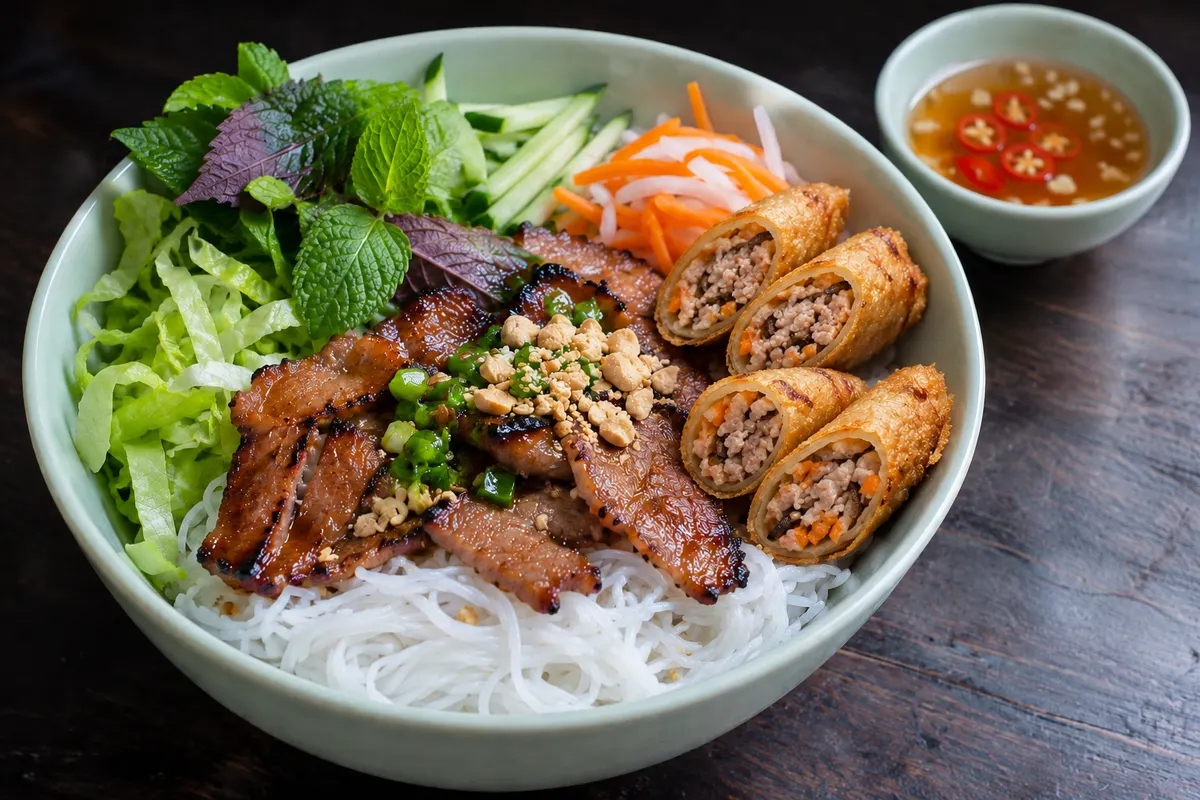
Bún thịt nướng chả giò: the spring roll adds fat and calories faster than protein.
Bún thịt nướng vs bún chả: which has more calories?
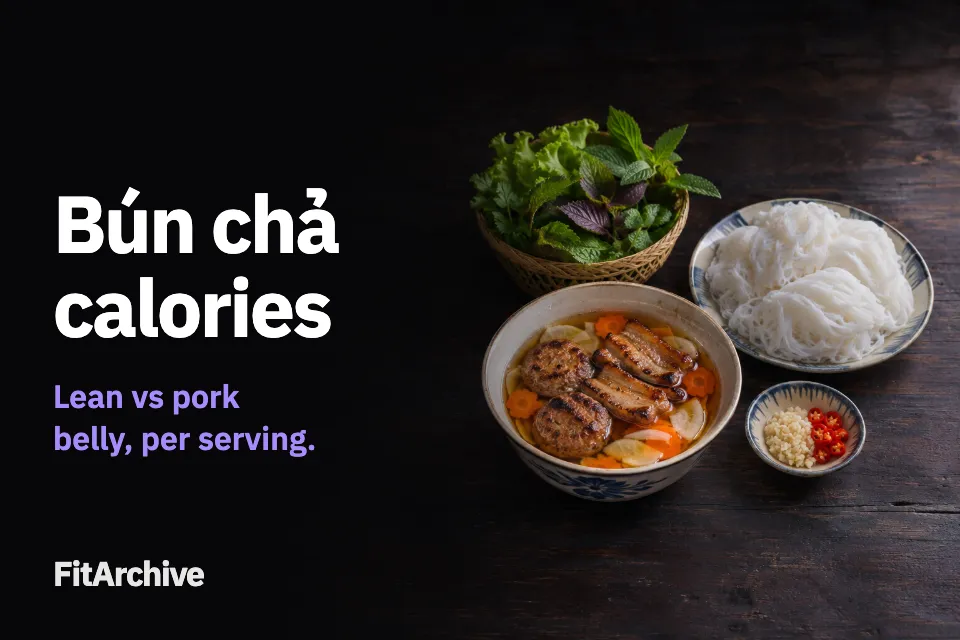
In the app, the two dishes use the same 200 g of bún and the same 100 g of grilled pork shoulder. Bún chả is about 538 kcal and 30 g of protein; bún thịt nướng is about 614 kcal and 32 g. Most of the 75 kcal difference is the peanuts (29 kcal) and the scallion oil (44 kcal) that go on top of the southern bowl. In real shops the bigger difference is the meat: a Hanoi bún chả plate with pork belly and patties is about 770 kcal in our estimate.
Bún thịt nướng chả giò: how much does the spring roll add?
The app’s bún thịt nướng chả giò recipe has 60 g of grilled pork instead of 100 g, plus a fried roll made of rice paper, minced pork and carrot, more oil and more peanuts. It ends up 45 kcal higher than the plain bowl but 3 g lower in protein: 659 kcal and 29 g.
If your shop keeps the full portion of pork and adds the roll on top, add one chả giò (52 g, about 174 kcal and 7.1 g of protein in the app). That gives about 788 kcal and 39 g of protein. Two rolls take it past 960 kcal.
How much protein is in bún thịt nướng?
| Bowl | Calories | Protein | Protein per 100 kcal |
|---|---|---|---|
| Bún thịt nướng | 614 kcal | 32 g | about 5.2 g |
| Bún thịt nướng chả giò | 659 kcal | 29 g | about 4.4 g |
| Bún thịt nướng plus a whole chả giò | 788 kcal | 39 g | about 4.9 g |
| For comparison: bún chả | 538 kcal | 30 g | about 5.6 g |
| For comparison: bún bò Nam Bộ | 482 kcal | 31 g | about 6.4 g |
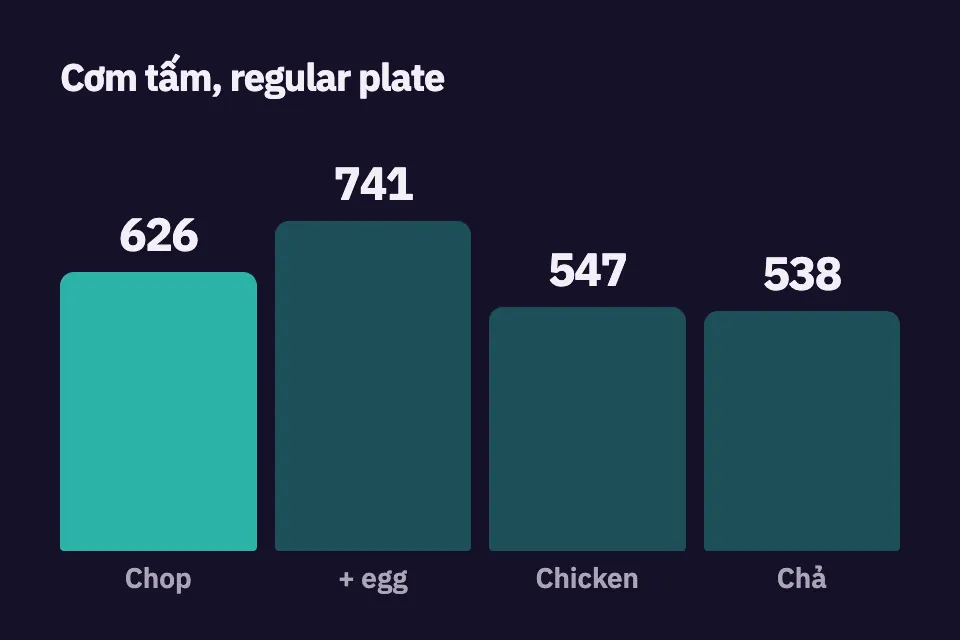
| For comparison: cơm tấm sườn | 626 kcal | 36 g | about 5.7 g |
| For comparison: beef phở | 418 kcal | 38 g | about 9.0 g |
A regular bowl reaches the roughly 25 to 30 g per meal that a review on protein and appetite suggested for fullness. The chả giò version is close but the extra calories come mostly from fat and rice paper. If you are building muscle on a budget of calories, beef phở gives far more protein per calorie. For daily targets, see how much protein per day.
Sizes and adjustments
Using FitArchive’s grilled pork recipe (small is 75% of regular, large 130%):
| Bowl | Calories | Protein |
|---|---|---|
| Small | 460 kcal | 24 g |
| Regular | 614 kcal | 32 g |
| Large | about 798 kcal | 41 g |
And changes to a regular bowl:
| Change | Calories | Protein |
|---|---|---|
| Extra grilled pork (50 g) | +130 kcal | +12.8 g |
| Add one chả giò (52 g) | +174 kcal | +7.1 g |
| Extra bún (100 g) | +108 kcal | +1.8 g |
| 100 g less bún | −108 kcal | −1.8 g |
| No scallion oil (5 g) | −44 kcal | 0 g |
| Use half the dressing | −25 kcal | −0.3 g |
Is bún thịt nướng fattening?
No single dish is fattening on its own. Weight change follows your total intake over days and weeks. In a two-year trial of 811 adults, reduced-calorie diets led to similar weight loss whatever their mix of fat, protein and carbohydrate. A regular bowl of bún thịt nướng is about the same as a plate of cơm tấm sườn and about 200 kcal more than a bowl of beef phở.
Two things are worth watching. First, portion size: in a lab study of 51 adults, people ate 30% more at lunch when served the largest portion than when served the smallest, and many shops serve extra pork or two spring rolls. Second, salt: the fish sauce and the marinade are salty, and the World Health Organization recommends adults keep sodium under 2,000 mg a day. This is general information, not individual nutrition advice.
How to order bún thịt nướng when cutting or building muscle
- Add pork, not chả giò. Extra grilled pork (50 g) adds about 13 g of protein for 130 kcal. A spring roll adds 7 g for 174 kcal.
- Ask for no scallion oil (không mỡ hành). That saves about 44 kcal.
- Pour half the dressing. That saves about 25 kcal of sugar and some salt.
- Leave some bún if you are cutting. Every 100 g of bún you leave saves about 108 kcal and costs almost no protein.
Together, extra pork, no scallion oil and half the dressing take the regular bowl to about 674 kcal and 44 g of protein. More on eating less while training is in keeping muscle while cutting.
Common mistakes when logging bún thịt nướng
- Logging the chả giò version as the plain bowl. It is about 45 kcal more and has less pork, so the protein is lower too.
- Using a “per 100 g” number without weighing. In our estimates a bowl runs from about 353 g to 459 g.
- Forgetting the extras: the scallion oil, the peanuts, a second spring roll or the dressing you drank.
In one small clinical study, adults who reported very low intakes had under-reported their food by about 47% on average. Logging at the table, extras included, matters more than exact weights.
Log bún thịt nướng in FitArchive
FitArchive’s food log has bún thịt nướng and bún thịt nướng chả giò as ready-made dishes, built from weighed parts with USDA ingredient data, and chả giò as its own item. Pick small, regular or large, set the bún or the pork to less or more, and the day’s calories and protein update next to your training. If your shop’s bowl is different, save it as your own food. The Vietnamese food calorie table shows how bún thịt nướng compares with other dishes.
Get FitArchive free on iPhone or Android. Food logging and your history are free, with no ads.