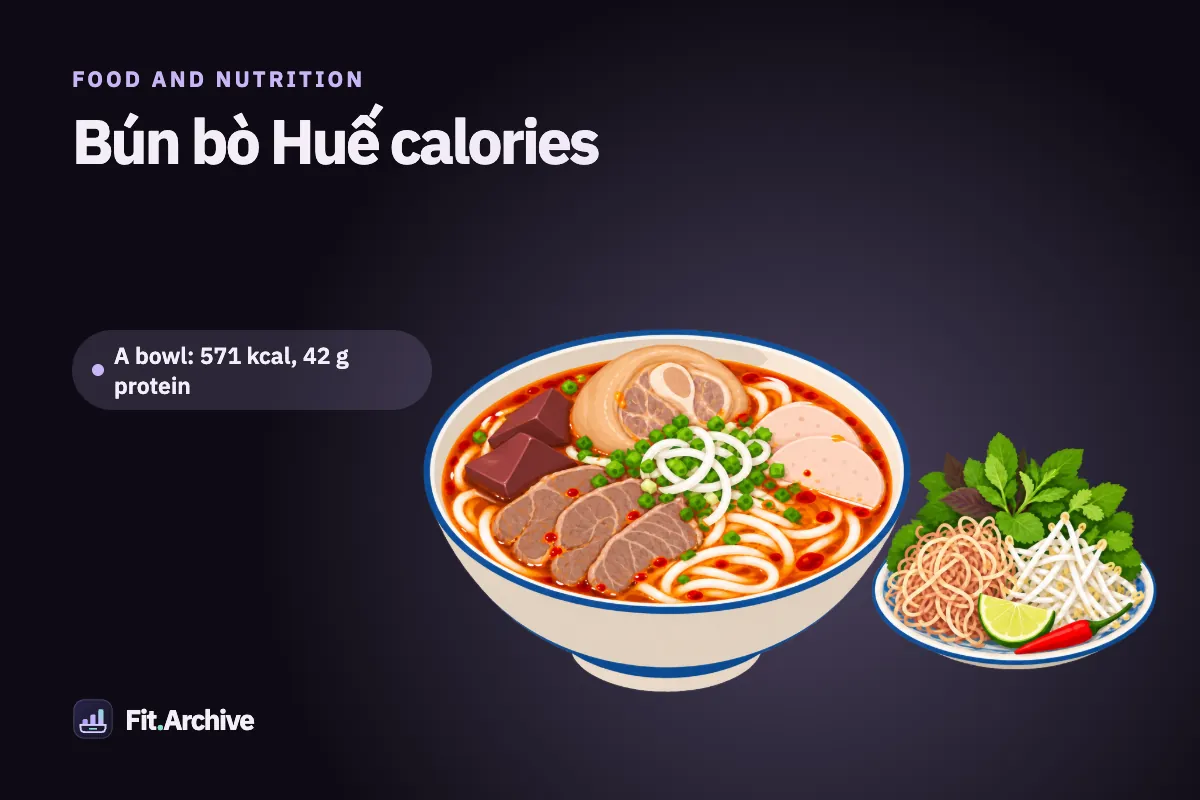
A regular bowl of bún bò Huế is about 571 kcal and 42 g of protein in FitArchive’s recipe estimate, with 61 g of carbohydrate and 17 g of fat. That bowl weighs 815 g: 220 g of cooked rice vermicelli (bún), 70 g of cooked beef shank, 30 g of steamed pork roll (giò lụa), 450 g of beef broth, 5 g of oil, bean sprouts and spring onion. The noodles bring about two fifths of the calories, and the beef shank brings more than half of the protein.
Every number below is an estimate for the stated recipe weights, built from USDA ingredient data. Restaurant bowls vary a lot: how much bún the shop puts in, how many slices of shank, whether you get pork knuckle, blood cake or crab cake, how fatty the broth is and how much red chili oil (sa tế) floats on top. A laboratory study of 269 restaurant foods found about one in five contained at least 100 kcal more than stated, so treat any figure for an unweighed bowl as a starting point.
How many calories are in bún bò Huế? Variants compared
These are FitArchive’s regular portions, rounded to whole kcal and grams. Bún bò Nam Bộ is included for contrast: it shares the name but is a different dish, stir-fried beef on vermicelli with no broth.
| Dish (regular portion) | Weight | Calories | Protein | Carbs | Fat |
|---|---|---|---|---|---|
| Bún bò Huế | 815 g | 571 kcal | 42 g | 61 g | 17 g |
| Bún bò Huế with pork knuckle (bún bò giò heo) | 795 g | 646 kcal | 51 g | 58 g | 23 g |
| Stir-fried beef vermicelli (bún bò Nam Bộ) | 340 g | 482 kcal | 31 g | 54 g | 16 g |
The pork knuckle bowl uses less bún (200 g) and less shank (60 g) but adds 80 g of cooked pork trotter meat, weighed without bone. That trotter meat is 190 kcal and 18 g protein, with 13 g of fat, so the bowl gains about 75 kcal and 9 g of protein over the standard one. Bún bò Nam Bộ is lighter on the scale because there is no broth, but per gram it is denser: 8 g of oil, roasted peanuts and 12 g of sugar in the sauce add up.
Vegetarian bún bò Huế (bún bò chay) is not in FitArchive’s catalogue. The nearest vegetarian noodle soups in the dataset are vegetarian phở (434 kcal, 18 g protein) and vegetarian hủ tiếu (480 kcal, 16 g protein), but they are different recipes. A bún bò chay with fried tofu and mock meat could land well away from both, so it is better to save your own food from its parts. The full list of 263 dishes is in the Vietnamese food calories and protein table.
Where do the calories in bún bò Huế come from?
This is the regular bowl broken into its parts:
| Part | Weight | Calories | Share of kcal | Protein |
|---|---|---|---|---|
| Cooked rice vermicelli (bún) | 220 g | 238 kcal | 42% | 4 g |
| Cooked beef shank | 70 g | 141 kcal | 25% | 24 g |
| Steamed pork roll (giò lụa) | 30 g | 78 kcal | 14% | 5 g |
| Beef broth | 450 g | 59 kcal | 10% | 9 g |
| Vegetable oil | 5 g | 44 kcal | 8% | 0 g |
| Bean sprouts, spring onion | 40 g | 12 kcal | 2% | 1 g |
| Total | 815 g | 571 kcal | 42 g |
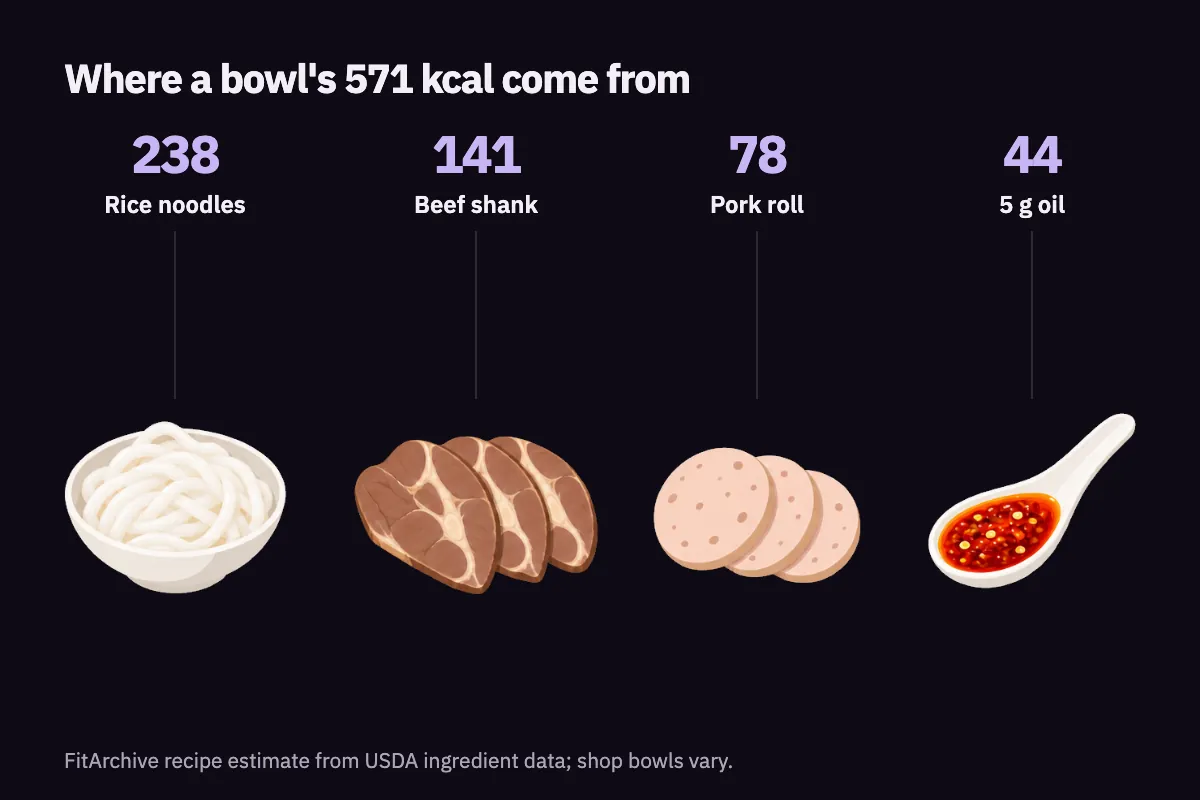
The noodles bring the most calories; the beef shank brings most of the protein.
Rows are rounded, so they can differ from the total by 1.
Two things stand out:
- The bún is the biggest single part. 220 g of cooked vermicelli is 238 kcal but only 4 g of protein. Asking for less bún changes the bowl more than skipping the broth.
- The oil is small by weight, not by calories. 5 g of oil is 44 kcal, about one small spoon of the red chili oil on top. A broth with a visible layer of fat, or a second spoon of sa tế, can push the real bowl well above this estimate.
Blood cake (huyết) and crab cake (chả cua) are not in this recipe and do not have values in the catalogue. If your bowl has them, the estimate is low.
Bún bò Huế calories for small, large, less noodles and more meat
FitArchive scales the whole dish for size (small ×0.75, large ×1.3). Bún bò Huế has two adjustable parts: the noodles and the beef shank, each of which can be set to less (×0.5) or more (×1.5). Applying the size and noodle factors:
| Bún bò Huế | Less noodles | Normal noodles | More noodles |
|---|---|---|---|
| Small bowl | 339 kcal, 30 g protein | 428 kcal, 32 g protein | 517 kcal, 33 g protein |
| Regular bowl | 452 kcal, 40 g protein | 571 kcal, 42 g protein | 690 kcal, 44 g protein |
| Large bowl | 588 kcal, 52 g protein | 742 kcal, 55 g protein | 897 kcal, 58 g protein |
And combining the noodle and meat settings for a regular bowl:
| Bún bò Huế, regular bowl | Less noodles | Normal noodles | More noodles |
|---|---|---|---|
| Less meat | 382 kcal, 29 g protein | 501 kcal, 31 g protein | 620 kcal, 33 g protein |
| Normal meat | 452 kcal, 40 g protein | 571 kcal, 42 g protein | 690 kcal, 44 g protein |
| More meat | 523 kcal, 52 g protein | 641 kcal, 54 g protein | 760 kcal, 56 g protein |
The noodles move calories a lot and protein very little. The meat moves both. For bún bò giò heo, the same factors give a small bowl of 484 kcal (38 g protein), a large bowl of 839 kcal (66 g protein), and a regular bowl with less noodles of 538 kcal (49 g protein).
Bún bò Huế calories with no noodles
Some people order the soup without bún, or eat the toppings and leave the noodles. FitArchive’s “less” setting halves the noodles; it does not remove them. Subtracting the whole 220 g noodle part from the recipe gives:
| Bún bò Huế without noodles | Calories | Protein |
|---|---|---|
| Small bowl | 250 kcal | 29 g |
| Regular bowl | 334 kcal | 38 g |
| Large bowl | 434 kcal | 50 g |
| Regular bowl, more meat | 404 kcal | 50 g |
These are subtractions from the recipe, not separate catalogue entries. The no-noodle bowl still has the pork roll, oil and broth, so it is not as low as a no-noodle phở (about 202 kcal and 34 g protein in the phở calories guide).
Bún bò Huế vs phở: which has more calories?
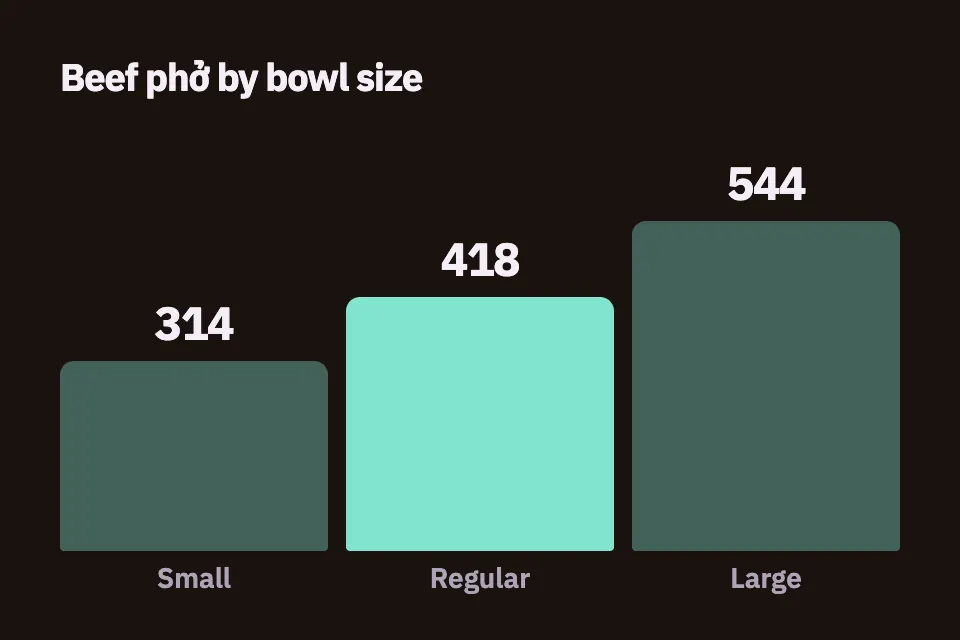
In this dataset a regular bún bò Huế is about 153 kcal more than a regular beef phở (571 against 418 kcal) and has about 4 g more protein (42 against 38 g). Both use the same beef broth value, so the gap comes from the other parts:
| Difference, regular bowl | Bún bò Huế | Beef phở | Gap |
|---|---|---|---|
| Noodles | 220 g bún, 238 kcal | 200 g phở noodles, 216 kcal | +22 kcal |
| Beef | 70 g shank, 141 kcal | 80 g lean beef, 126 kcal | +15 kcal |
| Steamed pork roll | 30 g, 78 kcal | none | +78 kcal |
| Oil | 5 g, 44 kcal | none | +44 kcal |
| Vegetables | 12 kcal | 18 kcal | 6 kcal less |
So the pork roll and the chili oil explain about four fifths of the difference. Per 100 kcal, beef phở gives about 9 g of protein and bún bò Huế about 7 g.
Is bún bò Huế fattening?
No single dish makes you gain or lose fat. Body weight follows your overall energy intake and expenditure across days and weeks. In a two-year trial of 811 adults, reduced-calorie diets led to similar weight loss whether they emphasized fat, protein or carbohydrate.
Bowl size does matter in the moment. In a lab study of 51 adults, people ate 30% more energy at lunch when served the largest portion than the smallest. A large bún bò Huế is about 742 kcal here, so the size you order is one of the bigger choices.
The broth also brings salt; these estimates do not cover sodium, and the World Health Organization recommends adults keep sodium below 2,000 mg a day. This is general information, not individual nutrition advice. For personal targets, ask a dietitian or doctor.
How much protein is in bún bò Huế, and how to order more or less
A regular bowl has about 42 g of protein for bún bò Huế, 51 g for bún bò giò heo and 31 g for bún bò Nam Bộ. Most of it comes from the meat, so adjust the meat to change protein and the noodles to change calories.
For more protein:
- Ask for extra meat (thêm thịt) instead of a large bowl. A regular bowl with more meat is about 641 kcal and 54 g protein; a large bowl is 742 kcal and 55 g. Same protein, about 100 kcal less.
- Trade noodles for meat. Less noodles and more meat is about 523 kcal and 52 g protein, fewer calories than the standard bowl with 10 g more protein.
- Pork knuckle adds protein and fat. Bún bò giò heo has 51 g protein but 23 g fat.
For a lighter bowl:
- Ask for less bún. About 119 kcal less for only 2 g less protein.
- Go easy on the sa tế. Each 5 g of oil is about 44 kcal.
- Fill up on the herb plate and bean sprouts. They add very few calories.
A review of protein and weight management found higher-protein meals give a modest increase in fullness and suggested at least about 25 to 30 g of protein per meal; every regular version above reaches that. Research on eating less overall while keeping muscle is in keeping muscle while cutting, and on eating more in how to gain weight. How much protein you need in a day is covered in the protein per day guide.
Common mistakes when logging bún bò Huế
- Using a generic entry with no recipe. If an entry does not list how much bún, meat and broth it assumes, you cannot tell whether it matches your bowl.
- Logging bún bò giò heo as plain bún bò. That misses about 75 kcal and 9 g protein in this model.
- Forgetting the add-ons. Blood cake, crab cake, an extra spoon of chili oil and a side of quẩy are not in the recipe. Log them separately or save the combination as your own food.
- Confusing bún bò Huế with bún bò Nam Bộ. They are different dishes with different numbers.
- Ignoring size. A large bowl is 30% more than a regular one, about 171 extra kcal.
Under-recording is common: in one small clinical study, adults who reported very low intakes had under-reported their food by about 47% on average. Logging at the meal, extras included, matters more than precise noodle weights.
Logging bún bò Huế in FitArchive
FitArchive is a free, private food and training log that works in the browser. Its food log has about 263 Vietnamese dishes built from weighed parts using USDA ingredient data, including bún bò Huế, bún bò giò heo and bún bò Nam Bộ. Pick small, regular or large, set the noodles and meat to less or more, and the day’s calories and protein update. For a no-noodle bowl, save the subtraction above as your own food. The demo has sample data. For another rice dish, see the cơm tấm calories guide; if you also lift, see logging food and workouts together.