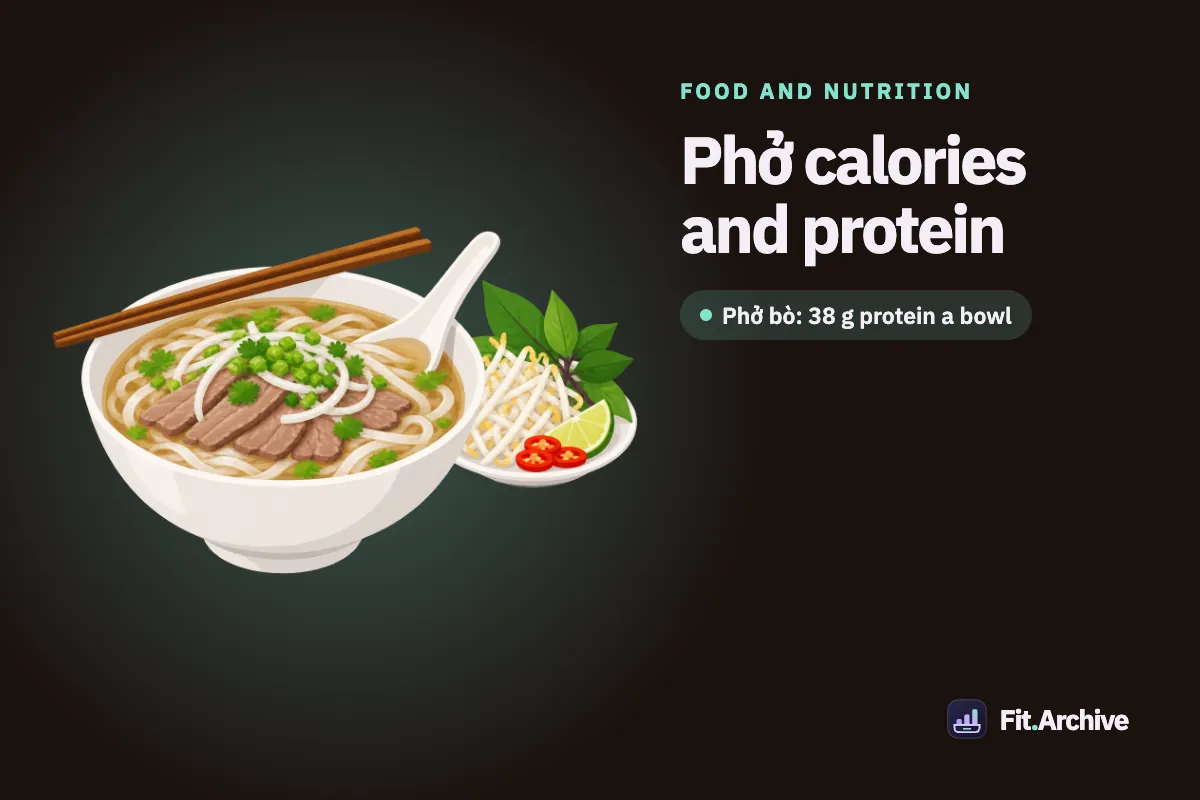
A regular bowl of beef phở (phở bò) is about 418 kcal and 38 g of protein in FitArchive’s recipe estimate, with 57 g of carbohydrate and 4 g of fat. That bowl weighs 785 g: 200 g of cooked rice noodles, 80 g of cooked lean beef, 450 g of beef broth, plus onion, spring onion and bean sprouts. About half of the calories come from the noodles, and almost two thirds of the protein comes from the beef.
Every number below is an estimate for the stated recipe weights, built from USDA ingredient data. Restaurant bowls vary: the amount of noodles and meat, whether the broth is skimmed, and extras such as an egg or fried dough all move the total. A laboratory study of 269 restaurant foods found about one in five contained at least 100 kcal more than stated, so treat any figure for an unweighed dish as a starting point.
How many calories are in pho? Every variant compared
These are FitArchive’s regular portions, rounded to whole kcal and grams.
| Dish (regular portion) | Weight | Calories | Protein | Carbs | Fat |
|---|---|---|---|---|---|
| Beef phở (phở bò) | 785 g | 418 kcal | 38 g | 57 g | 4 g |
| Rare beef phở (phở bò tái) | 785 g | 390 kcal | 33 g | 57 g | 3 g |
| Rare beef and flank (phở tái nạm) | 795 g | 434 kcal | 37 g | 57 g | 6 g |
| Well-done brisket phở (phở bò chín) | 785 g | 467 kcal | 38 g | 57 g | 9 g |
| Chicken phở (phở gà) | 755 g | 539 kcal | 38 g | 66 g | 12 g |
| Vegetarian phở (phở chay) | 820 g | 434 kcal | 18 g | 65 g | 13 g |
| Stir-fried phở with beef (phở xào bò) | 378 g | 526 kcal | 27 g | 62 g | 18 g |
| Dry chicken phở with sauce (phở gà trộn) | 403 g | 526 kcal | 31 g | 63 g | 16 g |
| Pan-crisped phở with beef (phở áp chảo) | 468 g | 562 kcal | 30 g | 60 g | 22 g |
| Lạng Sơn sour phở (phở chua) | 388 g | 628 kcal | 26 g | 75 g | 25 g |
| Phở rice-sheet roll (phở cuốn), 1 roll | 75 g | 82 kcal | 6 g | 13 g | 1 g |
For comparison from the same dataset, a regular bún bò Huế is about 571 kcal and 42 g protein, and hủ tiếu Nam Vang about 542 kcal and 36 g protein. The full list of 263 dishes is in the Vietnamese food calories and protein table.
Phở cuốn is logged per roll. As an example, a plate of 5 rolls would be about 411 kcal and 28 g protein, but plates vary, so count your rolls.
Where do the calories in beef pho come from?
This is the regular beef phở broken into its parts:
| Part | Weight | Calories | Share of kcal | Protein |
|---|---|---|---|---|
| Cooked rice noodles | 200 g | 216 kcal | 52% | 4 g |
| Cooked lean beef | 80 g | 126 kcal | 30% | 24 g |
| Beef broth | 450 g | 59 kcal | 14% | 9 g |
| Onion, spring onion, bean sprouts | 55 g | 18 kcal | 4% | 1 g |
| Total | 785 g | 418 kcal | 38 g |
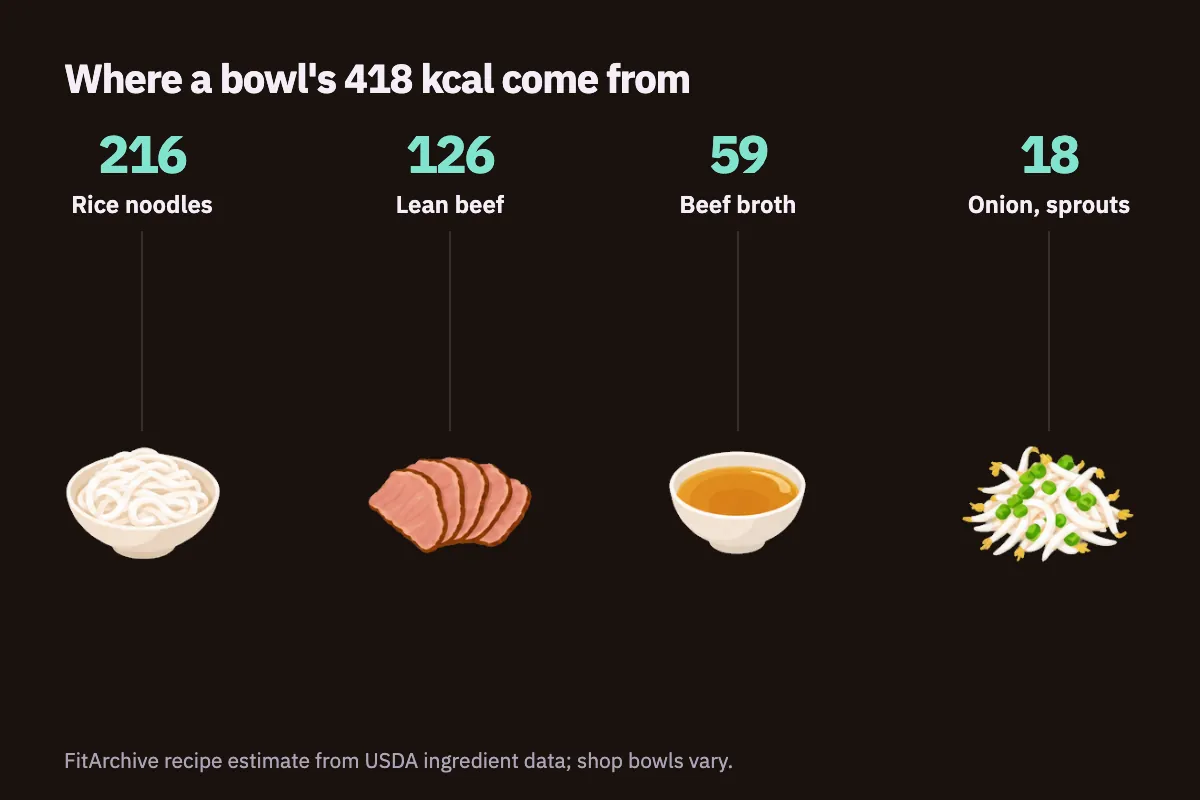
The noodles are the biggest lever on calories; the beef carries the protein.
Rows are rounded, so they can differ from the total by 1.
The noodles are the biggest lever on calories, so “less noodles” changes a bowl more than leaving the broth. The broth here is a lean beef broth with 0.5 g of fat. A rich broth with the fat left on, or a ladle of extra fat (nước béo), can add much more than the 59 kcal shown. If your bowl has a visible layer of fat, the estimate is probably low.
Pho calories for small, large, less noodles and no noodles
FitArchive scales the whole dish for size (small ×0.75, large ×1.3) and scales only the noodles for “less” (×0.5) or “more” (×1.5). Applying those factors to the beef phở recipe gives:
| Beef phở | Less noodles | Normal noodles | More noodles |
|---|---|---|---|
| Small bowl | 233 kcal, 27 g protein | 314 kcal, 28 g protein | 395 kcal, 29 g protein |
| Regular bowl | 310 kcal, 36 g protein | 418 kcal, 38 g protein | 526 kcal, 39 g protein |
| Large bowl | 403 kcal, 46 g protein | 544 kcal, 49 g protein | 684 kcal, 51 g protein |
A regular bowl with no noodles at all comes to about 202 kcal and 34 g protein (the recipe minus the 200 g noodle part), and a large bowl without noodles to about 263 kcal and 44 g protein. Notice that protein barely moves with the noodles, because rice noodles carry little protein. Calories move a lot.
Rare (tái), well-done (chín) or flank (nạm): which has fewer calories?
In this dataset the order is tái (390 kcal), plain beef (418 kcal), tái nạm (434 kcal) and chín brisket (467 kcal). The noodles and broth are identical, so the difference is only the meat:
- Tái: 80 g of rare beef is weighed raw. Raw meat contains more water than cooked meat, so 80 g raw provides less than 80 g cooked: 97 kcal and 19 g protein here, against 126 kcal and 24 g for 80 g of cooked lean beef. A tái bowl is not “lighter” because rare beef is special; it simply holds less cooked meat by weight.
- Chín: the brisket is fattier even with the fat trimmed, 174 kcal and 8 g fat for 80 g, so the bowl gains about 49 kcal over plain beef phở with almost the same protein.
- Tái nạm: 40 g rare beef plus 50 g cooked flank lands in between.
Fattier cuts such as gầu (fatty brisket) are not in this dataset; expect them to land above the chín estimate.
Why is chicken pho higher in calories than beef pho here?
People often expect chicken phở to be lighter. In this recipe set it comes out about 121 kcal higher, and the part breakdown shows why:
- Broth, about +104 kcal. The chicken broth value used is 162 kcal for 450 g, with 5.4 g fat and 15.8 g carbs, against 59 kcal and 0.5 g fat for the beef broth value.
- Meat, about +26 kcal. 80 g of cooked chicken meat is 152 kcal and 5.9 g fat, against 126 kcal and 2.7 g fat for lean beef.
- The beef bowl also includes 9 kcal of bean sprouts that the chicken bowl does not.
Protein is nearly the same (38 g each). So the gap comes from the broth and meat values chosen for these recipes, not from anything inherent to chicken. A skimmed chicken broth with lean breast meat would likely come in lower, and a fatty beef broth would push beef phở up. If you know how your usual shop makes its broth, that matters more than the label “beef” or “chicken”.
Is pho healthy for weight loss? Does it make you fat?
No single food makes you gain or lose fat. Body weight follows your overall energy intake and expenditure across days and weeks. In a two-year trial of 811 adults, reduced-calorie diets led to similar weight loss whether they emphasized fat, protein or carbohydrate.
By these estimates, a regular bowl of beef phở is a moderate meal with about 9 g of protein per 100 kcal, more than most dishes in the dataset. A review of protein and weight management found that higher-protein meals give a modest increase in fullness and suggested meals with at least about 25 to 30 g of protein; a regular beef bowl reaches that. The same review notes that longer-term results are mixed and depend largely on whether people stick to the diet.
If you are eating less overall, choose less noodles or a small bowl and keep the meat. If you are trying to eat more, a large bowl with more noodles is about 684 kcal and 51 g protein. The broth also brings salt; these estimates do not cover sodium, and the World Health Organization recommends adults keep sodium below 2,000 mg a day. This is general information, not individual nutrition advice.
How to make a bowl of pho higher in protein
- Order extra meat (thêm thịt) rather than a larger bowl. A large bowl adds noodles along with the meat.
- Pick cooked lean beef or tái nạm if you want protein without much extra fat. Chín brisket adds fat for almost no extra protein.
- Add an egg. FitArchive’s 50 g egg part is about 72 kcal and 6 g protein. Log it as its own food.
- Go easy on the noodles. Less noodles keeps almost all of the protein (36 g versus 38 g) while removing about 108 kcal.
How much protein you need in a day depends on your body weight and goals; the protein per day guide covers the research.
Common mistakes when logging pho
- Using a generic “pho” entry with no recipe. If an entry does not say how much noodles, meat and broth it assumes, you cannot tell whether it matches your bowl. Pick an entry that lists its parts.
- Ignoring bowl size. A large bowl is 30% more than a regular one in this model, about 126 extra kcal for beef phở.
- Forgetting the extras. Fried dough (quẩy), a poached egg, extra fat, hoisin sauce and chili sauce are not in the recipe. Log them separately.
- Logging tái nạm or chín as plain phở bò. The difference is small (16 to 49 kcal), but it adds up if phở is a weekly habit.
- Assuming chicken is always lighter. As shown above, it depends on the broth and the cut.
Under-recording is common: in one small clinical study, adults who reported very low intakes had under-reported their food by about 47% on average. Logging at the meal, extras included, matters more than precise noodle weights.
Logging pho in FitArchive
FitArchive is a free, private food and training log that works in the browser. Its food log has about 263 Vietnamese dishes built from weighed parts using USDA ingredient data, including every phở above. Log a bowl as small, regular or large, set the noodles to less or more, and the day’s calories and protein update. For a no-noodle bowl, save the subtraction above as your own food. The demo has sample data. For the other Vietnamese staple, see the bánh mì calories guide; if you also lift, see logging food and workouts together.