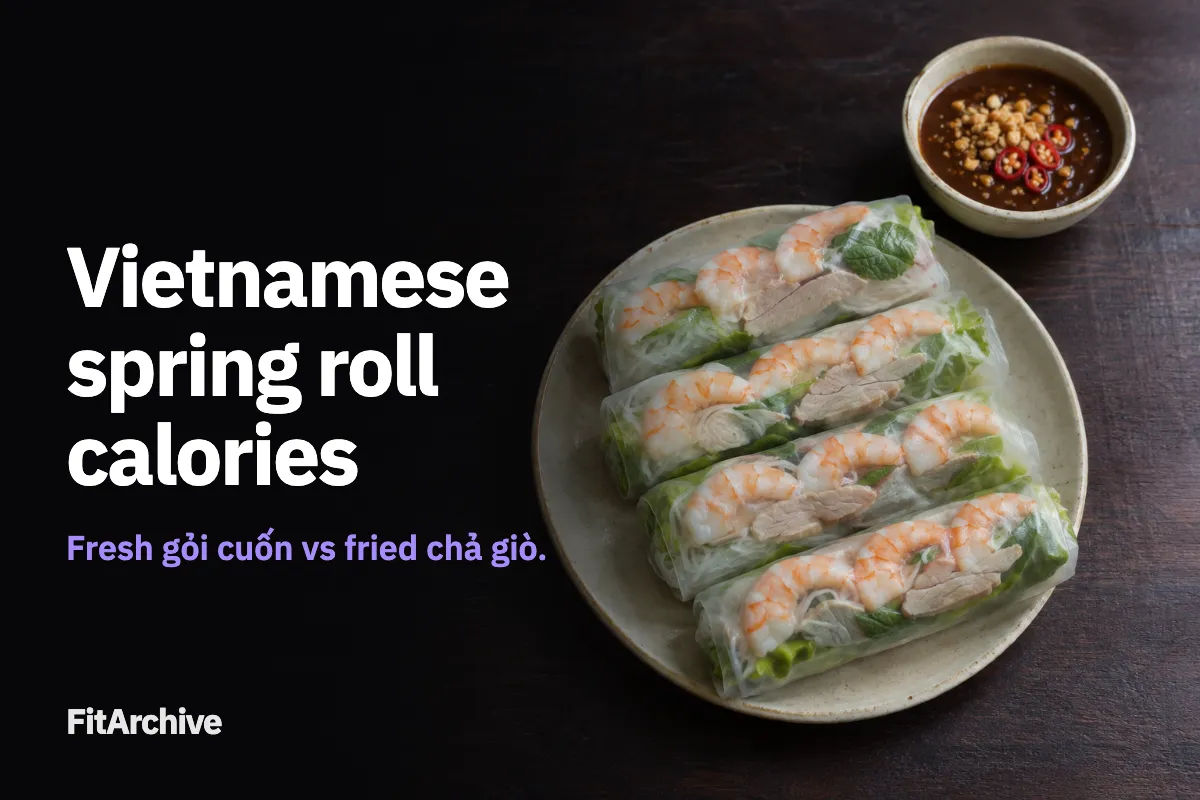
A fresh Vietnamese spring roll (gỏi cuốn) with shrimp and lean pork is about 102 kcal and 8 g of protein before sauce. Made with pork belly, the same roll is about 141 kcal. The dipping sauce adds about 17 kcal (sweet fish sauce) or about 40 kcal (peanut hoisin) per roll. A medium fried spring roll (chả giò, called nem rán in the north) is about 165 kcal and 7 g of protein, and about a third of that is frying oil. So three fresh rolls with fish sauce come to about 360 kcal and 25 g of protein, while five fried rolls come to about 910 kcal.
All numbers are estimates from USDA ingredient data and a verified rice paper label, for the roll weights we give. They are ingredient totals, not lab-measured rolls. Rolls differ a lot in size, filling and sauce, so read them as a starting point. A laboratory study of 269 restaurant foods found about one in five contained at least 100 kcal more than stated.
Calories per Vietnamese spring roll
| Roll | Calories, no sauce | With fish sauce | With peanut hoisin | Protein |
|---|---|---|---|---|
| Fresh roll, shrimp only (75 g) | 93 kcal | 110 kcal | 133 kcal | 6.5 g |
| Fresh roll, shrimp and lean pork (80 g) | 102 kcal | 119 kcal | 142 kcal | 8.2 g |
| Fresh roll, shrimp and pork belly (80 g) | 141 kcal | 158 kcal | 181 kcal | 8.2 g |
| Large restaurant fresh roll, belly (112 g) | 191 kcal | 208 kcal | 231 kcal | 11.1 g |
| Fried roll (chả giò), small finger size (about 30 g) | 99 kcal | 116 kcal | not usual | 3.5 g |
| Fried roll (chả giò / nem rán), medium (about 55 g) | 165 kcal | 182 kcal | not usual | 7.0 g |
| Fried roll, medium, air-fried | 125 kcal | 142 kcal | not usual | 7.0 g |
For comparison, USDA has its own entry for a fresh roll with meat or shrimp and rice paper: 80 kcal and 4 g protein for a 71 g roll. Its roll is smaller and has less filling than a typical Vietnamese restaurant roll, so we use our own weights above.
Some Vietnamese websites say a gỏi cuốn is only 40 to 70 kcal. That seems too low: a 22 cm sheet of rice paper alone is about 34 to 50 kcal dry, before any noodles, shrimp or pork.
What is inside a fresh spring roll?
This is the shrimp and pork belly roll from the table, the classic southern gỏi cuốn tôm thịt.
| Part | Grams | Calories | Protein |
|---|---|---|---|
| Rice paper (dry weight) | 10 | 34 | 0.2 g |
| Rice vermicelli (bún), cooked | 25 | 27 | 0.4 g |
| Shrimp, about 1.5 medium, halved | 15 | 18 | 3.4 g |
| Boiled pork belly | 15 | 61 | 4.0 g |
| Lettuce, herbs, garlic chives | 15 | 2 | 0.2 g |
| Total | 80 | 141 | 8.2 g |
The pork belly is 43% of the calories. Swap it for lean pork and the roll drops to about 102 kcal with the same protein. That one change does more than anything else in the roll.
Fresh vs fried spring rolls
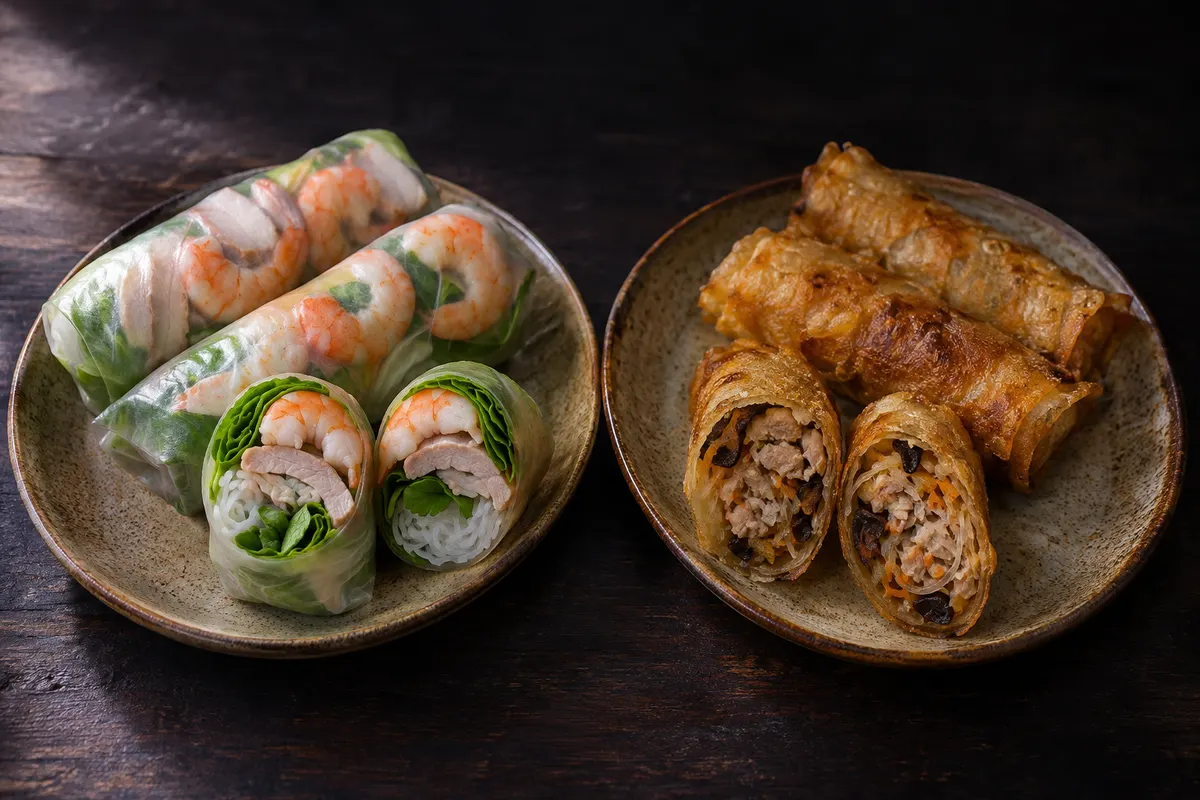
Fresh rolls on the left, fried rolls on the right. The fried roll is smaller but has more calories.
| Per roll | Fresh, lean pork | Fried, medium |
|---|---|---|
| Weight | 80 g | 55 g |
| Calories | 102 kcal | 165 kcal |
| Calories per 100 g | about 128 kcal | about 300 kcal |
| Protein | 8.2 g | 7.0 g |
| Protein per 100 kcal | about 8 g | about 4 g |
| Fat | 0.9 g | 10.7 g |
The fried roll is about 63 kcal more for about 30% less food. The main reason is oil: we assume about 6 g of oil is absorbed per medium roll, which is 53 kcal. That figure is an assumption, since frying conditions vary. It gives our roll about 19 g of fat per 100 g, somewhat above USDA’s fried egg rolls (about 14 to 15 g), which have a leaner filling.
Air-frying with a light brush of oil (about 1.5 g) brings a medium chả giò down to about 125 kcal in our model. It is still more than a lean fresh roll, but closer.
How many calories in 2, 3 or 5 spring rolls?
| Plate | Calories | Protein |
|---|---|---|
| 2 fresh rolls, lean pork, fish sauce | 238 kcal | 17 g |
| 3 fresh rolls, lean pork, fish sauce | 357 kcal | 25 g |
| 3 fresh rolls, pork belly, peanut hoisin | 543 kcal | 28 g |
| 4 fresh rolls, lean pork, fish sauce | 476 kcal | 34 g |
| 5 fried rolls, medium, fish sauce | 910 kcal | 36 g |
Spring roll dipping sauce calories: peanut hoisin vs fish sauce
- Peanut hoisin sauce (tương đậu phộng): about 40 kcal for one roll’s share (10 g hoisin and 3 g roasted peanuts). At the same mix, a whole small dish of 40 to 50 g is roughly 120 to 150 kcal, less if the shop thins it with water.
- Sweet fish sauce (nước mắm chua ngọt): about 17 kcal per roll’s share, nearly all from sugar.
So for three rolls, the sauce choice is a difference of about 70 kcal. Fish sauce brings a lot of salt, though, so do not drink it.
Are Vietnamese spring rolls good for weight loss?
Fresh rolls with shrimp and lean pork are one of the better choices on a Vietnamese menu if you are eating less: about 8 g of protein per 100 kcal, plenty of vegetables, and little fat. They are not free food. The rice paper and noodles are carbohydrate, and the sauce adds up.
No single food decides fat loss. In a two-year trial of 811 adults, reduced-calorie diets led to similar weight loss whatever their mix of fat, protein and carbohydrate. What matters is the total over days and weeks. If you are cutting, see keeping muscle while cutting. This is general information, not individual nutrition advice.
How to eat spring rolls for more protein
- Order shrimp, or shrimp and lean pork, instead of pork belly.
- Choose sweet fish sauce over peanut hoisin, or use the hoisin sparingly.
- Count rolls, not plates. Four lean fresh rolls give about 34 g of protein for under 500 kcal.
- If rolls are a full meal, add a second protein, such as grilled chicken or eggs, rather than fried rolls.
- At home, air-fry chả giò and blot them on paper.
A review on protein and appetite suggested about 25 to 30 g of protein per meal for fullness, which is about three lean rolls. For daily totals, see how much protein per day.
Spring rolls in other dishes
Fried rolls often come inside other meals. A plate of bún chả with one nem rán gains about 165 kcal, which is covered in the bún chả guide. Bún thịt nướng chả giò and bún nem are also in the Vietnamese food calorie table. For another fried dish wrapped in herbs and rice paper, see bánh xèo calories.
Common mistakes when logging spring rolls
- Using a 50 kcal number for a full-size roll. The rice paper alone is about 34 kcal.
- Forgetting the sauce, or counting it twice. Check whether your entry already includes it.
- Logging a plate when the number of rolls varies. Log per roll.
- Treating fried and fresh as the same food. The fried one is about 60% more per roll.
In one small clinical study, adults who reported very low intakes had under-reported their food by about 47% on average. Small snacks like rolls are easy to miss.
Log spring rolls in FitArchive
FitArchive’s food log lists gỏi cuốn and chả giò as per-roll entries, built from weighed parts with USDA ingredient data and a verified rice paper label. The gỏi cuốn entry is 147 kcal and already includes a peanut hoisin dip (10 g hoisin and 3 g peanuts), so do not log the sauce again. Chả giò is 174 kcal for a 52 g roll without sauce. Enter how many rolls you ate, and the day’s calories and protein update next to your workouts. Vegetarian versions are not in the list yet, so save your own if you eat them often.
Get FitArchive free on iPhone or Android. Food logging and your history are free, with no ads. More on how it handles Vietnamese food: counting calories in Vietnamese food.