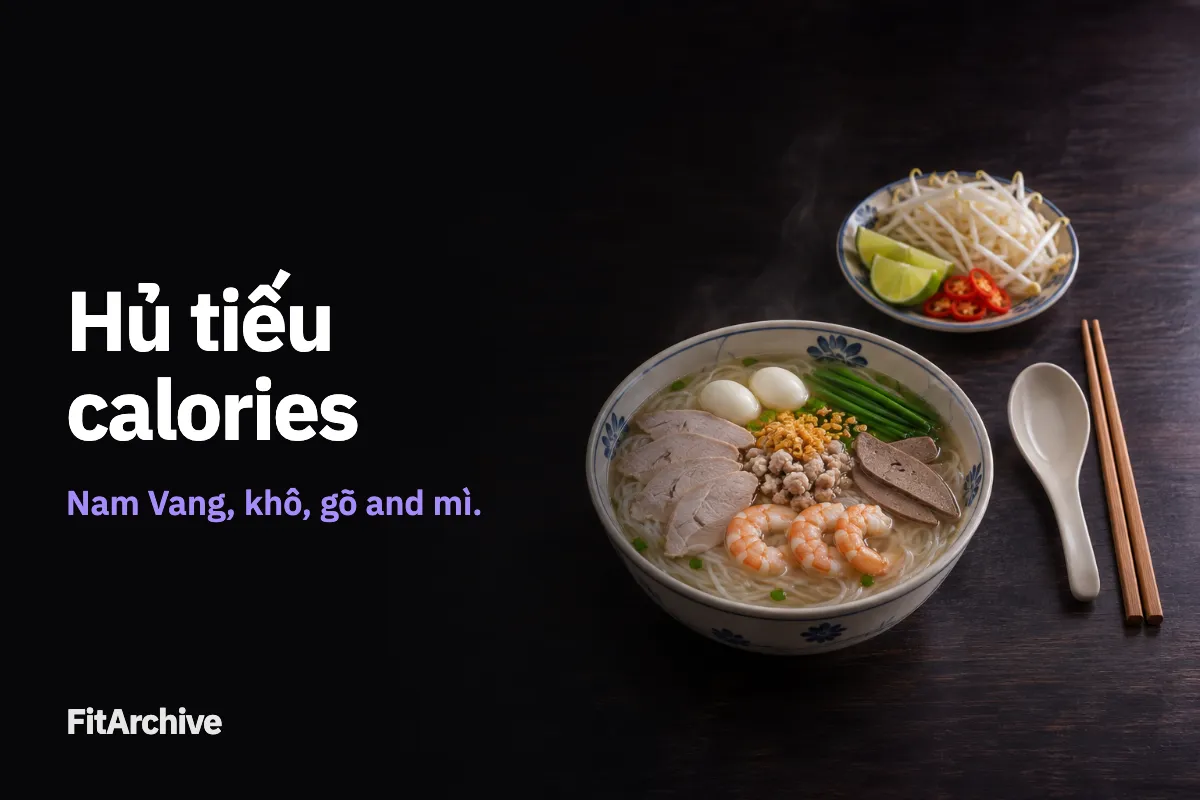
A regular bowl of hủ tiếu Nam Vang is about 542 kcal and 36 g of protein in FitArchive’s recipe: 200 g of cooked rice noodles, 50 g of lean pork, 30 g of shrimp and 450 g of broth. A fully topped bowl with minced pork, pork liver and two quail eggs is about 640 kcal and 44 g of protein in our component estimate. The dry version (hủ tiếu khô) is about the same, around 540 to 650 kcal, because the sauce and garlic oil replace the broth. The smaller street-cart bowl (hủ tiếu gõ) is about 430 to 500 kcal. Noodles bring about a third of the calories; the broth, toppings and fried garlic oil bring the rest.
These numbers are estimates from USDA ingredient data for the weights we state. Shops vary in how many noodles they use, how fatty the bone broth is, whether they add sugar to it, and how much fried garlic oil goes on top. A laboratory study of 269 restaurant foods found about one in five had at least 100 kcal more than stated. Use these as a starting point for an unweighed bowl.
How many calories are in hủ tiếu? Every version compared
FitArchive’s recipes (regular size) for the common versions:
| Hủ tiếu (regular) | Weight | Calories | Protein | Carbs | Fat |
|---|---|---|---|---|---|
| Hủ tiếu Nam Vang (soup) | 775 g | 542 kcal | 36 g | 67 g | 13 g |
| Hủ tiếu khô (dry, soup on the side) | 643 g | 539 kcal | 33 g | 67 g | 15 g |
| Hủ tiếu gõ (street cart) | 715 g | 498 kcal | 26 g | 70 g | 12 g |
| Hủ tiếu mì (rice and egg noodles) | 740 g | 534 kcal | 38 g | 71 g | 10 g |
| Hủ tiếu xào (stir-fried) | 482 g | 513 kcal | 32 g | 60 g | 16 g |
| Hủ tiếu xào gà (stir-fried with chicken) | 489 g | 538 kcal | 38 g | 62 g | 14 g |
| Hủ tiếu bò kho (beef stew) | 740 g | 664 kcal | 41 g | 67 g | 25 g |
| Hủ tiếu chay (vegetarian, fried tofu) | 815 g | 480 kcal | 16 g | 71 g | 16 g |
FitArchive’s Nam Vang recipe has no liver, quail eggs or minced pork. Many shops add all three, so we also built a topped version below. You will often see “about 400 kcal” for a bowl on Vietnamese health sites, usually without a weight or a source. That fits a bowl with fewer noodles and toppings, and only if you leave much of the broth.
What is in a fully topped bowl of hủ tiếu Nam Vang?
| Part | Grams | Calories | Protein | Share of calories |
|---|---|---|---|---|
| Rice noodles (hủ tiếu), cooked | 200 | 216 | 3.6 g | 34% |
| Sliced lean pork | 30 | 43 | 7.9 g | 7% |
| Minced pork (thịt băm) | 25 | 74 | 6.4 g | 12% |
| Shrimp, 2 | 25 | 30 | 5.7 g | 5% |
| Pork liver | 20 | 33 | 5.2 g | 5% |
| Quail eggs, 2 | 18 | 28 | 2.3 g | 4% |
| Broth (USDA stock as a proxy) | 450 | 162 | 11.3 g | 25% |
| Fried garlic and scallion oil | 5 | 44 | 0 g | 7% |
| Bean sprouts, garlic chives | 40 | 12 | 1.1 g | 2% |
| Total | 813 | 643 | 43.5 g |
Two things stand out. The broth is about a quarter of the calories in this model, so how much you drink matters, though shop broths range from lean to quite fatty. And the 5 g spoon of fried garlic oil on top adds about 44 kcal, more than either the shrimp (30 kcal) or the liver (33 kcal).
A note on the noodles: hủ tiếu noodles are often a chewy rice noodle, sometimes with tapioca. We use USDA’s cooked rice noodle (108 kcal per 100 g) as the closest match. If you weigh dry noodles at home, they are roughly three times denser than cooked, so “100 g of hủ tiếu” means very different things dry or cooked. Check which one a number refers to.
Hủ tiếu khô vs soup: is the dry version lighter?
No. In our model a regular hủ tiếu khô with a small bowl of broth on the side is about 650 kcal, the same as the topped soup. The dry noodles are tossed in garlic or scallion oil (about 10 g, 88 kcal) and a sweet soy-based sauce (about 8 g of sugar, 31 kcal). Those replace most of the broth calories.
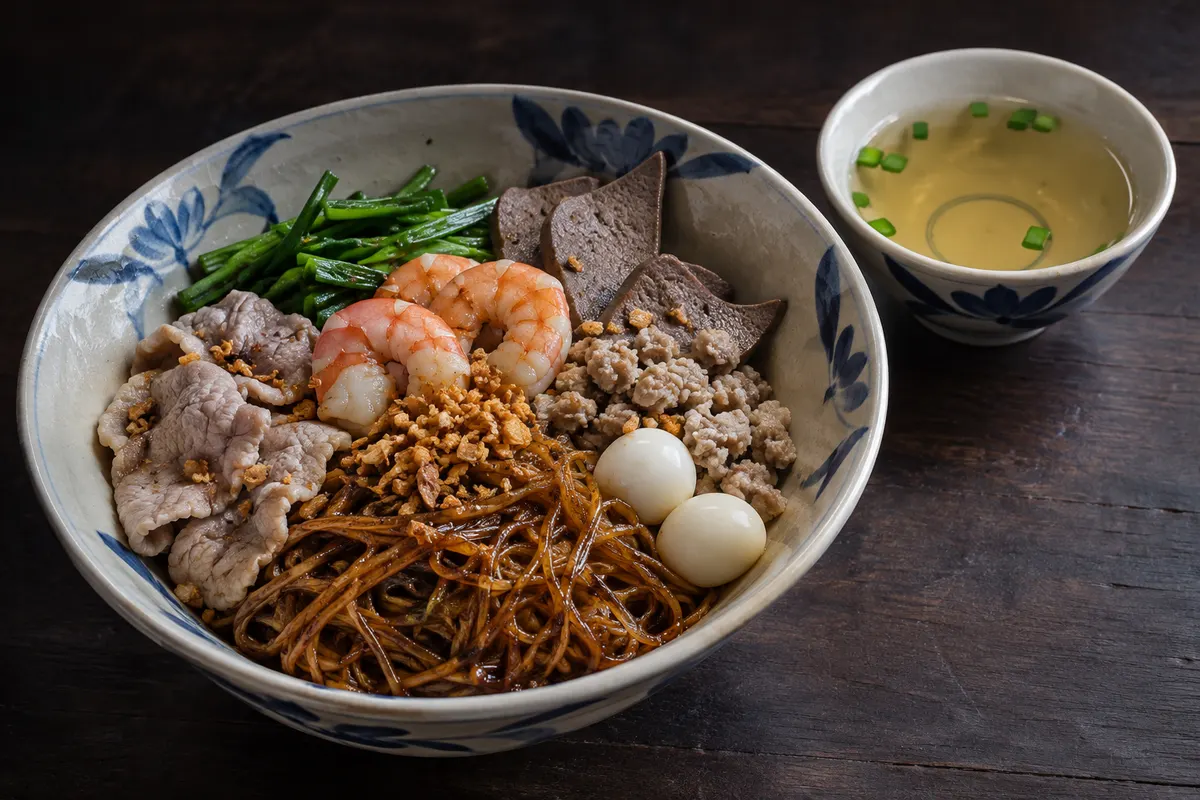
Hủ tiếu khô: the sauce and oil replace the broth, so the calories end up about the same.
Hủ tiếu gõ, mì and the rest
- Hủ tiếu gõ is the street-cart bowl: fewer noodles, fewer toppings, less broth. Our component estimate for a small cart bowl is about 434 kcal and 25 g protein; FitArchive’s recipe, with more noodles, is 498 kcal. It is the lightest of the meat bowls but also lower in protein, so add an egg or extra meat if it is a main meal.
- Hủ tiếu mì uses half rice noodles and half egg noodles. Egg noodles are about 138 kcal per 100 g cooked against 108 for rice noodles, so the bowl is a little higher if everything else is equal.
- Hủ tiếu bò kho is the heaviest at 664 kcal, because of the stewed beef chuck.
- Hủ tiếu chay is 480 kcal but only 16 g of protein.
Instant hủ tiếu packs are a separate product: read the label, and see instant noodles and training for how to make a pack into a better meal.
How much protein is in hủ tiếu?
| Bowl | Protein | Protein per 100 kcal |
|---|---|---|
| Nam Vang, FitArchive recipe | 36 g | about 6.6 g |
| Nam Vang, fully topped | 44 g | about 6.8 g |
| Hủ tiếu mì | 38 g | about 7.1 g |
| Hủ tiếu gõ | 26 g | about 5.2 g |
| Hủ tiếu chay | 16 g | about 3.4 g |
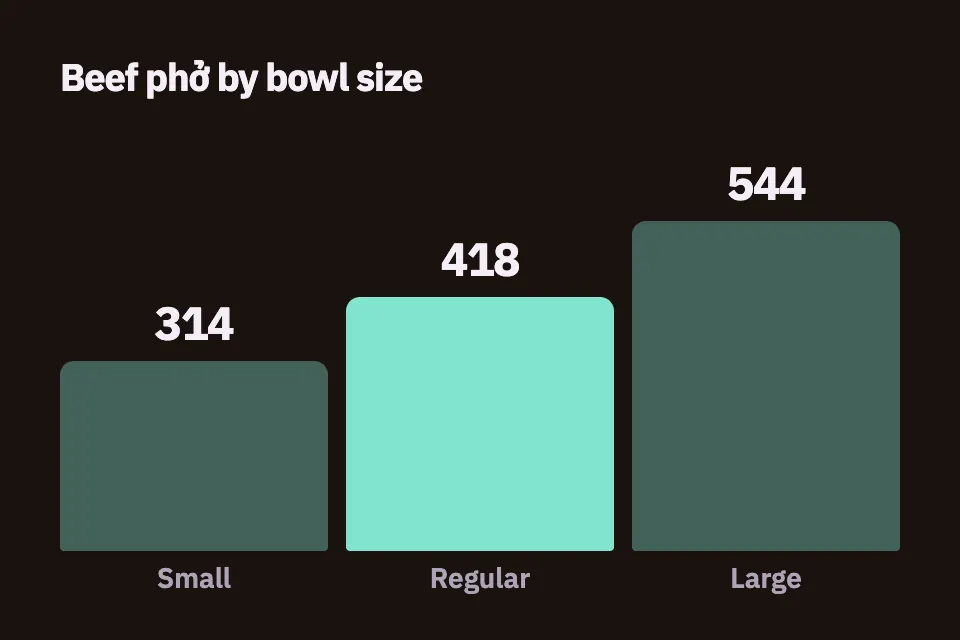
Most meat versions reach the roughly 25 to 30 g per meal that a review on protein and appetite suggested for fullness. For comparison, beef phở in our phở guide is 418 kcal and 38 g protein, so it gives more protein for fewer calories. For daily needs, see how much protein per day.
Sizes and adjustments
Using FitArchive’s Nam Vang recipe (small is 75%, large 130%):
| Bowl | Calories | Protein |
|---|---|---|
| Small | 406 kcal | 27 g |
| Regular | 542 kcal | 36 g |
| Large | 704 kcal | 47 g |
| Regular, half the noodles | 434 kcal | 34 g |
| Regular, no noodles | 326 kcal | 32 g |
And from the fully topped bowl:
| Change | Calories | Protein |
|---|---|---|
| 100 g fewer noodles (ít hủ tiếu) | −108 kcal | −1.8 g |
| Leave half the broth | −81 kcal | −5.7 g |
| Skip the liver | −33 kcal | −5.2 g |
| Skip the quail eggs | −28 kcal | −2.3 g |
| 50 g extra lean pork (thêm thịt nạc) | +72 kcal | +13.1 g |
| Extra spoon of garlic oil (5 g) | +44 kcal | 0 g |
Is hủ tiếu fattening?
A bowl of hủ tiếu is a normal-sized meal. Weight change follows your total intake over days and weeks, not one dish. In a two-year trial of 811 adults, reduced-calorie diets led to similar weight loss whatever their mix of fat, protein and carbohydrate. Eating it at night does not change its calories either.
Two things to watch: portion size and salt. In a lab study of 51 adults, people ate 30% more at lunch when served the largest portion. And broth is salty. The World Health Organization recommends adults keep sodium under 2,000 mg a day, so leaving the last of the broth helps there too. This is general information, not individual nutrition advice.
How to order hủ tiếu when cutting
- Ask for fewer noodles and more lean meat (ít hủ tiếu, thêm thịt nạc). In our model that is about 36 kcal less and 11 g more protein.
- Leave the last third to half of the broth.
- Skip the extra fried garlic oil (ít mỡ hành).
- Do not pick the dry version to save calories: in the app recipes the soup and dry bowls are 542 and 539 kcal, so the noodles, toppings and oil matter more.
Together, fewer noodles, extra lean pork and half the broth take the topped bowl from about 643 to about 526 kcal and raise protein to about 49 g. More on eating less while training is in keeping muscle while cutting. For other Saigon breakfasts, see cơm tấm calories.
Common mistakes when logging hủ tiếu
- Logging hủ tiếu khô as a “light” option. It is about the same as the soup.
- Using a 400 kcal number for a topped bowl. Liver, eggs and minced pork add about 100 kcal.
- Weighing dry noodles and using a cooked number, or the reverse.
- Forgetting add-ons such as a fried dough stick (giò cháo quẩy) or an extra egg.
In one small clinical study, adults who reported very low intakes had under-reported their food by about 47% on average. Logging at the table, extras included, matters more than exact weights.
Log hủ tiếu in FitArchive
FitArchive’s food log has hủ tiếu Nam Vang, khô, gõ, mì, xào, xào gà, bò kho and chay as ready-made dishes, each built from weighed parts with USDA ingredient data. Pick small, regular or large, set the noodles or meat to less or more, and the day’s calories and protein update next to your training. If your shop adds liver and quail eggs, add them or save the bowl as your own food. The Vietnamese food calorie table shows how hủ tiếu compares with other dishes, and bún bò Huế is another noodle soup worth comparing.
Get FitArchive free on iPhone or Android. Food logging and your history are free, with no ads.