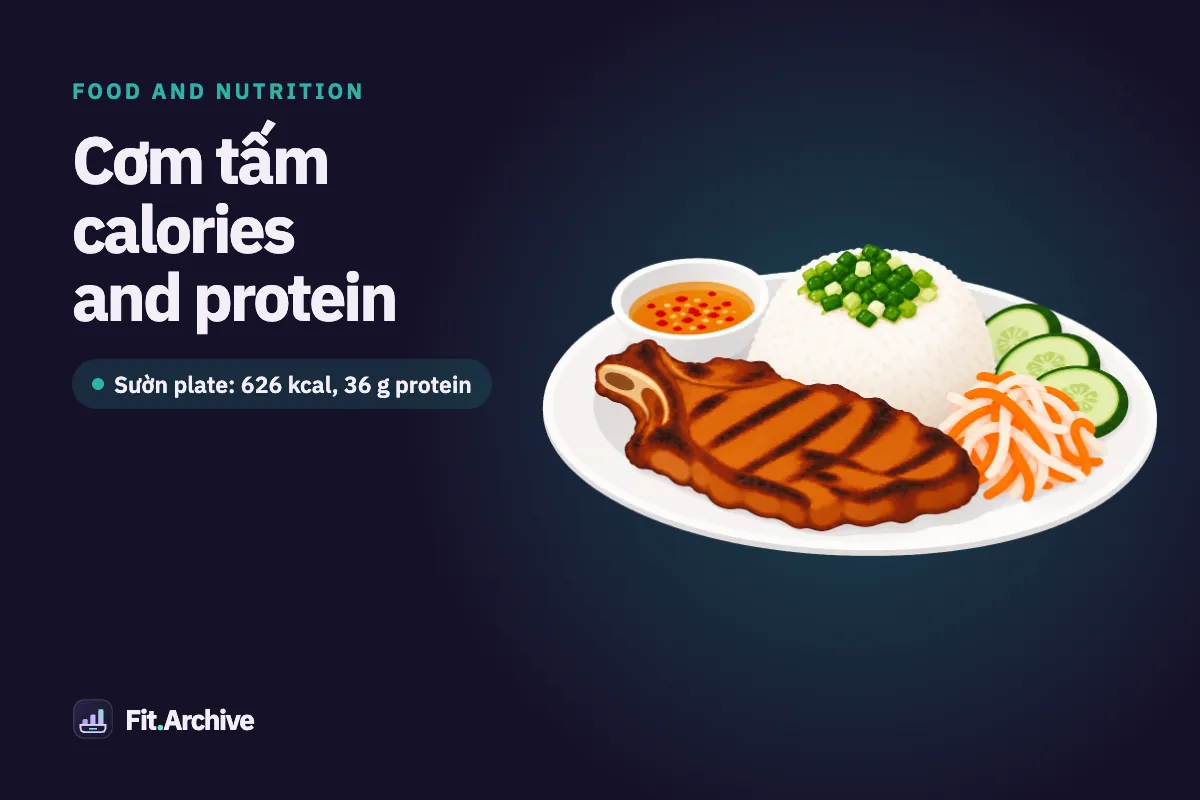
A regular plate of cơm tấm sườn, Vietnamese broken rice with a grilled pork chop, is about 626 kcal and 36 g of protein in FitArchive’s recipe estimate, with 70 g of carbohydrate and 21 g of fat. That 395 g plate is 200 g of cooked rice, a 120 g grilled pork chop, a fish sauce dressing with 10 g of sugar, 5 g of oil, and cucumber and carrot. The rice and the pork chop each supply a little over two fifths of the calories; almost all of the protein comes from the pork.
Every number below is an estimate for the stated recipe weights, built from USDA ingredient data. Real plates vary with the size and fat of the chop, how much rice the shop scoops (plus any free refill), how much scallion oil and sweet fish sauce go on top, and extras such as shredded pork skin (bì), chả or a fried egg. A laboratory study of 269 restaurant foods found about one in five contained at least 100 kcal more than stated, so treat any figure for an unweighed plate as a starting point.
How many calories are in com tam? Every plate compared
These are FitArchive’s regular portions, rounded to whole kcal and grams.
| Cơm tấm (regular plate) | Weight | Calories | Protein | Carbs | Fat |
|---|---|---|---|---|---|
| Grilled pork chop (cơm tấm sườn) | 395 g | 626 kcal | 36 g | 70 g | 21 g |
| Pork chop and fried egg (sườn trứng) | 450 g | 741 kcal | 42 g | 70 g | 31 g |
| Grilled chicken (gà nướng) | 360 g | 547 kcal | 31 g | 64 g | 17 g |
| Steamed egg meatloaf (cơm tấm chả) | 361 g | 538 kcal | 24 g | 65 g | 19 g |
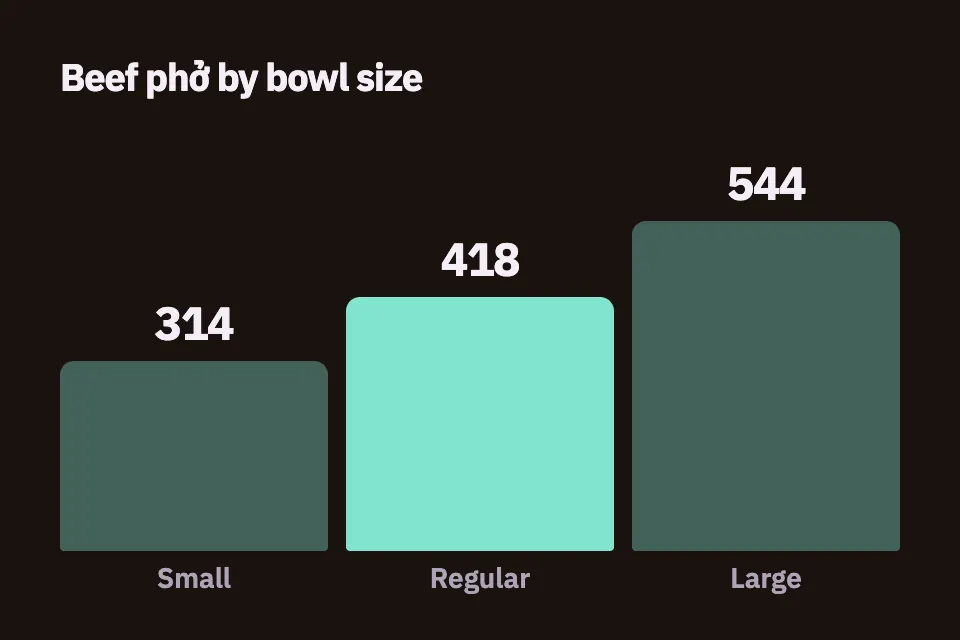
In the same dataset, cơm gà (chicken rice) is about 655 kcal and 39 g protein and cơm thịt kho trứng (braised pork belly and egg) about 782 kcal and 20 g. A regular bowl of beef phở is 418 kcal and 38 g, so cơm tấm sườn carries about 50% more calories for slightly less protein. All 263 dishes are in the Vietnamese food calories and protein table.
Two notes: the chicken plate uses a value for chicken cooked with its skin (219 kcal and 25 g protein per 100 g), as no matching grilled value was available. The chả is a steamed egg meatloaf of 45 g cooked ground pork, 45 g egg and a little wood ear mushroom, which is why its protein is lowest.
Where do the calories in com tam come from?
This is the regular cơm tấm sườn broken into its parts:
| Part | Weight | Calories | Share of kcal | Protein |
|---|---|---|---|---|
| Cooked rice | 200 g | 260 kcal | 42% | 5 g |
| Grilled pork chop | 120 g | 266 kcal | 43% | 29 g |
| Fish sauce dressing: fish sauce | 10 g | 4 kcal | 1% | 1 g |
| Fish sauce dressing: sugar | 10 g | 39 kcal | 6% | 0 g |
| Oil (scallion oil, grilling) | 5 g | 44 kcal | 7% | 0 g |
| Cucumber and carrot | 50 g | 13 kcal | 2% | 0 g |
| Total | 395 g | 626 kcal | 36 g |
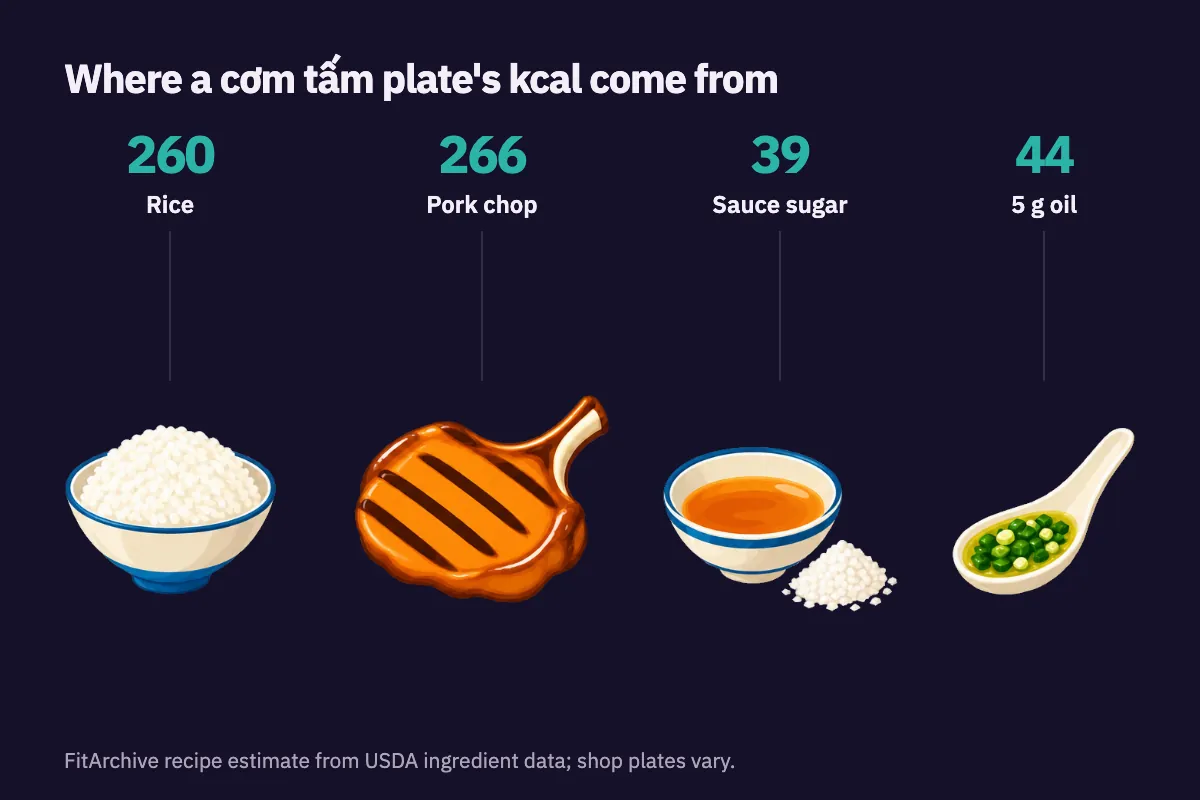
Rice and pork chop are almost equal on calories.
Rows are rounded, so they can differ from the total by 1.
- The pork chop and the rice are almost equal on calories. A 120 g chop is 266 kcal with 16 g of fat, so a thin chop changes the plate as much as a smaller scoop of rice.
- The sweet fish sauce is mostly sugar. The fish sauce is 4 kcal; the 10 g of sugar in it is 39 kcal. Pouring a full dish of nước mắm over the rice adds sugar, not just salt.
- Oil is small in grams but not in calories. 5 g is 44 kcal. The sườn trứng recipe uses 10 g because the egg is fried, so the egg raises the plate by about 116 kcal: 72 kcal for the egg and 44 kcal for the extra oil.
Bì, extra chả, pickled vegetables (đồ chua) and the small bowl of soup many shops serve are not in these recipes, so a “sườn bì chả” combo will be higher than the sườn plate.
Com tam calories for small, large, less rice and more rice
FitArchive scales the whole dish for size (small ×0.75, large ×1.3) and scales only the rice for “less rice” (×0.5) or “more rice” (×1.5). Applying those factors to cơm tấm sườn gives:
| Cơm tấm sườn | Less rice | Normal rice | More rice |
|---|---|---|---|
| Small plate | 372 kcal, 25 g protein | 469 kcal, 27 g protein | 567 kcal, 29 g protein |
| Regular plate | 496 kcal, 33 g protein | 626 kcal, 36 g protein | 756 kcal, 38 g protein |
| Large plate | 644 kcal, 43 g protein | 813 kcal, 46 g protein | 982 kcal, 50 g protein |
For cơm tấm sườn trứng, the same factors give 556 kcal (31 g protein) small, 964 kcal (54 g) large, and 611 kcal (39 g) for a regular plate with less rice. Each 100 g of rice is about 130 kcal, so a free refill is worth logging. With no rice at all, the regular sườn plate is about 366 kcal and 30 g protein.
The pork chop can also be set to less or more in the app, with the same ×0.5 and ×1.5 factors. On a regular plate:
| Regular cơm tấm sườn | Less rice | Normal rice | More rice |
|---|---|---|---|
| Less pork chop | 362 kcal, 18 g protein | 492 kcal, 21 g protein | 622 kcal, 24 g protein |
| Normal pork chop | 496 kcal, 33 g protein | 626 kcal, 36 g protein | 756 kcal, 38 g protein |
| More pork chop | 629 kcal, 48 g protein | 759 kcal, 50 g protein | 889 kcal, 53 g protein |
How many calories are in 100 g of com tam?
Dividing each plate’s total calories by its total weight gives an average for 100 g of the plate as served:
| Cơm tấm, average per 100 g of plate | Calories | Protein |
|---|---|---|
| Cơm tấm sườn | 158 kcal | 9 g |
| Cơm tấm sườn trứng | 165 kcal | 9 g |
| Cơm tấm gà nướng | 152 kcal | 9 g |
| Cơm tấm chả | 149 kcal | 7 g |
This is an average across rice, meat, dressing and vegetables, not a value for any one part. The cooked white rice the recipes use for broken rice is 130 kcal and 3 g protein per 100 g; the grilled pork chop is 222 kcal and 24 g. If you weigh only the rice, use the rice value; if you weigh the whole plate, the averages above are a fair shortcut.
How much protein is in com tam?
In these recipes a regular plate has 24 to 42 g of protein: 36 g for sườn, 42 g with an egg, 31 g for chicken and 24 g for chả. Per 100 kcal, cơm tấm sườn gives about 6 g of protein, against about 9 g for a bowl of beef phở. The plate is not low in protein; it simply carries more calories from rice, oil and fat alongside it.
A review of protein and weight management found that higher-protein meals give a modest increase in fullness and suggested meals with at least about 25 to 30 g of protein. The sườn, sườn trứng and chicken plates reach that; the chả plate falls just short. How much protein you need in a day depends on your body weight and goals; the protein per day guide covers the research.
Does com tam make you fat? Fitting a plate into a cut or a bulk
No single dish makes you gain or lose fat; body weight follows total energy intake and expenditure over weeks. In a two-year trial of 811 adults, reduced-calorie diets led to similar weight loss whether they emphasized fat, protein or carbohydrate, so a rice plate is not a problem in itself. What matters is how it fits the rest of your day.
If you are eating less overall, general options that keep most of the protein:
- Ask for less rice (ít cơm). In this recipe it removes about 130 kcal and only 3 g of protein.
- Skip the refill and go easy on the scallion oil and sweet fish sauce. Together the oil and dressing sugar are about 83 kcal on a regular plate.
- Choose sườn over sườn trứng, or count the egg. The fried egg plus its oil adds about 116 kcal.
If you are trying to eat more, a large plate with more rice is about 982 kcal and 50 g protein, or about 1,133 kcal as sườn trứng. For what research has found on surpluses and deficits, see keeping muscle while cutting and gaining weight when you are skinny. Personal targets are a question for a dietitian or doctor.
The fish sauce also brings salt; these estimates do not cover sodium, and the World Health Organization recommends adults keep sodium below 2,000 mg a day. This is general information, not individual nutrition advice.
Higher-protein com tam swaps
- Ask for extra pork chop (thêm sườn) rather than an egg. On a regular plate, more pork chop is about 759 kcal and 50 g protein; adding an egg is 741 kcal and 42 g. For similar calories, the extra meat brings 8 g more protein.
- Trade rice for meat. Less rice with more pork chop is about 629 kcal and 48 g protein, almost the same calories as the default plate (626 kcal) with 12 g more protein.
- Pick sườn or chicken over chả. The chả plate has 24 g protein against 36 g for sườn, for about 88 kcal less.
- Ask for skinless chicken breast if the shop has it. As an example calculation, swapping the recipe’s 100 g of chicken with skin for 100 g of cooked skinless breast (165 kcal and 31 g protein in FitArchive’s catalogue) gives about 493 kcal and 37 g protein.
Common mistakes when logging com tam
- Using a generic “broken rice” entry with no recipe. If it does not say how much rice and meat it assumes, you cannot tell whether it matches your plate.
- Forgetting the free rice refill. Half a plate’s worth of extra rice is about 130 kcal.
- Leaving out bì, chả, đồ chua and the soup. Log them separately or save your usual combo as your own food.
- Mixing up the cut. Cơm tấm sườn is usually a pork chop (sườn cốt lết). Cooked spareribs (sườn non) are 397 kcal per 100 g in FitArchive’s catalogue against 222 kcal for grilled pork chop, so a sườn non plate will be noticeably higher.
Under-recording is common: in one small clinical study, adults who reported very low intakes had under-reported their food by about 47% on average. Logging at the meal, extras included, matters more than weighing every grain of rice.
Logging com tam in FitArchive
FitArchive is a free, private food and training log that works in the browser. Its food log has about 263 Vietnamese dishes built from weighed parts using USDA ingredient data, including the four cơm tấm plates above. Log a plate as small, regular or large, set the rice and the pork chop or meat to less or more, and the day’s calories and protein update. The demo has sample data. If a milk tea comes with the meal, see milk tea calories; for the other staples, see pho calories and bánh mì calories.