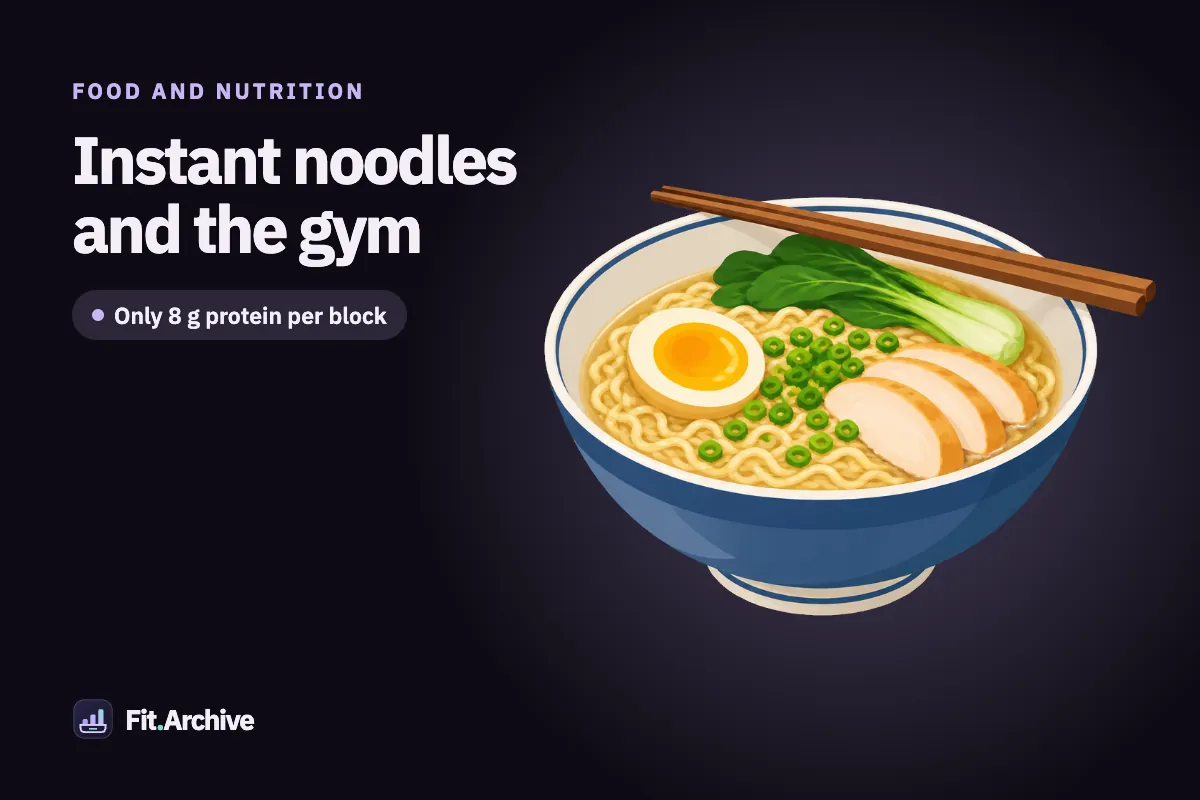
Yes, you can eat instant noodles while training for muscle. One pack now and then will not undo your progress. The problem is what a pack lacks: a 75 g block is about 330 kcal but only 8 g of protein in FitArchive’s catalogue estimate, and instant noodles are usually high in sodium. If noodles are dinner, add protein (eggs, tofu, lean meat or shrimp) and some vegetables, and go easy on the seasoning. With one egg, the bowl comes to about 403 kcal and 14 g of protein. With 100 g of chicken breast and 100 g of bok choy added, it reaches about 580 kcal and 47 g.
The numbers below come from the FitArchive food catalogue, which uses USDA ingredient data, rounded to whole kcal and grams. Brands differ in block size, frying method and seasoning, so the label on your pack is the better source for that pack. Treat these figures as estimates for the stated weights.
How many calories are in instant noodles?
The catalogue entry “Instant noodles, dry” is 440 kcal per 100 g. Its default serving is a whole 81 g package, and the “Mì gói trứng” dish (instant noodles with egg) uses a 75 g dry block. Rows marked as computed are our arithmetic from catalogue values, not separate catalogue entries.
| Instant noodles | Weight | Calories | Protein | Carbs | Fat |
|---|---|---|---|---|---|
| Dry noodles, per 100 g | 100 g | 440 kcal | 10 g | 60 g | 18 g |
| One package (catalogue serving) | 81 g | 356 kcal | 8 g | 49 g | 14 g |
| One block (the dish’s recipe) | 75 g | 330 kcal | 8 g | 45 g | 13 g |
| Mì gói trứng: block, 1 egg, spring onion | 130 g | 403 kcal | 14 g | 46 g | 18 g |
| Mì gói trứng with a second egg (computed) | 180 g | 475 kcal | 20 g | 46 g | 23 g |
| Mì gói trứng plus 100 g bok choy (computed) | 230 g | 415 kcal | 16 g | 48 g | 18 g |
Weights are the dry block plus the egg and cooked vegetables; the cooking water adds weight but no calories. The catalogue entry does not show how much of the seasoning and oil sachets it reflects, which is one more reason to check your own label.
So how many calories are in a pack of instant noodles? About 330 to 360 kcal for a typical 75 to 81 g block. Two blocks, which is a common dinner, come to about 660 kcal and 15 g of protein.
How many calories in instant noodles with egg?
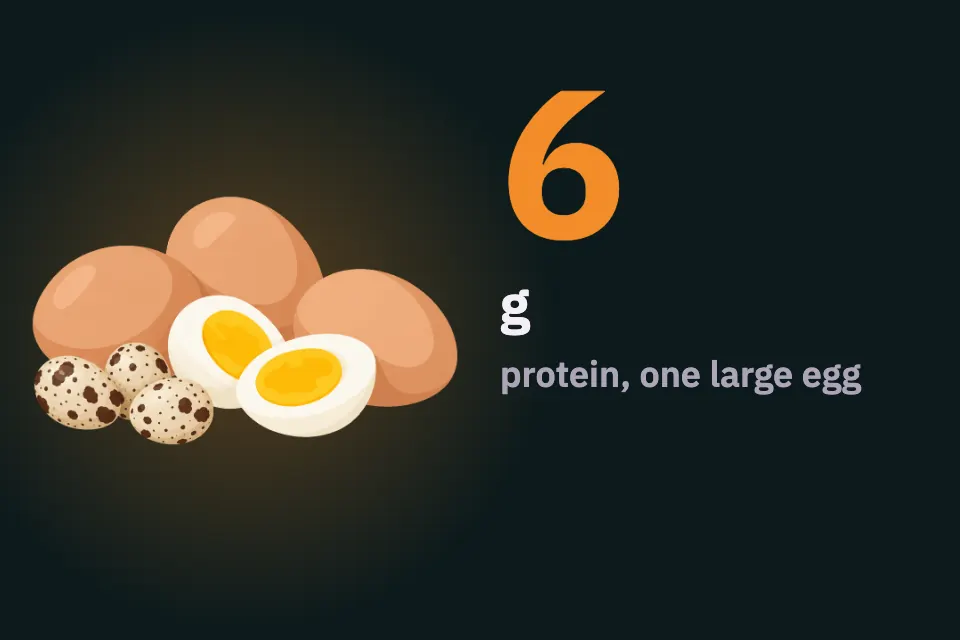
One egg (50 g) adds about 72 kcal and 6 g of protein, so the catalogue’s Mì gói trứng lands at about 403 kcal and 14 g of protein. A second egg brings it to about 475 kcal and 20 g. A fried egg cooked in oil adds the oil on top of that, so log the oil separately if you fry.
Notice where the calories come from in the block itself: about 55% from carbohydrate and about 36% from fat. Most instant noodles are fried during manufacturing (non-fried versions exist), which is why a dry block carries 13 g of fat before you add anything.
Are instant noodles bad for bodybuilding?
Not in the sense of being harmful in a single meal. The issue is protein per calorie. Compare protein for every 100 kcal, using the same catalogue:
| Food | Protein per 100 kcal |
|---|---|
| Instant noodle block, dry | 2 g |
| Mì gói trứng (block, 1 egg) | 3 g |
| Mì gói trứng plus 100 g chicken breast and 100 g bok choy (computed) | 8 g |
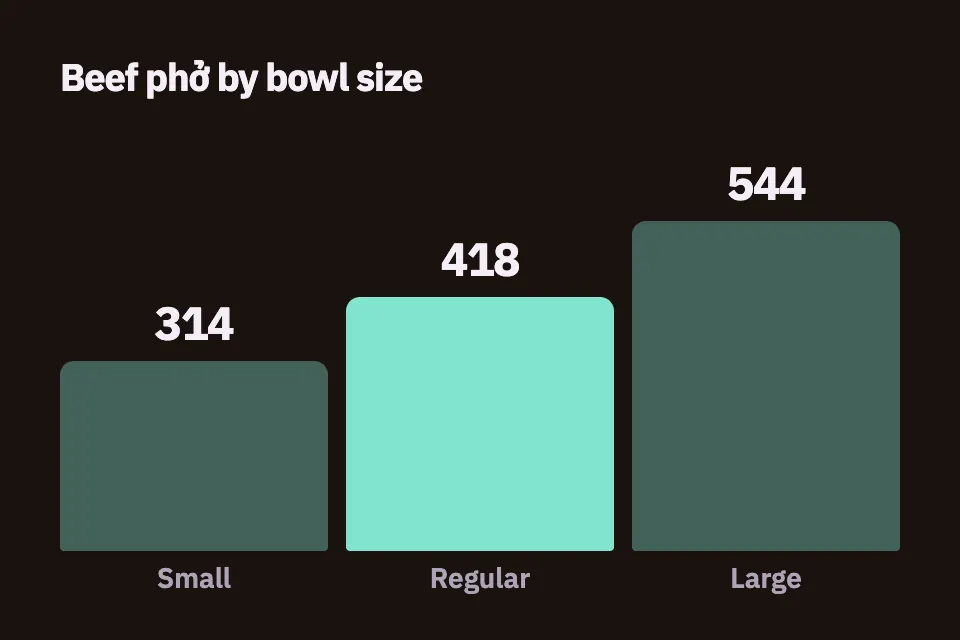
| Beef phở, regular bowl | 9 g |
| Cooked chicken breast | 19 g |
A lifter who often fills up on plain noodles can end up with plenty of energy and not much protein. Total daily protein is what matters most for muscle gain: in a 2018 meta-analysis of 49 trials, extra protein added modest gains on top of resistance training. The protein per day guide covers how much that means for you; this article does not repeat it.
There is also observational evidence about frequent intake. In a Korean survey of 10,711 adults, eating instant noodles at least twice a week was associated with a higher prevalence of metabolic syndrome in women, but not in men. It was a cross-sectional study, so it shows an association at one point in time, not that noodles caused it. A reasonable reading is that instant noodles work better as an occasional meal than as a daily staple.
How much sodium is in instant noodles?
The FitArchive catalogue does not record sodium, and sodium varies a lot between brands and flavours, so read the nutrition label on your pack. Labels list sodium in mg (natri) or salt in g; WHO’s conversion is 1 g of salt to 400 mg of sodium.
For context, the World Health Organization recommends that adults eat less than 2,000 mg of sodium a day (under 5 g of salt), and estimates that adults worldwide averaged about 4,278 mg a day in 2021. WHO’s own tips include limiting commercial sauces and instant products. Compare the sodium on your label with that 2,000 mg reference to see how much of a day’s limit one pack uses.
Practical ways to cut it:
- Use part of the seasoning sachet. Whatever sodium is in the sachet, using half of it means eating less of it.
- Leave some of the broth. Sodium dissolves into the soup, so drinking all of it means consuming more of it.
- Do not add extra fish sauce, soy sauce or seasoning powder on top of the sachet.
- Add flavour with fresh herbs, chilli, lime or garlic instead.
If you have high blood pressure, kidney disease or a doctor has told you to limit salt, follow their advice.
Can you eat instant noodles after the gym?
Yes. There is nothing special about noodles after training, good or bad. A meta-analysis of protein timing studies found that total protein intake, not eating protein right around the workout, best explained differences in muscle growth. Even so, a post-workout meal is a convenient place to get a solid serving of protein. The International Society of Sports Nutrition suggests about 20 to 40 g of protein per meal, spread every 3 to 4 hours. A plain block (8 g) or one egg (14 g in total) falls short of that.
Here is what common additions bring, from the catalogue:
| Add to the bowl | Calories | Protein |
|---|---|---|
| 1 egg, 50 g | 72 kcal | 6 g |
| Firm tofu, 100 g | 144 kcal | 17 g |
| Cooked chicken breast, 100 g | 165 kcal | 31 g |
| Boiled lean pork, 100 g | 143 kcal | 26 g |
| Cooked lean beef, 100 g | 157 kcal | 30 g |
| Cooked shrimp, 100 g | 119 kcal | 23 g |
| Bok choy (cải thìa), cooked, 100 g | 12 kcal | 2 g |
| Water spinach (rau muống), cooked, 100 g | 20 kcal | 2 g |
Two computed examples built from these values:
| Example bowl | Weight | Calories | Protein | Carbs | Fat |
|---|---|---|---|---|---|
| Mì gói trứng plus 100 g chicken breast and 100 g bok choy | 330 g | 580 kcal | 47 g | 48 g | 22 g |
| Mì gói trứng plus 100 g firm tofu and 100 g bok choy | 330 g | 559 kcal | 33 g | 51 g | 27 g |
The chicken version has more than three times the protein of the plain egg bowl for about 177 extra kcal. Leftover chicken, a block of tofu from the market or a few boiled eggs kept in the fridge are the easiest ways to do this on a busy night. For more on meals around training, see what to eat before and after the gym.
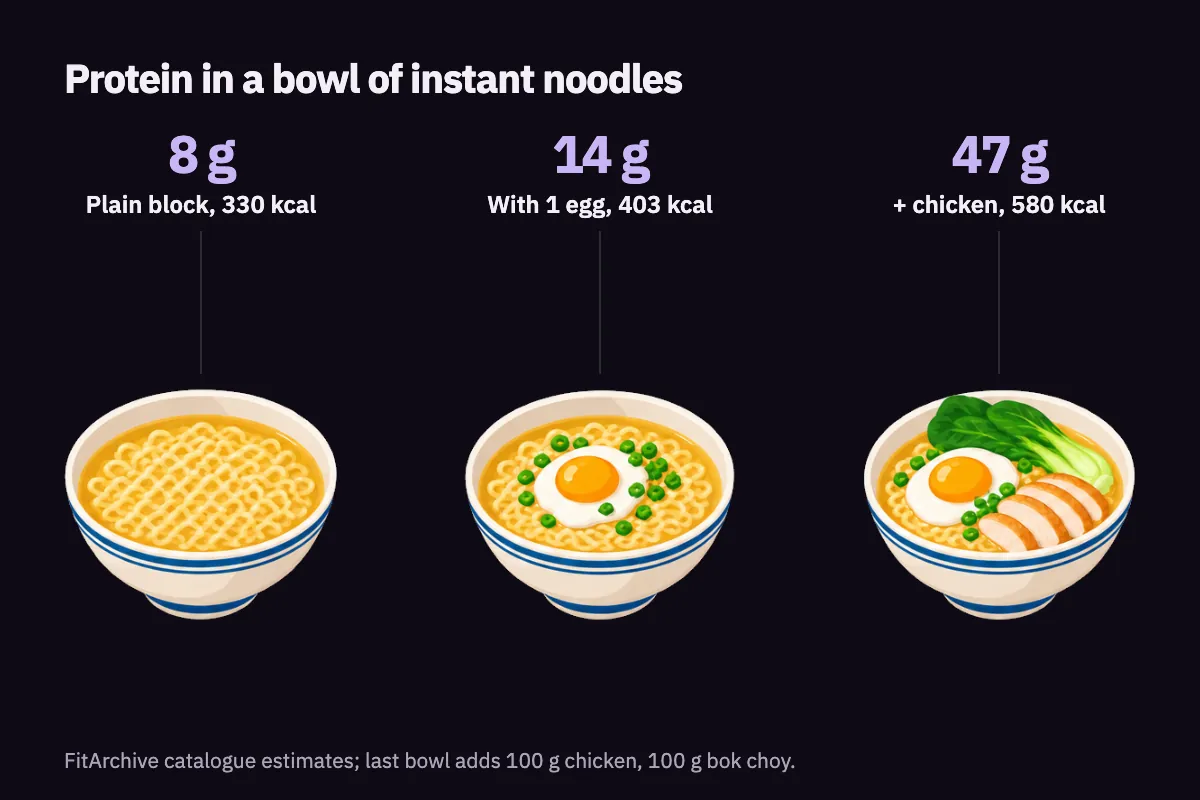
Adding a protein food changes the bowl more than anything else.
Do instant noodles make you fat or ruin your gains?
No single food decides either. Body weight follows your total energy intake and expenditure over weeks; in a two-year trial of 811 adults, reduced-calorie diets led to similar weight loss whatever their mix of fat, protein and carbohydrate. One pack of noodles at about 330 kcal fits into most days.
What can matter is the pattern. In a small inpatient trial of 20 adults, people offered an ultra-processed diet ate about 500 kcal a day more than on an unprocessed diet, and gained weight over two weeks. Instant noodles are a typical ultra-processed food, but that trial tested a whole diet, not noodles alone, and it was short. If you eat noodles often, the realistic risks are a day that runs higher in calories than you intended and lower in protein and vegetables.
For muscle, what you eat across the week matters far more than any one meal: enough total energy for your goal, enough protein, and training that progresses. The what to eat to build muscle guide shows how full days of Vietnamese meals add up.
Common mistakes with instant noodles
- Counting two blocks as one. Many people cook two at a time. That doubles calories and sodium, while protein stays low.
- Calling noodles with one egg a high-protein meal. At 14 g it is closer to a snack’s worth of protein.
- Forgetting the oil. A fried egg, fried shallots or extra oil from the flavour sachet all add fat. Log what you add.
- Drinking all the broth with the whole sachet. That way you consume all of the sachet’s sodium.
- Using a generic entry instead of the label. Brands and flavours differ; the weight and nutrition panel on your pack are more accurate than any average.
- Making noodles the default. As an occasional quick meal, they are fine. As a daily habit, they crowd out protein and vegetables.
This is general information, not personal nutrition or medical advice.
Logging instant noodles in FitArchive
FitArchive is a free, private food and training log that works in the browser. Search “Instant noodles, dry” and log it by the weight printed on your pack, or by the 81 g package serving. The catalogue also has the dish Mì gói trứng (75 g block, one egg, spring onion); its egg can be set to less or more, and for a second whole egg or added chicken or tofu, log those as their own foods. The day’s calories and protein update as you go. FitArchive does not track sodium, so check that on the label. The demo has sample data, and the Vietnamese food calories table lists the other dishes.