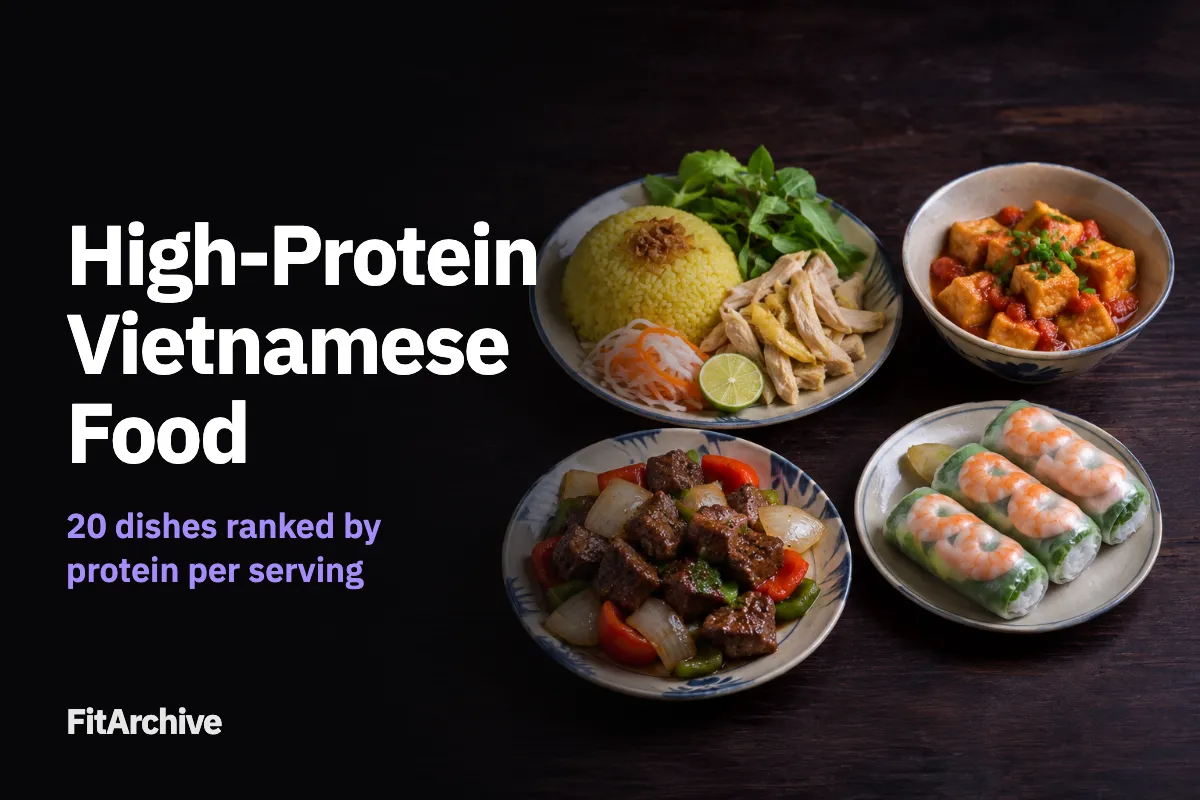
The highest-protein Vietnamese food at a normal serving is a share of seafood hotpot (67 g of protein), bún bò Huế with pork knuckle (51 g), crispy chicken rice, cơm gà xối mỡ (46 g), and shaking beef with rice, cơm bò lúc lắc (43 g), in FitArchive’s recipe estimates. For protein per calorie, beef phở is the standout among everyday meals: 38 g of protein in 418 kcal. Most noodle soups and rice plates land between 30 and 45 g, while bánh xèo, xôi xéo and braised pork belly with rice stay at 20 g or less.
Below: the top 20 ranked, the next tier and the low-protein surprises, the best picks for each meal, what to say when you order, a 100-120 g protein day built from street food, a budget angle and vegetarian options.
This is general information, not personal nutrition or medical advice. If you have kidney disease or another medical condition, are pregnant, or are under 18, follow your doctor’s or dietitian’s advice instead.
High-protein Vietnamese food: the top 20 dishes ranked
Every dish number comes from the same dataset: FitArchive’s recipe estimates at the regular size, calculated from specified ingredient weights, with ingredient values from USDA FoodData Central and cited manufacturer labels (the TH true FOOD chả lụa label in bún bò Huế and bánh cuốn, the Blue Dragon rice paper label in nem nướng); the method and an example are at the end. The gỏi cuốn figures are the exception: they use the separate 80 g lean-pork roll with fish sauce from our spring roll guide, not the catalogue’s default 98 g roll. They describe a stated recipe and portion, not a measured restaurant meal. Protein per 100 kcal is protein × 100 ÷ kcal, worked out from the rounded values, so it can differ by 0.1 from the figure in a dish’s own article.
| # | Dish | Regular serving | kcal | Protein (g) | Protein per 100 kcal |
|---|---|---|---|---|---|
| 1 | Lẩu hải sản (seafood hotpot, one person’s share) | 950 g | 673 | 67 | 10.0 |
| 2 | Bún bò Huế with pork knuckle (bún bò giò heo) | 795 g bowl | 646 | 51 | 7.9 |
| 3 | Cơm gà xối mỡ (crispy chicken rice) | 398 g plate | 692 | 46 | 6.6 |
| 4 | Cơm bò lúc lắc (shaking beef with rice) | 435 g plate | 634 | 43 | 6.8 |
| 5 | Bò kho (beef stew, no bread) | 440 g bowl | 483 | 42 | 8.7 |
| 6 | Bún bò Huế | 815 g bowl | 571 | 42 | 7.4 |
| 7 | Cơm tấm sườn trứng (pork chop and fried egg) | 450 g plate | 741 | 42 | 5.7 |
| 8 | Mì Quảng gà (chicken Mì Quảng) | 532 g bowl | 622 | 41 | 6.6 |
| 9 | Bún đậu (vermicelli, fried tofu and 50 g lean pork) | 395 g serving | 571 | 40 | 7.0 |
| 10 | Mì hoành thánh (wonton noodle soup) | 690 g bowl | 611 | 39 | 6.4 |
| 11 | Cơm gà (chicken rice) | 518 g plate | 655 | 39 | 6.0 |
| 12 | Phở bò (beef phở) | 785 g bowl | 418 | 38 | 9.1 |
| 13 | Phở gà (chicken phở) | 755 g bowl | 539 | 38 | 7.1 |
| 14 | Hủ tiếu Nam Vang | 775 g bowl | 542 | 36 | 6.6 |
| 15 | Cơm tấm sườn (grilled pork chop) | 395 g plate | 626 | 36 | 5.8 |
| 16 | Bún cá (fish noodle soup) | 741 g bowl | 545 | 35 | 6.4 |
| 17 | Nem nướng (grilled pork sausage rolls) | 265 g serving | 529 | 33 | 6.2 |
| 18 | Bún riêu (crab noodle soup) | 820 g bowl | 563 | 33 | 5.9 |
| 19 | Bún thịt nướng (grilled pork vermicelli) | 407 g bowl | 614 | 32 | 5.2 |
| 20 | Bún bò Nam Bộ (stir-fried beef vermicelli) | 340 g bowl | 482 | 31 | 6.4 |
The hotpot is a group meal, so treat one person’s 950 g share as rough. For a meal you order alone, bún bò Huế with pork knuckle leads.
All 60 common dishes, with carbs and fat, are in the Vietnamese food calories and protein table.
Which Vietnamese dish has the most protein?
- Most protein per serving: rice plates with a big piece of meat and the meatier noodle soups reach 40 to 51 g, but most cost 600 to 750 kcal.
- Most protein per calorie: beef phở (9.1 g per 100 kcal) and bò kho (8.7) lead the full meals. Broth adds some protein (about 9 g in the beef phở recipe) for few calories.
- Why rice plates are heavier: a regular plate has 200 g of cooked rice (260 kcal), plus oil, sugary dressing and often a fattier cut.
The next tier, and dishes that look filling but carry little protein
Many favourites fall just outside the top 20, and a few popular meals are low in protein for their calories. These matter if you eat out every day.
| Dish | Serving | kcal | Protein (g) | Protein per 100 kcal |
|---|---|---|---|---|
| Bún chả (lean pork shoulder) | 382 g | 538 | 30 | 5.6 |
| Bánh mì gà (chicken) | 208 g sandwich | 469 | 29 | 6.2 |
| Bánh mì thịt nướng (grilled pork) | 208 g sandwich | 418 | 28 | 6.7 |
| Cháo gà (chicken rice porridge) | 393 g bowl | 372 | 26 | 7.0 |
| Gỏi cuốn, 3 rolls with lean pork and fish sauce | 3 × 80 g rolls | 357 | 25 | 7.0 |
| Bánh mì thịt (classic pork) | 210 g sandwich | 526 | 25 | 4.8 |
| Xôi gà (sticky rice with chicken) | 253 g pack | 361 | 21 | 5.8 |
| Bánh cuốn (pork filling and chả lụa) | 325 g plate | 508 | 20 | 3.9 |
| Cơm thịt kho trứng (rice with braised pork belly and egg) | 404 g plate | 782 | 20 | 2.6 |
| Bánh xèo (one crispy pancake) | 250 g | 586 | 16 | 2.7 |
| Xôi xéo (mung bean and fried shallots) | 235 g pack | 309 | 7 | 2.3 |
Fat-heavy dishes dilute protein: bánh xèo carries 37 g of fat from pork belly, oil and coconut milk. The filling decides a bánh mì (pâté gives 17 g, roast pork 15 g). Rice-sheet and sticky-rice dishes are mostly starch unless you add meat or egg.
Home dishes and cơm bình dân: protein before you add rice
Home-style dishes are just the protein part: in a cơm bình dân (everyday rice shop) you pick them from a tray and eat them with rice. The values below exclude rice; a 150 g bowl of cooked rice adds about 195 kcal and 4 g of protein.
| Dish (without rice) | Serving | kcal | Protein (g) | Protein per 100 kcal |
|---|---|---|---|---|
| Cá chiên (pan-fried fish) | 172 g | 302 | 40 | 13.2 |
| Bò lúc lắc (shaking beef) | 330 g | 419 | 43 | 10.3 |
| Gà luộc (boiled chicken) | 170 g | 321 | 35 | 10.9 |
| Gà kho gừng (ginger braised chicken) | 153 g | 302 | 31 | 10.3 |
| Tôm rim (caramelized shrimp) | 149 g | 249 | 28 | 11.2 |
| Thịt luộc (boiled pork) | 110 g | 263 | 26 | 9.9 |
| Bò xào cải làn (beef with Chinese broccoli) | 221 g | 249 | 25 | 10.0 |
| Cá kho tộ (caramelized braised fish) | 160 g | 337 | 24 | 7.1 |
| Canh cua rau đay (crab and jute leaf soup) | 465 g bowl | 104 | 15 | 14.4 |
| Trứng chiên (omelette) | 116 g | 216 | 13 | 6.0 |
| Thịt kho trứng (braised pork belly and eggs) | 218 g | 634 | 17 | 2.7 |
A complete cơm bình dân plate in the data (614 g, with meat, vegetables and soup) is 610 kcal and 34 g. Picking two protein dishes instead of one is the easiest upgrade.
Best high-protein Vietnamese food by meal
Values for dishes in the tables above are not repeated here.
- Breakfast: phở bò (the best protein per calorie), bánh mì thịt nướng or gà, cháo gà, or xôi gà with thêm gà. Bánh mì trứng (egg) is 464 kcal and 23 g.
- Lunch: cơm gà xối mỡ on a big training day, cơm bò lúc lắc, bún bò Huế (with pork knuckle for 51 g), Mì Quảng gà, or cơm bình dân with two protein dishes from the home-dish table.
- Dinner: cá chiên with rice (about 497 kcal, 44 g), gà luộc with rice (about 516 kcal, 39 g), bò kho (a plain 90 g roll adds 245 kcal and 10 g) or bún cá if you have had pork all day.
- Snacks: gỏi cuốn (2 rolls with lean pork are 238 kcal and 17 g), a grilled pork skewer (thịt xiên nướng, 105 kcal and 11 g per 55 g), or two hard-boiled eggs (about 155 kcal and 13 g). Fried chả giò (165 kcal and 7 g per medium roll) and bánh tráng trộn (312 kcal, 9 g) are poor protein snacks.
What to order for protein in Vietnam: phrases that add protein
Most of the gain comes from more meat and less noodles or rice. The numbers come from each recipe’s size and part adjustments.
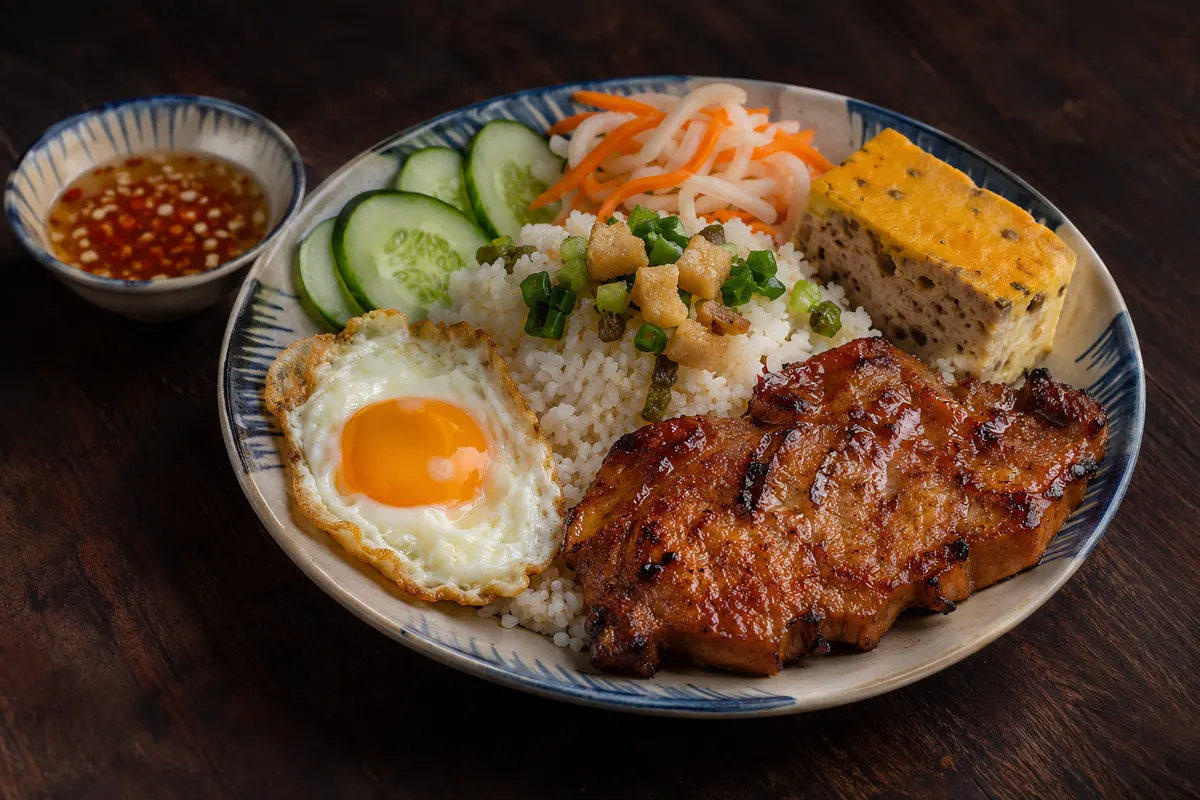
Illustration includes chả trứng. The 741 kcal / 42 g protein estimate is for the regular pork-chop-and-fried-egg recipe, excluding the additional meatloaf.
| What to say | Example | kcal | Protein (g) | Change |
|---|---|---|---|---|
| Tô lớn, ít bánh (large bowl, less noodles) | Phở bò | 403 | 46 | +8 g protein, 15 kcal less than a regular bowl |
| Ít bánh (less noodles) | Phở bò, regular | 310 | 36 | −108 kcal, −2 g |
| Thêm thịt (more meat) | Bún bò Huế, regular | 641 | 54 | +70 kcal, +12 g |
| Không bún (no noodles) | Bún bò Huế, regular | 334 | 38 | −237 kcal, −4 g |
| Thêm sườn (more pork chop) | Cơm tấm sườn | 759 | 50 | +133 kcal, +14 g |
| Ít cơm (less rice) | Cơm tấm sườn | 496 | 33 | −130 kcal, −3 g |
| Thêm trứng (add an egg) | Cơm tấm sườn → sườn trứng | 741 | 42 | +115 kcal, +6 g |
| Thêm thịt nạc (50 g extra lean pork) | Hủ tiếu Nam Vang | 614 | 49 | +72 kcal, +13 g |
| Thêm thịt (50% more grilled pork) | Bún chả, lean | 668 | 43 | +130 kcal, +13 g |
| Thêm thịt (50 g extra grilled pork) | Bún thịt nướng | 744 | 45 | +130 kcal, +13 g |
| Thêm trứng (add an egg) | Bánh cuốn | 580 | 26 | +72 kcal, +6 g |
| Thêm gà (more chicken) | Xôi gà | 418 | 30 | +57 kcal, +9 g |
The best single order in the dataset is phở bò tô lớn, ít bánh: a large bowl with less noodles gives 46 g of protein for 403 kcal, about 11.4 g per 100 kcal. If you want the calories too, a regular large bowl is 544 kcal and 49 g.
Leaving half the broth in bún riêu saves 81 kcal but also 5.7 g of protein. And “thêm” works best with lean meat, chicken, fish or egg; extra pork belly and scallion oil add calories much faster than protein.
Is Vietnamese food healthy? What the numbers say
The data shows calories and macros per serving; it cannot judge a whole diet, and sodium in broths and fish sauce is not shown. The leanest full meals are phở bò tái (390 kcal, 3 g fat), phở bò and cháo gà; canh chua cá (148 kcal, 14 g protein per 208 g bowl) is a light side. The heaviest plates are cơm thịt kho trứng (782 kcal, 48 g fat), bánh mì chảo (657 kcal, 37 g fat) and bánh xèo. If you want high protein Asian food you can eat every day, clear-broth, lean-meat and fish dishes score best on protein per calorie.
A 100-120 g protein day from Vietnamese food
How much protein you need depends on your body weight and goals. A meta-analysis of protein with resistance training found no further gains in fat-free mass beyond about 1.62 g per kg of body weight a day, which is about 113 g for a 70 kg person. The ISSN position stand on nutrient timing suggests 20 to 40 g of high-quality protein per meal every three to four hours. Our guide on how much protein per day to build muscle explains the range and its limits.
Most dishes in the top 20 hit 30 to 45 g on their own, so three of them already get you there. These are examples of how meals add up, not targets.
Day A: three street-food meals, about 110 g
| Meal | Food | kcal | Protein (g) |
|---|---|---|---|
| Breakfast | Phở bò | 418 | 38 |
| Lunch | Cơm tấm sườn | 626 | 36 |
| Afternoon | Cà phê sữa đá (iced milk coffee) | 97 | 3 |
| Dinner | Bún riêu | 563 | 33 |
| Total | 1,704 | 110 |
Day B: a bigger training day, about 119 g
| Meal | Food | kcal | Protein (g) |
|---|---|---|---|
| Breakfast | Xôi gà | 361 | 21 |
| Lunch | Cơm gà xối mỡ | 692 | 46 |
| Snack | 2 gỏi cuốn with lean pork and fish sauce | 238 | 17 |
| Dinner | Bún cá | 545 | 35 |
| Total | 1,836 | 119 |
Neither day needs a protein shake. When swapping meals, compare both calories and protein and recalculate the daily total; dishes in the same ranking can differ substantially. If you need fewer calories, use the ít bánh and ít cơm orders above; if you need more, add rice or a larger bowl. For more meal structures, see what to eat to build muscle.
High-protein Vietnamese food on a budget
Prices change by city and stall, so we don’t quote them. Cheap protein is still easy to spot:
- Cơm bình dân with two protein dishes lets you choose what goes on the plate, which can beat a single specialty plate for protein.
- Thêm trứng is usually one of the cheapest add-ons and adds about 6 g of protein.
- Tofu and soy milk are cheap and protein-dense: firm tofu has about 12 g of protein per 100 kcal, unsweetened soy milk about 9 g (USDA entries in the vegetarian section).
- Drinks are where money and calories go without protein. A trà sữa trân châu is 322 kcal with 1 g of protein.
Vegetarian high-protein Vietnamese food
Vegetarian dishes in the dataset are lower in protein:
| Dish | Serving | kcal | Protein (g) | Protein per 100 kcal |
|---|---|---|---|---|
| Bánh mì chay (fried tofu) | 198 g | 422 | 22 | 5.2 |
| Phở chay (vegetarian phở) | 820 g bowl | 434 | 18 | 4.1 |
| Hủ tiếu chay (vegetarian hủ tiếu) | 815 g bowl | 480 | 16 | 3.3 |
| Đậu hũ sốt cà chua (tofu in tomato sauce), without rice | one serving | 479 | 29 | 6.1 |
| Firm tofu (đậu phụ), plain, USDA FDC 172475 | 150 g block | 216 | 26 | 12.0 |
| Unsweetened soy milk, USDA FDC 175223 | 243 g glass | 80 | 7 | 8.8 |
The tofu in tomato sauce figure comes from FitArchive’s what to eat to build muscle guide. The plain tofu row is the USDA firm tofu entry at 17.3 g protein and 144 kcal per 100 g, scaled to a 150 g block; soy milk is the USDA unsweetened entry scaled to one 243 g cup. Other tofu types can have less protein; recalculate from the label or the matching food entry. The 571 kcal / 40 g bún đậu estimate includes 50 g lean pork and is not vegetarian; recalculate for a meat-free serving and check the dipping sauce.
A vegetarian day of bánh mì chay, rice with đậu hũ sốt cà chua, two glasses of soy milk and a bowl of phở chay comes to about 1,690 kcal and 87 g of protein. Adding a 150 g block of firm tofu (the USDA entry above) takes it to about 113 g. Ask for thêm đậu (extra tofu) wherever you can.
How these numbers were made
Each dish is a recipe calculated from specified ingredient weights, with ingredient values from USDA FoodData Central and cited manufacturer labels. A regular beef phở, for example, is 200 g of cooked rice noodles (FDC 168914), 80 g of cooked lean beef (FDC 170635) and 450 g of beef broth (FDC 172883), plus onion, scallions and bean sprouts: 23.6 g of protein from the beef, 9 g from the broth and the rest from noodles and vegetables. In FitArchive a small portion is the regular recipe × 0.75 and a large one × 1.3.
These are estimates for a stated recipe and portion, not measurements of the bowl in front of you. If your bowl clearly has more meat, choose large or “more” for that part. The Vietnamese food calories table explains the main reasons a real bowl can differ.
Log these dishes in FitArchive
FitArchive is a workout and food log with 460+ Vietnamese dishes built as recipes with stated portions; every dish in the top 20 above comes from that catalogue. You pick a dish, set it to small, regular or large, and adjust its main part (less or more noodles, rice or meat), so “phở tô lớn, ít bánh” takes a couple of taps. Food logging with calories and macros, barcode scanning and your full history are free, with no ads; a photo or typed meal for an AI draft is part of Plus. Workouts and food sit in the same log, so you see protein next to your training week; see the Vietnamese food calorie counter page.
Still choosing an app? See how to pick a calorie counter for Vietnamese food.
Get it for iPhone or Android, or try the web demo.
FAQ
Is pho high in protein? Yes. In FitArchive’s regular beef phở recipe it is 38 g of protein in 418 kcal, the best protein per calorie of any everyday noodle soup here, and a large bowl with less noodles gives 46 g in 403 kcal.
What is the highest-protein Vietnamese dish? Per serving, a share of seafood hotpot and bún bò Huế with pork knuckle; for a single plate, cơm gà xối mỡ and cơm bò lúc lắc. Per calorie, home dishes like cá chiên lead.
What should I order at a Vietnamese restaurant for protein? Bún bò Huế, phở bò, cơm bò lúc lắc, cơm gà or cơm tấm sườn trứng, plus gỏi cuốn as a side. Ask for thêm thịt or thêm trứng, and ít bánh or ít cơm if you want fewer calories.
Is bánh mì high in protein? It depends on the filling: grilled pork or chicken gives 28 to 29 g, pâté or roast pork only 15 to 17 g. About half the calories come from the roll.
Is Vietnamese food good for building muscle? It can easily cover your protein: three dishes from the top 20 add up to roughly 100 to 120 g. Muscle growth still depends on your training and total food intake; the protein per day guide covers how much you need.
Can vegetarians get enough protein from Vietnamese food? Yes, with planning. Vegetarian phở and hủ tiếu have only 16 to 18 g, so add tofu, soy milk or eggs; the sample vegetarian day above reaches about 87 g, or 113 g with an extra block of firm tofu.