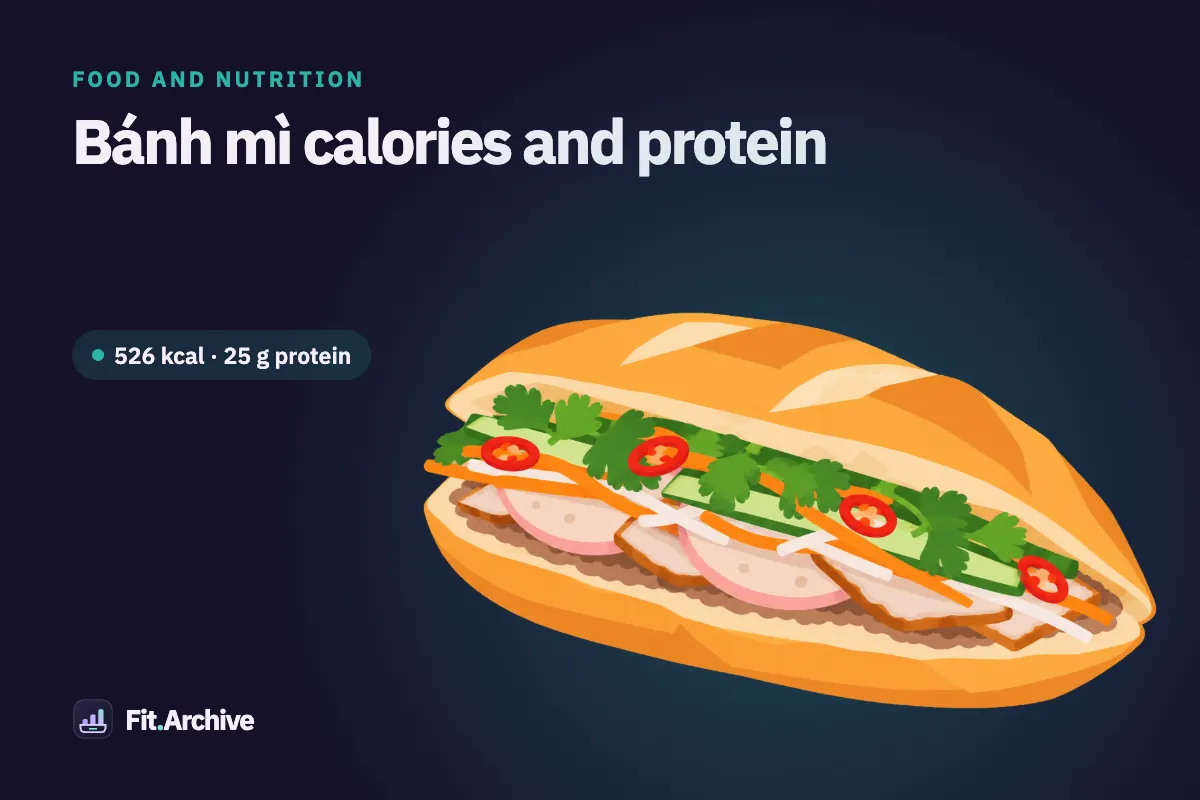
A classic pork bánh mì (bánh mì thịt) is about 526 kcal and 25 g of protein in FitArchive’s recipe estimate, with 50 g of carbohydrate and 25 g of fat. That 210 g sandwich is a 90 g roll filled with steamed pork roll, grilled pork shoulder, liver pâté, mayonnaise and pickled-style vegetables. The bread alone is about 245 kcal, so roughly half the calories are in the roll and half in what goes inside.
These are estimates for the stated recipe weights, built from USDA ingredient data. Real sandwiches vary with the size of the roll, how thickly the pâté and mayonnaise or butter are spread, how much meat goes in and whether the roll is brushed with oil before toasting. A laboratory study of 269 restaurant foods found about one in five contained at least 100 kcal more than stated, so treat any figure for an unweighed sandwich as a starting point.
How many calories are in a banh mi? Every filling compared
Regular portions in FitArchive, rounded to whole kcal and grams:
| Bánh mì (regular) | Weight | Calories | Protein | Carbs | Fat |
|---|---|---|---|---|---|
| Pork (bánh mì thịt) | 210 g | 526 kcal | 25 g | 50 g | 25 g |
| Grilled pork (thịt nướng) | 208 g | 418 kcal | 28 g | 54 g | 10 g |
| Chicken (gà) | 208 g | 469 kcal | 29 g | 49 g | 17 g |
| Char siu (xá xíu) | 213 g | 475 kcal | 27 g | 61 g | 14 g |
| Pork meatballs (xíu mại) | 210 g | 447 kcal | 26 g | 51 g | 15 g |
| Pork roll (chả lụa) | 208 g | 505 kcal | 21 g | 50 g | 25 g |
| Pâté (pate) | 188 g | 482 kcal | 17 g | 50 g | 24 g |
| Roast pork (heo quay) | 183 g | 510 kcal | 15 g | 53 g | 26 g |
| Egg (trứng) | 218 g | 464 kcal | 23 g | 48 g | 20 g |
| Vegetarian, fried tofu (chay) | 198 g | 422 kcal | 22 g | 55 g | 14 g |
| Grilled with chili salt (nướng muối ớt) | 137 g | 420 kcal | 15 g | 53 g | 17 g |
| Skillet with eggs, pâté, sausage (chảo) | 288 g | 657 kcal | 30 g | 50 g | 37 g |
| Hải Phòng stick with pâté (que), 1 stick | 53 g | 144 kcal | 6 g | 19 g | 5 g |
| Plain roll, no filling | 90 g | 245 kcal | 10 g | 47 g | 2 g |
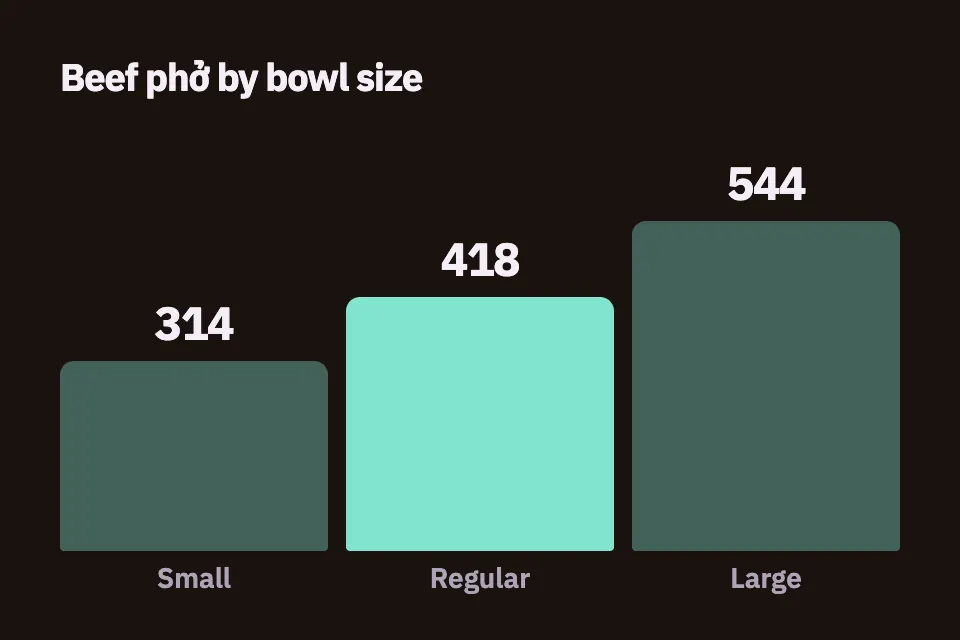
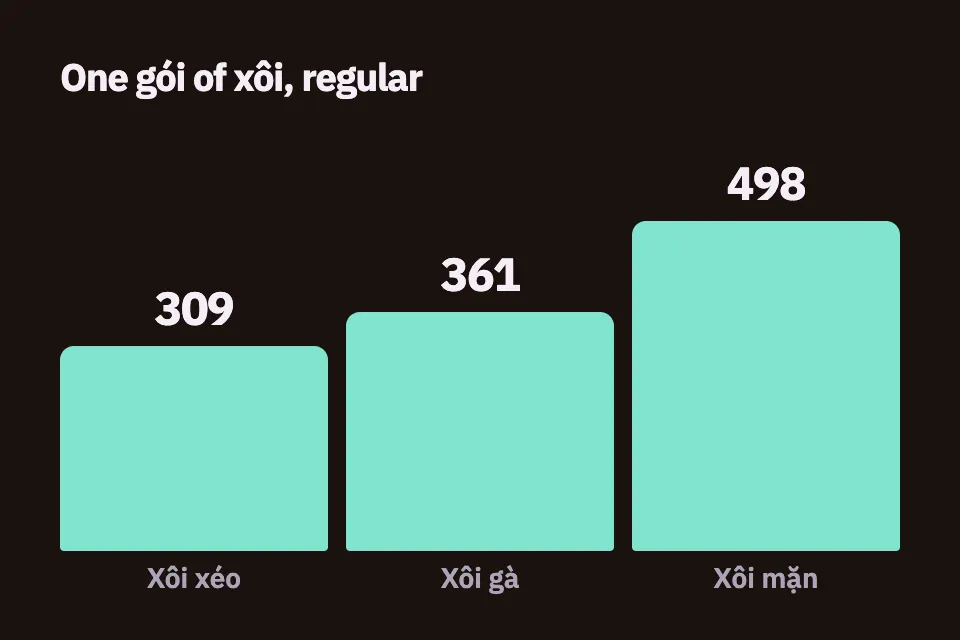
Most sandwiches land between about 420 and 530 kcal, because they share the same 245 kcal roll. The filling decides the rest, and it decides almost all of the difference in protein. For comparison from the same dataset, xôi mặn is about 498 kcal and 22 g protein, and a regular beef phở 418 kcal and 38 g. The full list is in the Vietnamese food calories and protein table.
Where do the calories in a pork banh mi come from?
| Part | Weight | Calories | Share of kcal | Protein |
|---|---|---|---|---|
| Bread roll | 90 g | 245 kcal | 47% | 10 g |
| Steamed pork roll (giò lụa) | 30 g | 78 kcal | 15% | 5 g |
| Grilled pork shoulder | 30 g | 78 kcal | 15% | 8 g |
| Mayonnaise | 10 g | 68 kcal | 13% | 0 g |
| Liver pâté | 15 g | 48 kcal | 9% | 2 g |
| Cucumber, carrot, spring onion | 35 g | 10 kcal | 2% | 0 g |
| Total | 210 g | 526 kcal | 25 g |
Rows are rounded, so they can differ from the total by 1.
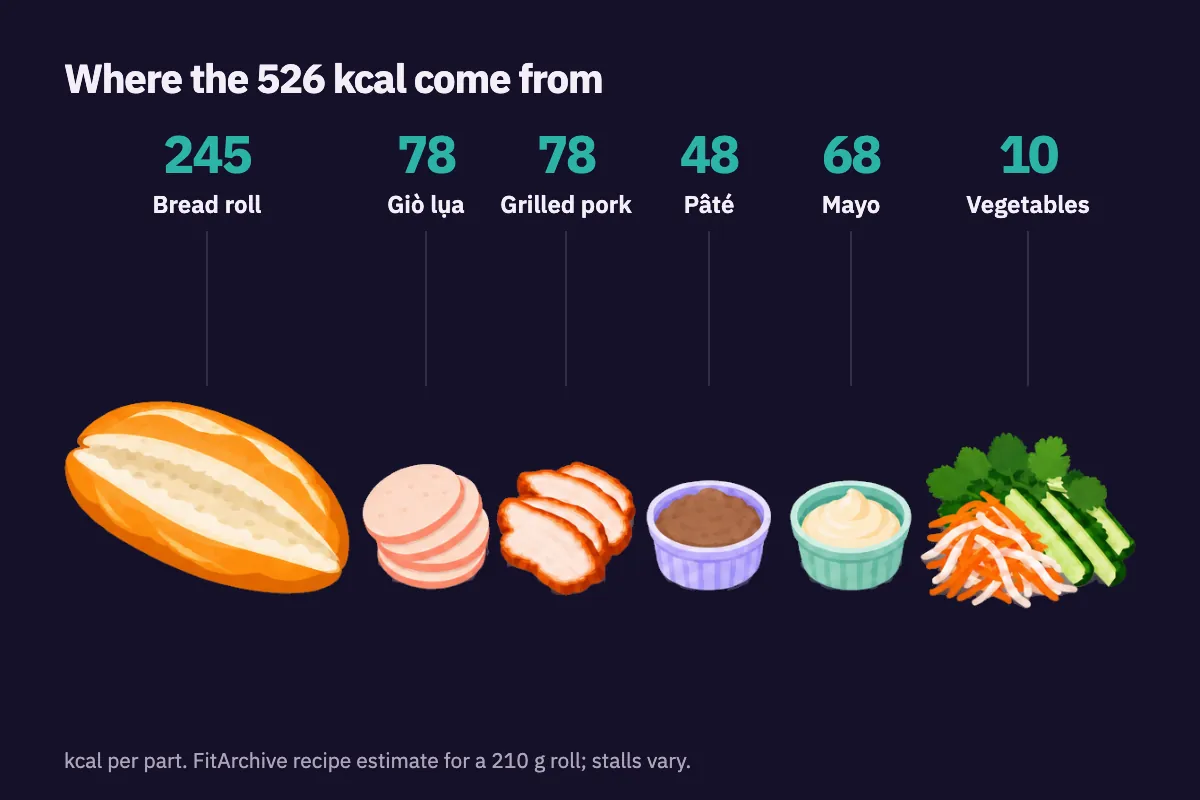
The bread is almost half; the spreads add more than the grilled pork.
The bread is the largest part, but look at the spreads: 10 g of mayonnaise and 15 g of pâté together come to about 116 kcal, more than the 30 g of grilled pork, while adding about 2 g of protein. Many stalls use butter or a house-made egg and oil spread instead of mayonnaise. Those are not in this recipe, and a thick layer can add more than the 68 kcal shown here.
How many calories in a plain banh mi roll?
The bread value in the dataset is about 272 kcal per 100 g, with 11 g protein, 52 g carbohydrate and 2 g fat. A 90 g roll, the size used in the sandwiches above, is about 245 kcal and 10 g of protein. A 45 g half roll would be about 122 kcal, and the 35 g stick in bánh mì que about 95 kcal.
Rolls differ in size from bakery to bakery, and an airy roll can look bigger than it weighs. If plain bread is a daily habit, weighing your usual roll once tells you more than any label.
Which banh mi fillings add the most calories?
Looking at the parts in the recipes:
- Roast pork belly (heo quay). 45 g of pork belly is 233 kcal with only 4 g of protein. This is why the roast pork sandwich has the least protein of the meat fillings.
- Mayonnaise and butter-style spreads. About 68 kcal per 10 g in this data, almost all fat.
- Pâté. About 48 kcal per 15 g. The pâté sandwich uses 50 g, about 160 kcal, which gives it 24 g of fat and 17 g of protein.
- Pork roll (chả lụa). 70 g is about 182 kcal and 11 g protein.
- Frying oil. In the egg sandwich, 8 g of oil adds 71 kcal on top of 143 kcal for 100 g of egg (about two eggs).
- Extras on the skillet plate. Bánh mì chảo adds sausage (129 kcal for 40 g), pâté and oil to eggs and a roll, reaching 657 kcal.
Vegetables, herbs and chili barely register: under 15 kcal per sandwich.
Does banh mi make you fat?
No single food makes you gain fat. Body weight follows overall energy intake and expenditure across days and weeks; in a two-year trial of 811 adults, reduced-calorie diets produced similar weight loss whatever mix of fat, protein and carbohydrate they emphasized.
By these estimates a bánh mì is a moderate meal of 420 to 530 kcal, but most fillings are lower in protein for their calories than a bowl of beef phở. A review of protein and weight management found a modest fullness benefit from higher-protein meals and suggested at least about 25 to 30 g of protein per meal, while noting that long-term results depend largely on whether people stick to the diet. The grilled pork, chicken and char siu sandwiches come close to that range; pâté and roast pork do not. This is general information, not individual nutrition advice.
Which banh mi has the most protein?
Ranked by protein for the calories:
| Bánh mì | Protein | Calories | Protein per 100 kcal |
|---|---|---|---|
| Grilled pork (thịt nướng) | 28 g | 418 kcal | 6.8 g |
| Chicken (gà) | 29 g | 469 kcal | 6.1 g |
| Pork meatballs (xíu mại) | 26 g | 447 kcal | 5.8 g |
| Char siu (xá xíu) | 27 g | 475 kcal | 5.7 g |
| Pork (thịt) | 25 g | 526 kcal | 4.7 g |
| Pâté (pate) | 17 g | 482 kcal | 3.6 g |
| Roast pork (heo quay) | 15 g | 510 kcal | 2.8 g |
To push a sandwich higher: ask for extra lean meat or chicken, add an egg (FitArchive’s 50 g egg part is about 72 kcal and 6 g protein), and ask for a thinner spread of mayonnaise or pâté. How much protein you need over a day depends on body weight and goals; see how much protein per day to build muscle.
Banh mi size: small and large
FitArchive scales a sized dish by ×0.75 for small and ×1.3 for large. Applied to the recipes:
| Bánh mì | Small | Regular | Large |
|---|---|---|---|
| Pork (thịt) | 395 kcal, 18 g protein | 526 kcal, 25 g protein | 684 kcal, 32 g protein |
| Grilled pork (thịt nướng) | 314 kcal, 21 g protein | 418 kcal, 28 g protein | 544 kcal, 37 g protein |
| Chicken (gà) | 351 kcal, 22 g protein | 469 kcal, 29 g protein | 609 kcal, 37 g protein |
| Egg (trứng) | 348 kcal, 17 g protein | 464 kcal, 23 g protein | 603 kcal, 30 g protein |
Common mistakes when logging banh mi
- Logging the filling and forgetting the roll, or the reverse. The roll is about 245 kcal on its own.
- Ignoring the size of the roll. A large roll in this model adds about 160 kcal to a pork bánh mì.
- Missing extra spread. Another 15 g of pâté is about 48 kcal and another 10 g of mayonnaise about 68 kcal, and neither changes how the sandwich looks.
- Forgetting the drink. An iced milk coffee (cà phê sữa đá) is about 97 kcal in the same dataset.
- Treating bánh mì chảo as a sandwich. It is a full plate at about 657 kcal.
- Counting bánh mì que as one serving. It is logged per stick, and people often eat several.
Logging banh mi in FitArchive
FitArchive is a free, private food and training log that works in the browser. Its food log has about 263 Vietnamese dishes built from weighed parts using USDA ingredient data, including every bánh mì above. Log a sandwich as small, regular or large; on most bánh mì entries the bread can also be set to less or more, and the day’s calories and protein update. The demo has sample data. For the soup side of the Vietnamese breakfast, see pho calories and protein; if you also lift, see logging food and workouts together.