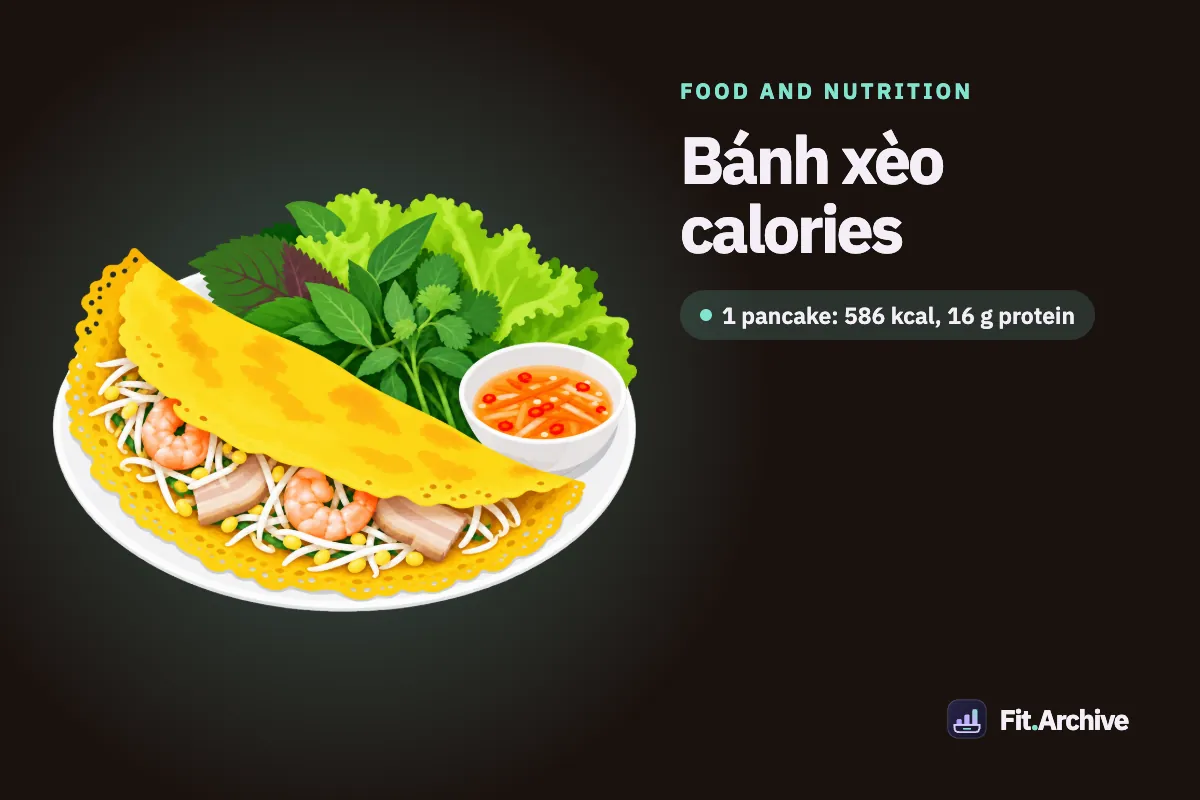
One bánh xèo (Vietnamese crispy pancake) is about 586 kcal and 16 g of protein in FitArchive’s recipe estimate, with 50 g of carbohydrate and 37 g of fat. That is one large southern-style pancake as served: 40 g of rice flour, 20 g of coconut milk, 15 g of oil, 30 g of pork belly, 30 g of shrimp, bean sprouts and mung beans, plus 40 g of lettuce and a dipping sauce with 10 g of sugar. Oil, pork belly and coconut milk together supply 327 kcal, more than half of the total.
Every number below is an estimate for the stated recipe weights, built from USDA ingredient data. Real pancakes vary a lot: the diameter, how much oil goes into the pan, how much pork belly and shrimp are folded in, and how much sauce you dip or drink. The central Vietnamese versions are often much smaller than the southern one modelled here. A laboratory study of 269 restaurant foods found about one in five contained at least 100 kcal more than stated, so treat any figure for an unweighed dish as a starting point.
How many calories are in banh xeo and banh khot?
These are FitArchive’s regular portions, rounded to whole kcal and grams.
| Dish (regular portion) | Weight | Calories | Protein | Carbs | Fat |
|---|---|---|---|---|---|
| Bánh xèo, 1 pancake with lettuce and sauce | 250 g | 586 kcal | 16 g | 50 g | 37 g |
| Bánh khọt, 1 serving with lettuce and sauce | 188 g | 497 kcal | 14 g | 51 g | 27 g |
Bánh khọt are the small, thick cousins of bánh xèo, cooked in a mould and topped with shrimp. FitArchive logs them as one serving (a plate), built from 50 g of rice flour, 25 g of coconut milk, 20 g of oil and 40 g of shrimp. The number of pieces in a serving varies by shop, so use the weights rather than a piece count to compare.
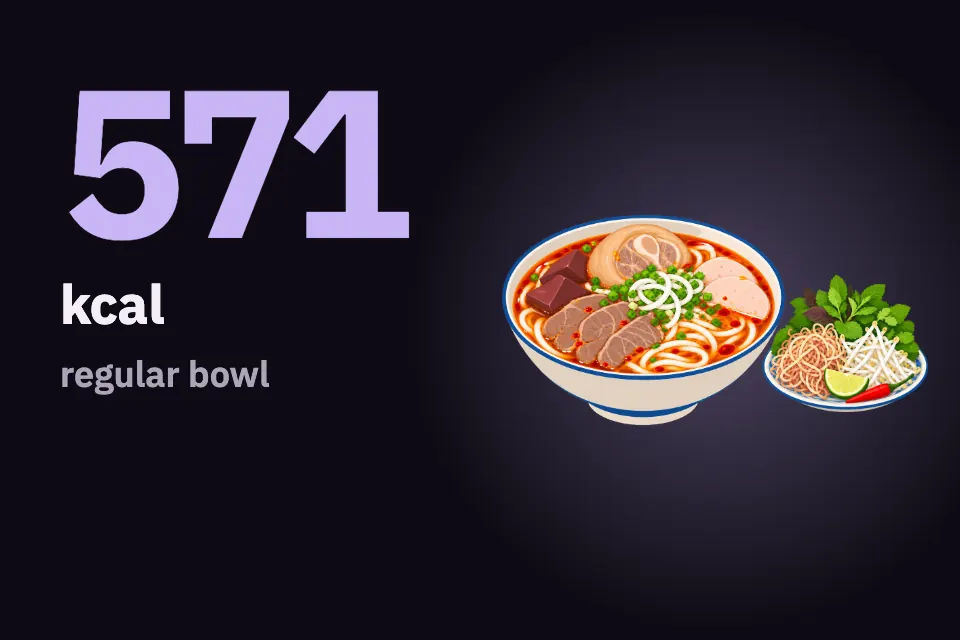
For scale from the same dataset: a regular bún bò Huế is about 571 kcal with 42 g protein, and a beef phở 418 kcal with 38 g. One bánh xèo has about the same calories as a bowl of bún bò Huế but well under half of its protein. The full list of 263 dishes is in the Vietnamese food calories and protein table.
Where do the calories and fat in banh xeo come from?
This is one regular bánh xèo broken into its parts:
| Part | Weight | Calories | Share of kcal | Protein | Fat |
|---|---|---|---|---|---|
| Pork belly (raw weight) | 30 g | 155 kcal | 27% | 3 g | 16 g |
| Rice flour | 40 g | 146 kcal | 25% | 2 g | 1 g |
| Vegetable oil | 15 g | 133 kcal | 23% | 0 g | 15 g |
| Coconut milk | 20 g | 39 kcal | 7% | 0 g | 4 g |
| Sugar (in the dipping sauce) | 10 g | 39 kcal | 7% | 0 g | 0 g |
| Cooked shrimp | 30 g | 36 kcal | 6% | 7 g | 1 g |
| Bean sprouts, mung beans | 55 g | 28 kcal | 5% | 2 g | 0 g |
| Lettuce | 40 g | 6 kcal | 1% | 1 g | 0 g |
| Fish sauce | 10 g | 4 kcal | 1% | 1 g | 0 g |
| Total | 250 g | 586 kcal | 16 g | 37 g |
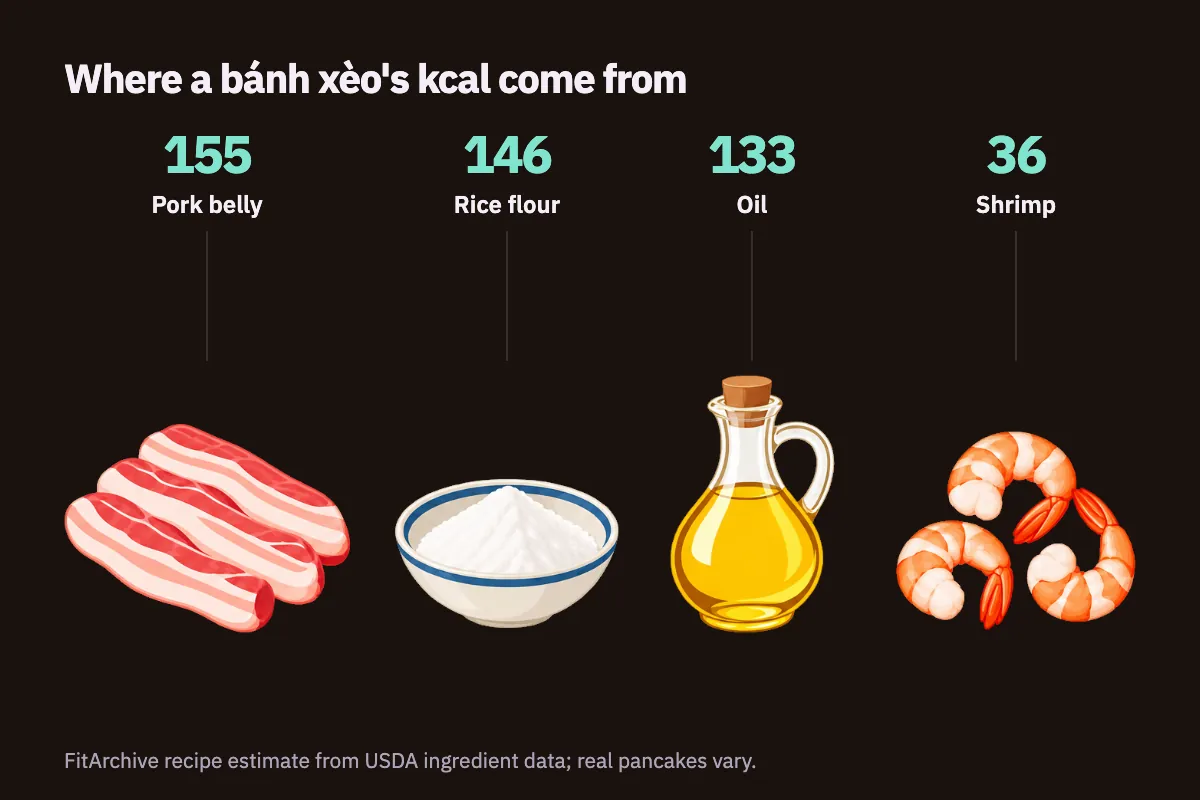
Pork belly and oil supply many of the calories; shrimp supplies most of the protein.
Rows are rounded, so they can differ from the total by 1.
The fat has three sources. Pork belly gives about 43% of it: 30 g of raw belly is mostly fat, 16 g of fat for only 3 g of protein. Frying oil gives about 41%: 15 g of oil is 133 kcal. Coconut milk in the batter gives about 12%. The batter itself, rice flour, is lean; it is what the pancake is cooked in and filled with that makes it rich.
Protein comes mainly from the shrimp (7 g). That is why bánh xèo has only about 3 g of protein per 100 kcal, against about 7 g for bún bò Huế and about 9 g for beef phở in this dataset.
In bánh khọt, the 20 g of oil (177 kcal) makes up about three quarters of the fat, and coconut milk most of the rest.
Banh xeo calories for small, large, less or more pork
FitArchive scales the whole dish for size (small ×0.75, large ×1.3). In bánh xèo the adjustable part is the pork belly, which can be set to less (×0.5) or more (×1.5). The shrimp and oil stay the same.
| Bánh xèo, 1 pancake | Less pork | Normal pork | More pork |
|---|---|---|---|
| Small | 381 kcal, 11 g protein | 439 kcal, 12 g protein | 497 kcal, 13 g protein |
| Regular | 508 kcal, 14 g protein | 586 kcal, 16 g protein | 663 kcal, 17 g protein |
| Large | 660 kcal, 19 g protein | 761 kcal, 21 g protein | 862 kcal, 22 g protein |
More pork belly adds about 78 kcal per regular pancake but only about 1 g of protein. The oil is not adjustable for bánh xèo, so if yours is visibly greasy or fried in a lot of oil, the estimate is probably low; every extra 5 g of oil is about 44 kcal.
Bánh khọt has two adjustable parts, the oil and the shrimp. For a regular serving:
| Bánh khọt, 1 serving | Less oil | Normal oil | More oil |
|---|---|---|---|
| Less shrimp | 385 kcal, 9 g protein | 474 kcal, 9 g protein | 562 kcal, 9 g protein |
| Normal shrimp | 409 kcal, 14 g protein | 497 kcal, 14 g protein | 586 kcal, 14 g protein |
| More shrimp | 433 kcal, 18 g protein | 521 kcal, 18 g protein | 610 kcal, 18 g protein |
A small serving of bánh khọt is about 373 kcal (10 g protein) and a large one about 646 kcal (18 g protein). Here the oil moves calories, and the shrimp moves protein at little cost.
Banh xeo calories per 100 g
Dividing the totals by the recipe weight gives an average for 100 g:
| Per 100 g (average) | Calories | Protein | Carbs | Fat |
|---|---|---|---|---|
| Bánh xèo, with lettuce and sauce | 234 kcal | 6 g | 20 g | 15 g |
| Bánh xèo, pancake only | 283 kcal | 8 g | 20 g | 19 g |
| Bánh khọt, with lettuce and sauce | 265 kcal | 7 g | 27 g | 14 g |
| Bánh khọt, pancakes only | 327 kcal | 9 g | 30 g | 19 g |
“Pancake only” leaves out the lettuce and the dipping sauce. One caution: these are ingredient weights. The rice flour is weighed dry and the pork belly raw, and the water in the batter is not counted. A cooked pancake keeps some of that water while the pork loses some, so the weight on your plate will not match these grams exactly. Use the per-100 g figures as a rough guide and prefer logging by pancake or serving.
Is banh xeo fattening? Lighter ways to eat it
No single food makes you gain or lose fat. Body weight follows your overall energy intake and expenditure across days and weeks; in a two-year trial of 811 adults, reduced-calorie diets led to similar weight loss whether they emphasized fat, protein or carbohydrate. Bánh xèo is energy-dense, though, so how much of it you eat matters. Some general ways to enjoy it with fewer calories:
- Wrap it in plenty of vegetables and herbs. 100 g of lettuce is about 15 kcal in FitArchive’s catalogue. In a lab study of 42 women, eating a low-energy-dense salad before a pasta lunch cut total lunch intake by 7 to 12%. It was a short-term study, but it fits the idea of filling the plate with greens.
- Share a pancake. Half a bánh xèo is about 293 kcal and 8 g protein. In another lab study, adults ate 30% more energy when given the largest portion than the smallest, so a smaller serving in front of you helps.
- Pair it with a protein side. As an example, half a pancake, 100 g of cooked chicken breast (165 kcal, 31 g protein) and 100 g of extra lettuce come to about 473 kcal and 40 g protein, compared with 586 kcal and 16 g for a whole pancake. A review of protein and weight management found higher-protein meals give a modest increase in fullness and suggested at least about 25 to 30 g of protein per meal.
- Ask for less pork belly if the option exists: about 78 kcal less per regular pancake.
- Dip, don’t drink, the sauce. The sugar in the sauce is 39 kcal of the total.
Research on eating less while keeping muscle is in keeping muscle while cutting, and food choices for lifters in what to eat to build muscle. This is general information, not individual nutrition advice; for personal targets, ask a dietitian or doctor.
Common mistakes when logging banh xeo
- Counting one pancake when you ate two. Bánh xèo is often shared from a stack. Two regular pancakes are about 1,171 kcal and 32 g protein.
- Forgetting the dipping sauce. FitArchive’s entry includes one portion of sauce. A generic “banh xeo” entry might not, and if you refill the bowl or drink it, each extra 10 g of sugar is about 39 kcal.
- Using a southern size for a central pancake, or the reverse. A small central pancake is much smaller than the one modelled here. Log a fraction of a portion if yours is clearly smaller.
- Logging bánh khọt by piece count from another source. Piece sizes differ. Compare by weight or by serving.
- Ignoring extra oil. A very greasy pancake can carry far more than 15 g of oil.
Under-recording is common: in one small clinical study, adults who reported very low intakes had under-reported their food by about 47% on average. Logging every pancake at the meal matters more than precise weights.
Logging banh xeo in FitArchive
FitArchive is a free, private food and training log that works in the browser. Its food log has about 263 Vietnamese dishes built from weighed parts using USDA ingredient data, including bánh xèo and bánh khọt. Choose small, regular or large, set the pork, oil or shrimp to less or more where the dish allows, enter how many portions you ate (0.5 for half a pancake, 2 for two), and the day’s calories and protein update. The demo has sample data. For other favourites, see the bún bò Huế calories guide and the bánh mì calories guide.