The calories in a bowl of rice depend on its weight: a 150 g bowl of cooked white rice has about 195 kcal, 42 g of carbohydrate, 4 g of protein and almost no fat, using the USDA value of 130 kcal per 100 g. A fuller 200 g bowl is about 260 kcal. A 150 g bowl of fried rice is about 216 to 258 kcal in FitArchive’s recipes, because the oil, egg and meat add calories on top of the rice. The number that matters most is how many grams of rice are in your bowl, and bowls differ more than the rice does.
150 g is the size FitArchive’s food log uses for one bowl (một chén or một bát) of cooked rice. Your own bowl may hold less or more, especially if you press the rice down or heap it above the rim. The tables below give the calories for several weights so you can pick the row that matches yours.
How many calories are in a bowl of rice? White rice by bowl size
Cooked white rice, using the USDA value for cooked long-grain white rice (130 kcal, 2.7 g protein, 28.2 g carbohydrate and 0.3 g fat per 100 g), rounded:
| Cooked white rice | Calories | Protein | Carbs | Fat |
|---|---|---|---|---|
| 100 g (a small or half-full bowl) | 130 kcal | 3 g | 28 g | 0 g |
| 150 g (FitArchive’s default bowl) | 195 kcal | 4 g | 42 g | 0 g |
| 200 g (a full bowl) | 260 kcal | 5 g | 56 g | 1 g |
| 250 g (a heaped bowl) | 325 kcal | 7 g | 71 g | 1 g |
Every extra 50 g of cooked rice adds 65 kcal. Two 150 g bowls at a family meal are about 390 kcal; three are about 585 kcal, which is more than a regular bowl of beef phở (418 kcal in FitArchive’s recipe).
In Vietnamese, the southern word is chén and the northern word is bát. They mean the same small rice bowl, so “1 chén cơm” and “1 bát cơm” have the same answer: it depends on the grams.
How to find out how much your bowl holds
Put your usual bowl on a kitchen scale, set it to zero, fill it the way you normally do, and read the weight. Do it once or twice and you know your bowl. After that, multiply the grams by 1.3 to get the calories of plain white rice. If you cook for one person, you can also weigh the uncooked rice: 100 g of uncooked white rice is 365 kcal and 7 g of protein, however much water it absorbs.
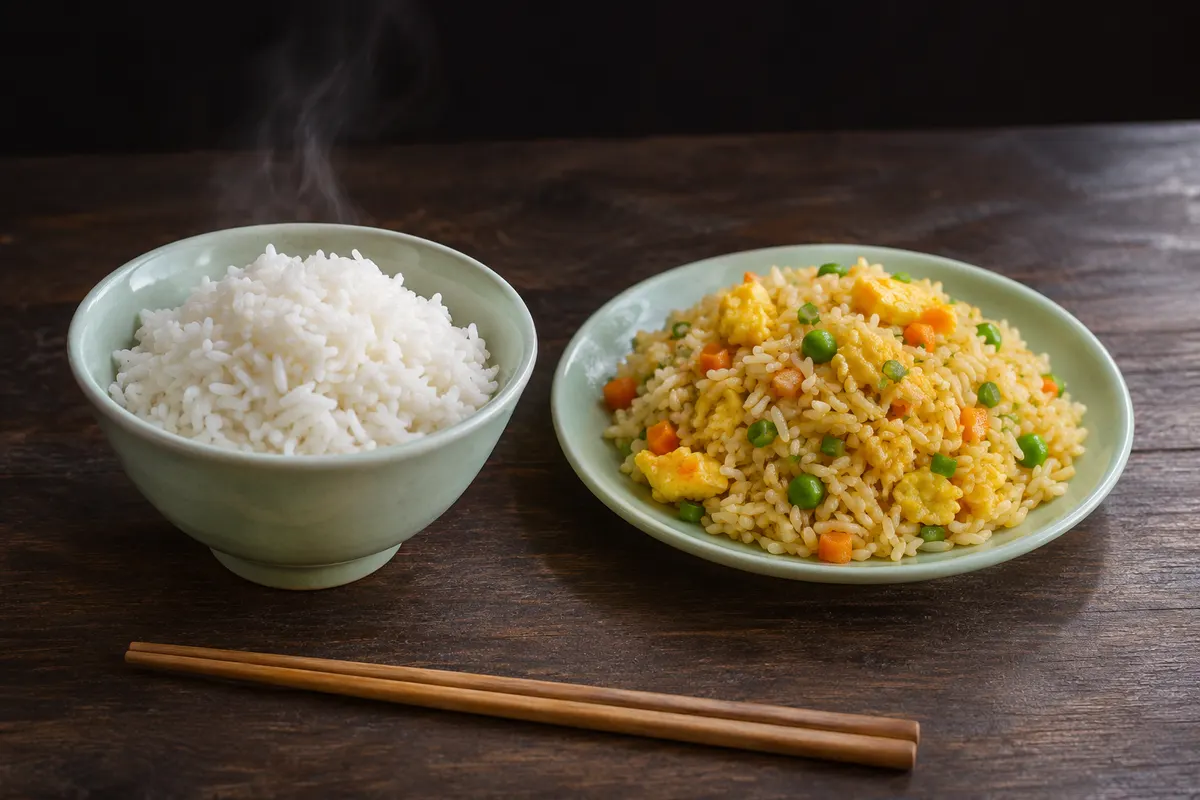
Plain rice on the left, egg fried rice on the right. Most of the difference is the oil.
Brown rice, sticky rice and white rice compared
The same 150 g bowl with other kinds of cooked rice, from the USDA values FitArchive uses:
| 150 g cooked | Calories | Protein | Carbs | Fat |
|---|---|---|---|---|
| White rice (cơm trắng) | 195 kcal | 4 g | 42 g | 0 g |
| Brown rice (cơm gạo lứt) | 185 kcal | 4 g | 38 g | 2 g |
| Sticky rice (xôi, plain) | 146 kcal | 3 g | 32 g | 0 g |
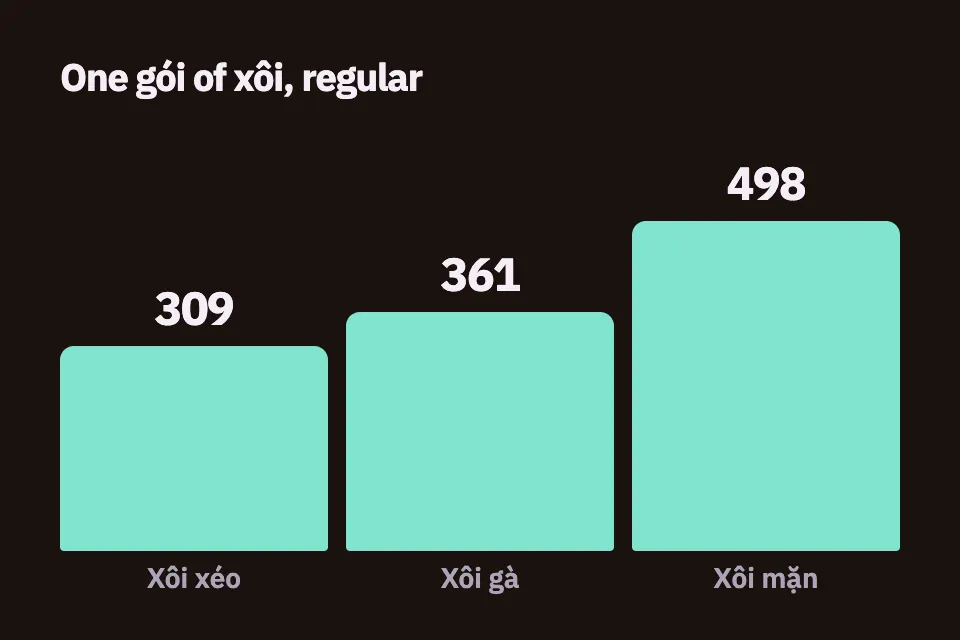
Brown rice saves only about 10 kcal per bowl, so choose it for taste or fibre rather than for a big calorie gap. Cooked sticky rice is lower per 100 g in the USDA data mainly because that cooked sample holds more water; uncooked, sticky and white rice are almost the same (370 and 365 kcal per 100 g). The sticky rice calories guide explains this and covers xôi with toppings.
How many calories are in a bowl of fried rice?
Fried rice (cơm chiên in the south, cơm rang in the north) is cooked rice stir-fried in oil, usually with egg and some meat or seafood. FitArchive builds each dish from weighed ingredients. Dividing each recipe by its weight gives the calories for a 150 g bowl of fried rice and for a full shop plate:
| Fried rice (FitArchive recipe) | 150 g bowl | Protein per bowl | Full plate | Protein per plate |
|---|---|---|---|---|
| Plain egg and pork fried rice (cơm chiên) | 246 kcal | 9 g | 650 kcal (397 g) | 25 g |
| Yangzhou fried rice (cơm chiên Dương Châu) | 239 kcal | 12 g | 697 kcal (437 g) | 35 g |
| Beef and pickled mustard greens (cơm rang dưa bò) | 216 kcal | 10 g | 539 kcal (375 g) | 26 g |
| Seafood fried rice (cơm chiên hải sản) | 222 kcal | 12 g | 663 kcal (447 g) | 35 g |
| Garlic fried rice (cơm chiên tỏi) | 237 kcal | 4 g | 482 kcal (305 g) | 9 g |
| Salted fish fried rice (cơm chiên cá mặn) | 258 kcal | 12 g | 556 kcal (323 g) | 26 g |
| Sausage fried rice (cơm chiên xúc xích) | 255 kcal | 8 g | 693 kcal (408 g) | 21 g |
For a second opinion, the USDA’s survey database (FNDDS) lists chicken fried rice at 173 kcal per 100 g, pork fried rice at 179 kcal and shrimp fried rice at 166 kcal. For 150 g that is about 260, 269 and 249 kcal, a little above FitArchive’s recipes.
So a bowl of fried rice is roughly 20 to 60 kcal more than a bowl of plain rice, and has more protein because of the egg and meat. The bigger difference is the portion: a full plate in these recipes weighs about 300 to 450 g, two to three times a 150 g bowl.
Where the extra calories come from
The plain cơm chiên recipe, broken into its parts:
| Part | Weight | Calories | Protein |
|---|---|---|---|
| Cooked white rice | 250 g | 325 kcal | 7 g |
| Cooking oil | 12 g | 106 kcal | 0 g |
| Cooked ground pork | 40 g | 119 kcal | 10 g |
| Egg | 50 g | 72 kcal | 6 g |
| Mixed vegetables | 40 g | 26 kcal | 1 g |
| Soy sauce | 5 g | 3 kcal | 0 g |
| Total | 397 g | 650 kcal | 25 g |
Rows are rounded, so they can differ from the total by 1. Twelve grams of oil, a little under a tablespoon, adds 106 kcal, and every extra gram of oil adds about 9 kcal, so an oilier plate will be above these figures. A laboratory study of 269 restaurant foods found about one in five contained at least 100 kcal more than stated, so treat any unweighed plate as a starting point.
How much protein is in a bowl of rice?
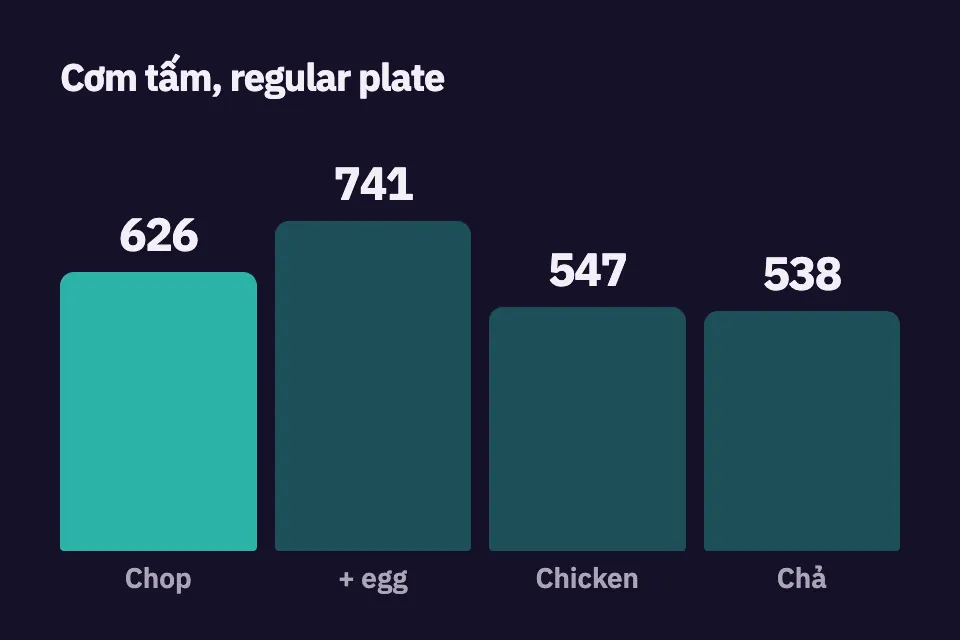
A 150 g bowl of white rice has about 4 g of protein, or about 2 g per 100 kcal. That is not nothing over three meals, but rice is mostly a carbohydrate food: three bowls a day give about 12 g of protein and 127 g of carbohydrate. For comparison, a regular plate of cơm tấm sườn has 36 g of protein, mostly from the pork chop, and a bowl of beef phở has 38 g.
If you train and want more protein, the protein has to come from what you eat with the rice: meat, fish, eggs, tofu or milk. How much you need depends on your body weight and goals; the protein per day guide covers the research, and high-protein Vietnamese food lists dishes that bring a lot of it.
Does rice make you gain weight?
Rice on its own does not make you gain fat; body weight follows total energy intake and expenditure over weeks. In a two-year trial of 811 adults, reduced-calorie diets led to similar weight loss whether they emphasised fat, protein or carbohydrate. What matters is how many bowls you eat and what comes with them.
If you are eating less overall, general options:
- Know your bowl. Weigh your usual bowl once. The difference between a 150 g and a 250 g bowl is 130 kcal per bowl, about 390 kcal over three meals.
- Fill up on the dishes, not the second bowl. Vegetables and lean protein give more volume and protein for the calories.
- Count the oil in fried rice. Plain rice is almost fat-free; fried rice gets a large share of its extra calories from oil.
If you are trying to gain weight, an extra bowl of rice is one of the simplest ways to add about 200 kcal. For what the research says about surpluses and deficits, see gaining weight when you are skinny and keeping muscle while cutting. Personal targets are a question for a dietitian or doctor; this is general information, not individual nutrition advice.
Common mistakes when counting rice calories
- Using the uncooked value for cooked rice. 100 g uncooked is 365 kcal; 100 g cooked is 130 kcal. Mixing them up nearly triples the number.
- Counting “1 bowl” without knowing the grams. A bowl entry is only right if your bowl holds about the same.
- Logging fried rice as plain rice. A 150 g bowl of fried rice is 20 to 60 kcal more, and a shop plate is two to three bowls.
- Forgetting refills. At family meals the second and third bowls add up quickly. Logging each bowl as you eat it is easier than remembering later.
The 263 dishes in the Vietnamese food calories and protein table include the rice plates. For broken rice, see cơm tấm calories.
Logging rice in FitArchive
FitArchive is a free, private food and training log that works in the browser. Its food log has cooked white, brown and sticky rice with the USDA values above, a one-bowl serving of 150 g, and more than 460 Vietnamese dishes built from weighed parts, including the fried rice plates in this article. You can log rice by the bowl or by the gram, and set rice dishes to small, regular or large with less or more rice. The demo has sample data.