Drop sets, myo-reps and rest-pause sets are ways to fit several hard sets’ worth of reps into a few minutes. When studies match total volume and effort, they produce about the same muscle growth and strength as ordinary straight sets, not more. Their real advantage is time: some drop-set protocols took half to a third of the time. The cost is that they feel much harder. Use them to save time or add variety, not as a shortcut to growth.
On social media these techniques are often sold as the secret to “shocking” a muscle into growing. This guide explains what each one is, what the research actually found, how strong that research is, and how to log them so your training history still makes sense.
What is a drop set?
A drop set is a set taken close to failure, followed straight away by a lighter load for more reps, with little or no rest. You can drop once or several times.
Example: cable triceps pushdowns with 30 kg for 12 reps to failure, then move the pin to 22.5 kg and do as many reps as you can, then 15 kg for a final round. That is one drop set with two drops.
Drop sets are easiest on machines, cables and a dumbbell rack, where changing the load takes seconds. In one 8-week study, the drop-set group did 10 reps at 75% of their one-rep max and then 6 more reps at 55%, which gives an idea of the drops researchers use.
What are myo-reps?
Myo-reps start with an activation set: a set taken close to failure, usually with a moderate weight you could lift for something like 12 to 20 reps. Then you rest only a few deep breaths, roughly 10 to 20 seconds, and do a short mini-set of a few reps with the same weight. You repeat pause and mini-set until your reps drop off.
Example: leg extension, 40 kg for 15 reps at 1 rep in reserve, then mini-sets of 5, 5, 4 and 3 reps with short pauses. Myo-reps were popularized by a Norwegian coach and are now common on YouTube. Formally, they are a version of rest-pause training.
What is a rest-pause set?
A rest-pause set is a set taken to or near failure, a short pause (often 10 to 30 seconds), then more reps with the same load, repeated once or twice. The difference from myo-reps is mostly the label: rest-pause often uses heavier loads and fewer mini-sets, while myo-reps use a lighter, higher-rep activation set and more mini-sets. Studies define both in different ways, so check the protocol rather than the name.
Rest-pause is not the same as cluster sets, which add short rests inside a set to keep reps fast and far from failure, mostly for strength and power work.
Drop sets vs straight sets: what the studies show
| Study | Who and how long | Comparison | Main finding |
|---|---|---|---|
| Angleri et al. 2017, trial | 32 trained men, 12 weeks, one leg per method | Drop sets vs traditional sets, total volume matched | Leg muscle cross-sectional area up 7.8% vs 7.6%; leg press and leg extension strength similar |
| Fink et al. 2018, trial | 16 young men, 6 weeks, triceps | One drop set vs 3 normal sets | Triceps size up 10.0% vs 5.1%, strength 16% vs 25%; drop set felt harder (effort rating 7.7 vs 5.3) |
| Enes et al. 2021, trial | 28 trained men, 8 weeks, legs | Drop sets, rest-pause and traditional sets, volume matched | Thigh muscle thickness similar; rest-pause slightly better for squat 1RM |
| Coleman et al. 2022, meta-analysis | 5 studies, at least 6 weeks each | Drop sets vs traditional | Trivial differences for both strength and muscle size |
| Sødal et al. 2023, meta-analysis | 6 studies, 142 people (114 men), young adults | Drop sets vs traditional | Both grew; no significant difference; some drop-set protocols took half to a third of the time |
| Havers et al. 2026, meta-analysis | 12 studies, 274 people | Drop sets vs traditional | No significant difference in growth, strength or endurance; drop sets gave higher effort ratings and lactate |
The Coleman meta-analysis was published in the International Journal of Strength and Conditioning, which is not indexed in PubMed, so it links to the journal record.
Reading these together: the larger and better-controlled comparisons find no growth advantage for drop sets when the total work is similar. The one study that favoured drop sets, Fink 2018, had 8 people per group and compared a single drop set with 3 normal sets, so the groups did not do the same work. All studies were short, and most participants were young men.
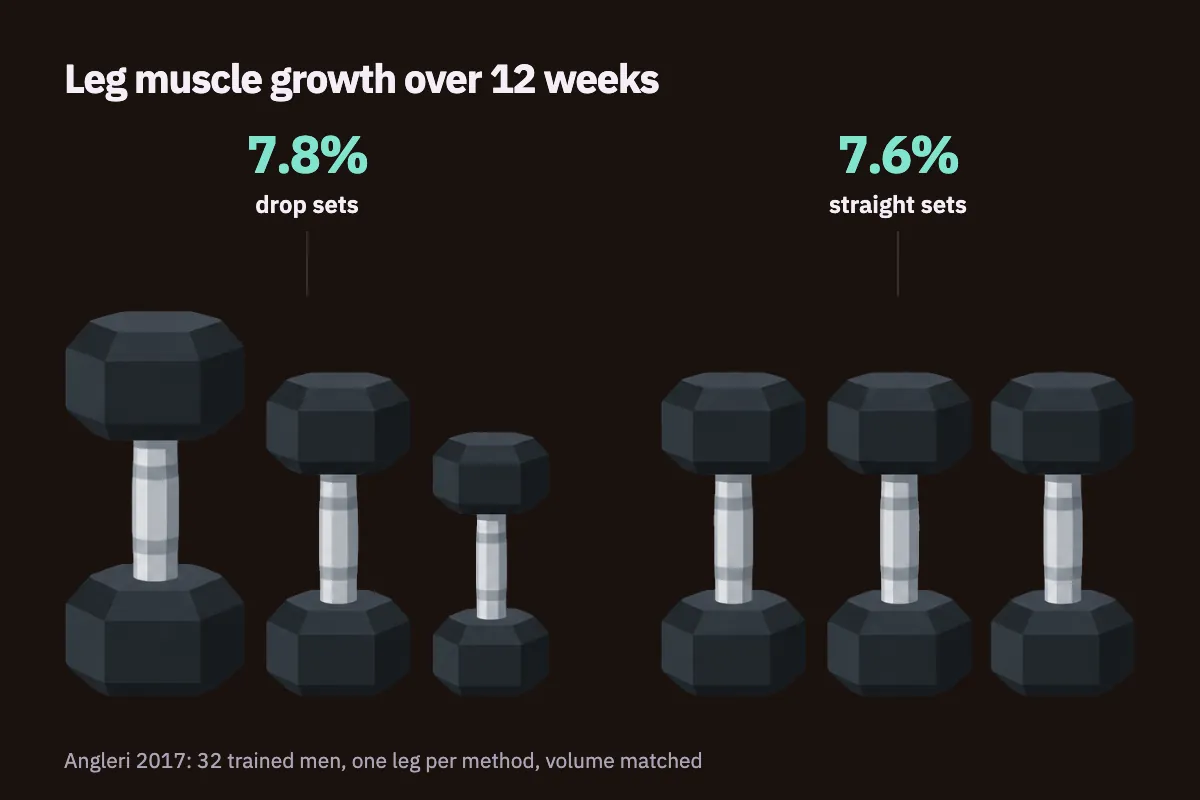
With volume matched, drop sets grew muscle about the same.
Rest-pause and myo-reps: what the studies show
There is less research on these two:
- Prestes et al. 2019. In 18 trained people over 6 weeks, rest-pause gave similar strength gains to 3 sets of 6 reps with 2 minutes’ rest, and greater thigh muscle thickness gains (11% vs 1%). With 9 people per group, treat that result with caution.
- Enes et al. 2021. In the volume-matched trial above, rest-pause produced similar thigh growth and slightly more squat strength than traditional sets.
- Bradshaw et al. 2026. In the first 8-week myo-reps trial we found, 22 trained men did bench press, incline bench press and cable flyes twice a week. Myo-reps and straight sets gave similar chest growth and strength, even though the myo-reps group lifted about 30% less total volume load and finished sessions faster.
Myo-reps vs drop sets: which is better?
No study has compared myo-reps and drop sets head to head. The closest is Enes 2021, where rest-pause and drop sets gave similar muscle growth. So choose by practicality:
- Drop sets suit machines, cables and dumbbells, where you can change the load instantly.
- Myo-reps and rest-pause keep the same weight, so they suit equipment you cannot quickly change, a busy gym, or exercises such as leg extensions, curls and lateral raises.
- Neither suits heavy barbell squats or bench presses taken to failure without safety bars or a spotter.
So why do they not build more muscle?
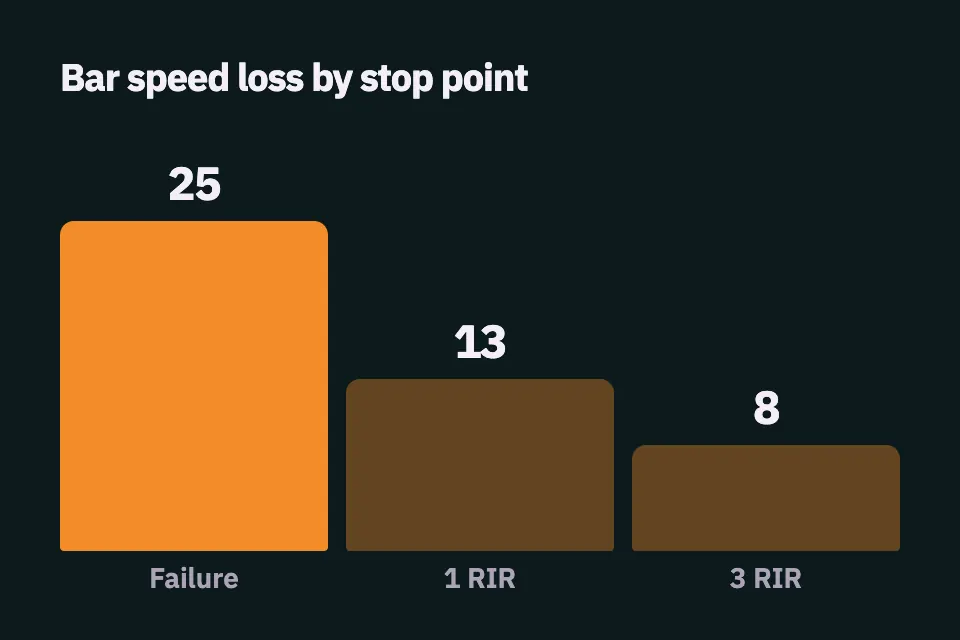
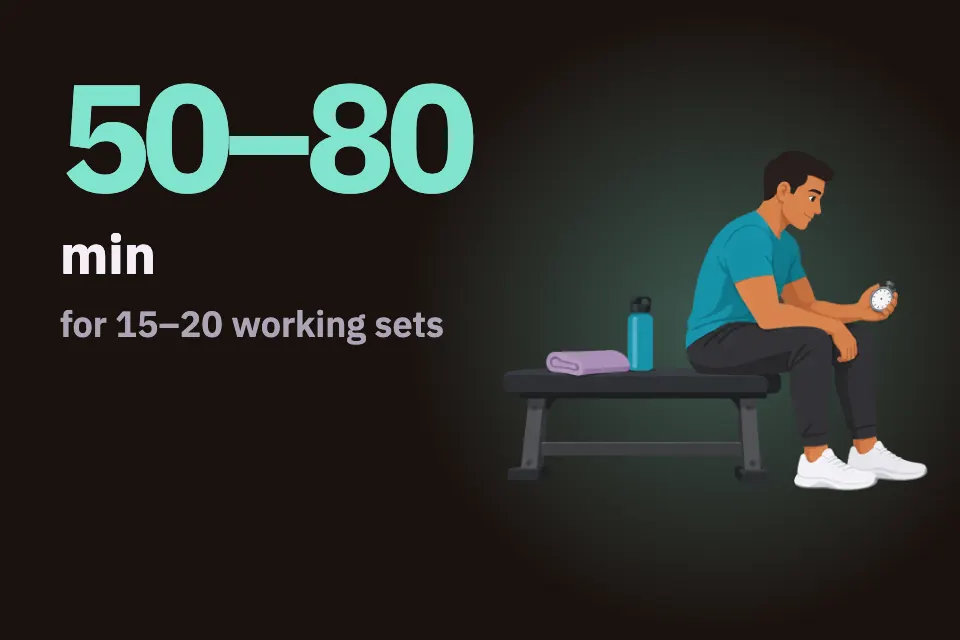
Growth seems to depend mainly on how many hard sets you do and how close to failure they end, with diminishing returns as sets pile up. These techniques mostly change how quickly you get those hard reps, not what the muscle experiences per rep. A 2019 systematic review of advanced techniques found the evidence too thin for specific guidelines, but suggested trained lifters can use them for an extra stimulus, to break plateaus or to avoid boredom. A 2021 review of time-efficient training concluded that supersets, drop sets and rest-pause roughly halve training time while keeping volume, and are probably better for muscle growth than for maximal strength.
What about supersets? A superset is two different exercises done back to back, for example a row followed by a bench press. In a 10-week trial of whole-body supersets, sessions took nearly half the time and body composition changes were similar, but lat pulldown strength improved about 5 kg less than with traditional sets.
The practical cost is fatigue. Drop sets raised effort ratings in the meta-analyses, and a session full of them can feel far harder than its set count suggests. If you already train to or near failure on every set, adding techniques everywhere may hurt your next sessions more than it helps this one.
How to log drop sets, myo-reps and rest-pause sets
Log each mini-set as its own set with its own weight, reps and reps in reserve, and write the technique in the workout note. These are invented example entries, not recommended loads:
| Exercise | Set | Weight | Reps | RIR | Workout note |
|---|---|---|---|---|---|
| Cable pushdown | 1 (main) | 30 kg | 12 | 0 | Last set: drop set, 2 drops |
| Cable pushdown | 2 (drop 1) | 22.5 kg | 8 | 0 | |
| Cable pushdown | 3 (drop 2) | 15 kg | 9 | 0 | |
| Leg extension | 1 (activation) | 40 kg | 15 | 1 | Myo-reps, about 15 s pauses |
| Leg extension | 2 to 5 (mini-sets) | 40 kg | 5, 5, 4, 3 | 0 to 1 |
Two things to know when you read the numbers back:
- Your weekly set count will rise. Any set tracker that counts every hard set, including FitArchive’s weekly hard sets by muscle, will count that drop set as 3 sets and the myo-reps as 5. There is no agreed rule for how many “real” sets a drop set equals. Keep the same logging rule every week and compare like with like; see how to count weekly sets per muscle.
- Use your first set for progress. The main set or activation set is the one done fresh, so compare it from week to week, using double progression or load. Mini-sets depend on how long you paused, which is hard to repeat exactly.
Common mistakes
- Using techniques to replace progression. If the main set’s load or reps never go up, the drops are hiding a plateau.
- Doing them on every exercise. One technique on the last set of one or two isolation exercises is a common, manageable use.
- Changing pause length every week. A 10-second and a 30-second pause give different mini-set reps. Keep it roughly constant.
- Not writing the technique down. Months later, three sets of decreasing weight look like a bad day unless the note says “drop set”.
- Going to failure on heavy barbell lifts without safeties. Save failure for machines, cables and dumbbells you can put down.
If the point is saving time, our guide on how long a workout should be covers other options, such as shorter rest between sets.
Logging intensity techniques in FitArchive
FitArchive has no special drop-set button. It logs each set’s weight, reps and RIR, so enter every drop or mini-set as its own set and put the technique in the workout note. The Progress screen’s estimated 1RM uses your best working set in a session and only when reps plus RIR are 15 or fewer, so lighter drops do not pull the estimate down, and a 15-rep activation set at 1 RIR gets no estimate. Try the layout in the demo.