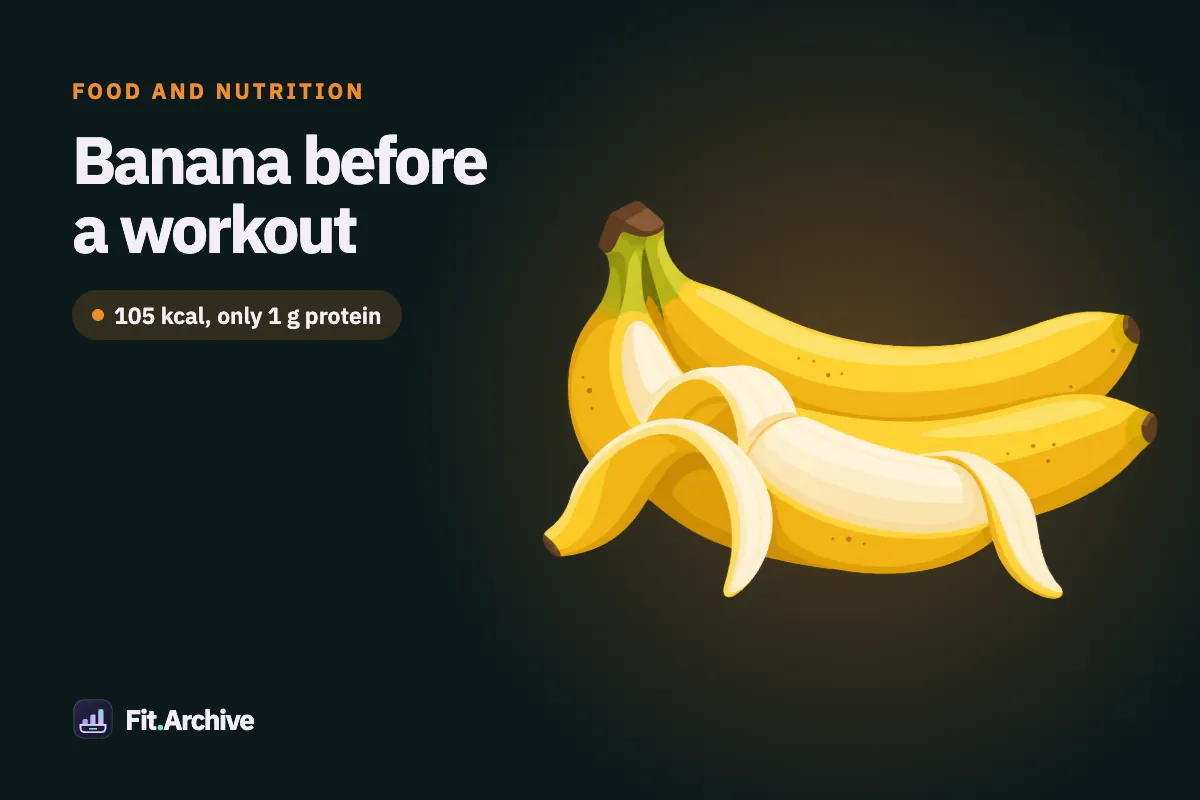
A banana is a good, convenient snack before or after a workout, but it is not required. A medium banana (118 g without the peel) has about 105 kcal, 27 g of carbohydrate and 1 g of protein in FitArchive’s food catalogue. Eaten roughly 30 to 60 minutes before training it can take the edge off hunger; after training, pair it with protein such as eggs, yogurt or milk. Bananas have not been shown to prevent cramps.
Two claims about bananas are popular in gyms and on social media: that a banana before lifting gives you noticeably more energy, and that its potassium stops muscle cramps. This guide checks both against the research, gives the numbers by banana size, and shows simple before and after options.
Is eating a banana before a workout good?
For most lifters it is a sensible choice for practical reasons: a banana is mostly carbohydrate, cheap, needs no preparation, and many people find it easy on the stomach. What the research shows:
| Study | Who and what | Main finding |
|---|---|---|
| Nieman et al. 2012 | 14 trained cyclists rode a 75 km time trial twice, eating either bananas or a 6% carbohydrate sports drink (same carbohydrate dose every 15 minutes) | Similar finishing times (about 2.41 and 2.36 hours, not significantly different) and similar blood glucose |
| Henselmans et al. 2022 | Systematic review of 49 studies on carbohydrate and strength training | In 13 of 19 acute studies, more carbohydrate did not improve lifting performance; most of the 6 positive studies compared against fasting or used more than 10 sets per muscle group |
| ISSN nutrient timing position stand 2017 | Expert review of nutrient timing | Total daily protein comes first; its dose for carbohydrate during exercise (about 30 to 60 g per hour) is aimed at long, hard sessions of more than about an hour |
How strong is this? The banana study was small, about endurance cycling rather than lifting, and funded by a banana company (Dole), with two authors from Dole’s research laboratory. It shows bananas work as fuel during long exercise, not that they boost a gym session.
For lifting, if you have eaten normally and your session is a typical hour of weights, extra carbohydrate right before is unlikely to change performance much. It may help more when you train without breakfast, after a long gap since your last meal, or in very high volume sessions.
How many calories are in a banana?
FitArchive’s food catalogue has one banana entry, based on USDA data, with three sizes. The weights are for the peeled fruit. Values are rounded:
| Banana (peeled weight) | Calories | Protein | Carbs | Fat |
|---|---|---|---|---|
| Small (101 g) | 90 kcal | 1 g | 23 g | 0 g |
| Medium (118 g) | 105 kcal | 1 g | 27 g | 0 g |
| Large (136 g) | 121 kcal | 1 g | 31 g | 0 g |
| Per 100 g | 89 kcal | 1 g | 23 g | 0 g |
These are catalogue estimates. Real bananas vary a lot in size, so for accuracy, weigh one without the peel. Note the protein: even a large banana has only about 1 g.
How long before a workout should you eat a banana?
There is no exact rule. A practical range is about 30 to 60 minutes before training, comfortable for most people. Use it as a starting point, not a deadline:
| Time before training | Example | Notes |
|---|---|---|
| 2 to 3 hours | A normal meal; a banana can be part of it | You start the session fed, so a snack is optional |
| 30 to 60 minutes | One banana, or a banana with a small yogurt | A practical range for a light snack |
| Under 30 minutes | Half to one small banana, if you are hungry | Some people feel fine; others get stomach discomfort, so test it on a normal training day |
During long, high intensity exercise of more than about 70 minutes, the ISSN suggests about 30 to 60 g of carbohydrate per hour; a medium banana has about 27 g, which is why cyclists and runners carry them. For a normal lifting session, water is usually enough.
If you train first thing in the morning, a banana 20 to 30 minutes before is a common compromise between training fasted and eating a full breakfast. Our guide to pre and post workout meals covers fasted training and the anabolic window in more detail.
Banana before or after a workout?
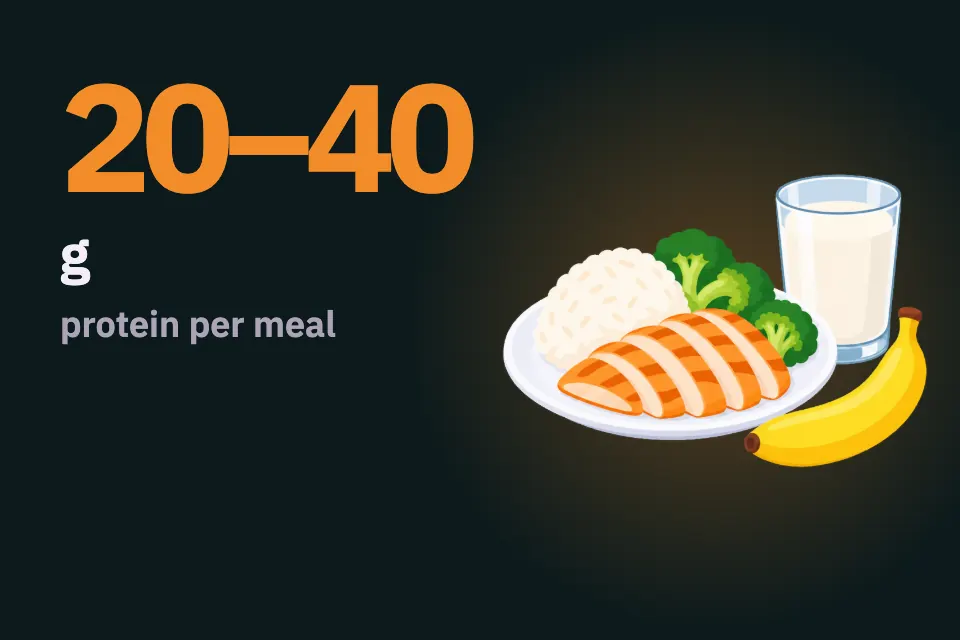
Either works; what you eat across the whole day matters more. Before training, a banana is fuel and a hunger fix. After training, the priority for muscle is protein, which a banana barely provides. The ISSN position stand links servings of about 20 to 40 g of high quality protein with maximal muscle protein synthesis, so after training, treat the banana as the side and add a protein food.
Example combinations, using FitArchive catalogue values (rounded):
| After training (example) | Calories | Protein | Carbs | Fat |
|---|---|---|---|---|
| Medium banana only | 105 kcal | 1 g | 27 g | 0 g |
| Banana with plain yogurt (100 g) | 166 kcal | 5 g | 32 g | 4 g |
| Banana with whole milk (244 g, one cup) | 254 kcal | 9 g | 39 g | 8 g |
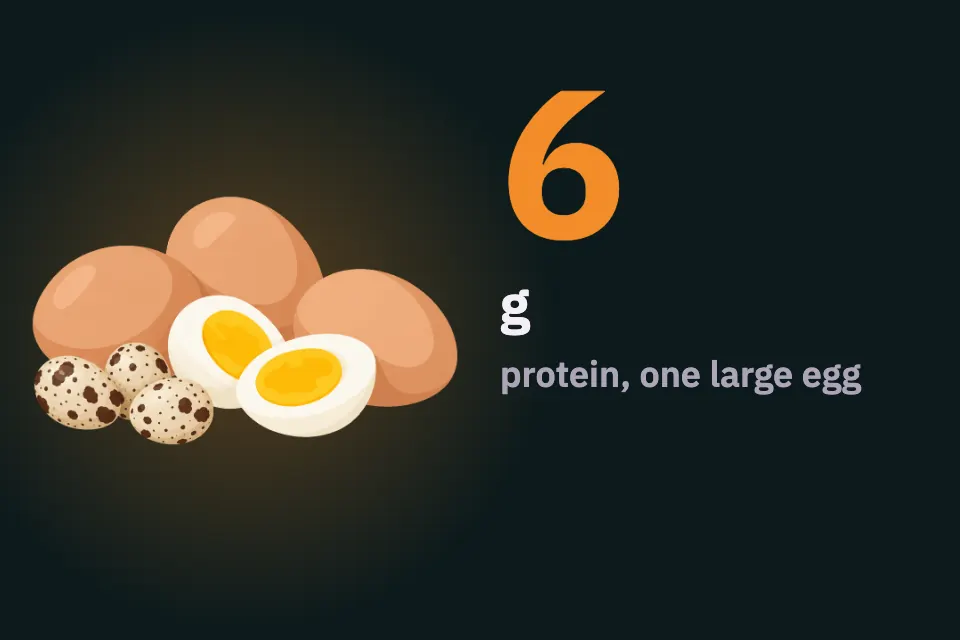
| Banana with 2 hard boiled eggs (100 g) | 260 kcal | 14 g | 28 g | 11 g |
| Banana with nonfat Greek yogurt (170 g) | 205 kcal | 19 g | 33 g | 1 g |
| Banana with whole milk and 2 hard boiled eggs | 409 kcal | 22 g | 40 g | 19 g |
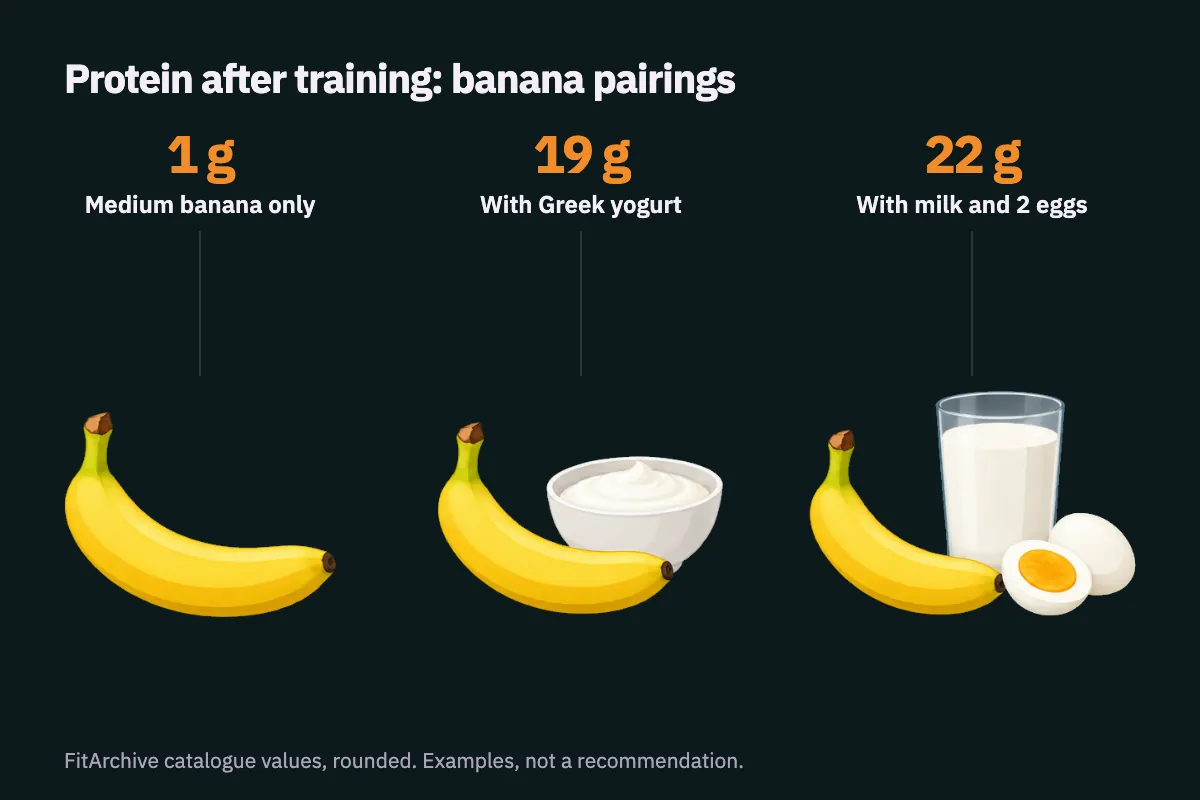
Add a protein food to the banana after training.
Only the last two get close to 20 g. If a proper meal is a few hours away, a banana with milk or yogurt works as a bridge. For how eggs fit in, see how many eggs a day for the gym; for daily amounts, see how much protein per day to build muscle.
Is a banana smoothie a good pre or post workout drink?
A Vietnamese banana smoothie (sinh tố chuối) is a different food from a banana. FitArchive’s recipe estimate for a regular 290 g glass is 255 kcal, 6 g protein, 50 g carbs and 5 g fat:
| Part | Weight | Calories | Share of calories |
|---|---|---|---|
| Banana | 120 g | 107 kcal | 42% |
| Sweetened condensed milk | 25 g | 80 kcal | 31% |
| Whole milk | 80 g | 49 kcal | 19% |
| Sugar | 5 g | 19 kcal | 8% |
| Water | 60 g | 0 kcal | 0% |
A small glass (×0.75) is about 191 kcal and a large one (×1.3) about 332 kcal. Less condensed milk brings a regular glass to about 215 kcal, and less condensed milk plus less sugar to about 205 kcal. Shops differ mainly in condensed milk, sugar and glass size. Even the large glass has only about 8 g of protein.
Other banana dishes, at FitArchive’s default size: chè chuối (banana sweet soup, 195 g) about 348 kcal and 4 g protein, bánh chuối nướng (baked banana cake, 143 g) about 255 kcal and 6 g, and bánh chuối hấp (steamed banana cake, 150 g) about 241 kcal and 2 g. More dishes are in the Vietnamese food calorie table.
Do bananas prevent muscle cramps?
Probably not, and low potassium has not been shown to cause exercise cramps. The evidence:
- In a study of Ironman triathletes, 11 who cramped and 9 who did not had no clinically meaningful differences in blood electrolytes, including potassium.
- In a laboratory study, 9 men cycled for 60 minutes in the heat and then ate 0, 1 or 2 servings of banana (150 g or 300 g). Blood potassium rose only slightly, stayed within normal values, and took 30 to 60 minutes to change. The author concluded bananas are unlikely to relieve cramps this way, and certainly not quickly.
- Reviews in 2019 and 2022 describe the causes of exercise cramps as uncertain and probably mixed, with fatigue and altered nerve signalling playing a role, rather than one missing mineral. Gentle stretching is the usual first treatment.
Bananas are still a good food; just do not rely on them for cramps. If you have kidney disease or take medicines that affect potassium, ask your doctor how bananas fit your diet.
Bananas when cutting or bulking
A banana counts like any other food: it adds about 90 to 121 kcal depending on size, almost all from carbohydrate. No single food makes you gain or lose fat; your total intake over weeks does.
- While cutting, a whole banana is a moderate calorie way to get carbohydrate before training, far lower than a smoothie with condensed milk or a cup of milk tea. Keep protein high in your meals; see keeping muscle while cutting.
- While bulking, bananas are an easy way to add food when appetite is the limit, for example blended with milk. Our guide for gaining weight when you are skinny covers the research on surplus size.
Personal calorie or carbohydrate targets are best set with a registered dietitian or doctor, especially if you have diabetes.
Does the type of banana matter?
In Vietnam you will see several kinds, such as chuối tiêu (long and slim), chuối tây or chuối xiêm (shorter and plumper) and small chuối cau. FitArchive has one banana entry, so we do not list separate values for each variety. For logging, the main difference is size: pick small, medium or large, or weigh the peeled fruit and log the grams.
Common mistakes
- Counting a banana as your protein. It has about 1 g. Add eggs, yogurt, milk or a meal.
- Expecting it to stop cramps. The evidence does not support that.
- Eating it right before training when it upsets your stomach. Move it earlier, or skip it.
- Logging a smoothie as “a banana”. A regular banana smoothie is about 255 kcal; a medium banana is 105.
- Treating timing as a rule. Thirty to 60 minutes is a convenient range, not a window you must hit.
- Judging a snack from one session. Compare several workouts; the progressive overload guide explains how.
This is general information, not personal nutrition advice.
Logging bananas in FitArchive
FitArchive is a free, private training and food log that works in your browser, including offline. You can log a small, medium or large banana, or the exact grams, and Vietnamese dishes such as sinh tố chuối from about 263 recipe estimates, with sizes and less or more of the adjustable parts. Daily calories and protein sit next to your workouts, so you can check whether a banana before a morning session lines up with better sets. The demo shows the layout with sample data.